


Bulk Produce Gaylord Boxes For Sale
Key Information for Produce Bin Buyers
- Capacity: commonly around 600–1,400 lbs depending on wall count, board grade, crop type, moisture exposure, condition, and supplier rating.
- Price: Pricing varies by wall count, size, shape, bottom style, condition, location, quantity, and freight. Current used produce-bin listings on this page may range from under $10 per unit to more than $20 per unit, so request a quote for current pickup or delivered pricing. See our Gaylord box pricing guide for more.
- Common sizes: 48×40×36 and 48×40×40 (octagon); some 47×37×40 and 42×34×36 rectangle. See our dimensions guide for the full breakdown.
- Per pallet: 1 box per 48×40 or 48×45 pallet.
- Per truck: 200–400 per 53' dry van depending on height.
- More: Browse all Gaylord boxes for sale - sizes, wall counts, and styles available.
Shop all produce Gaylord boxes
What are produce boxes?
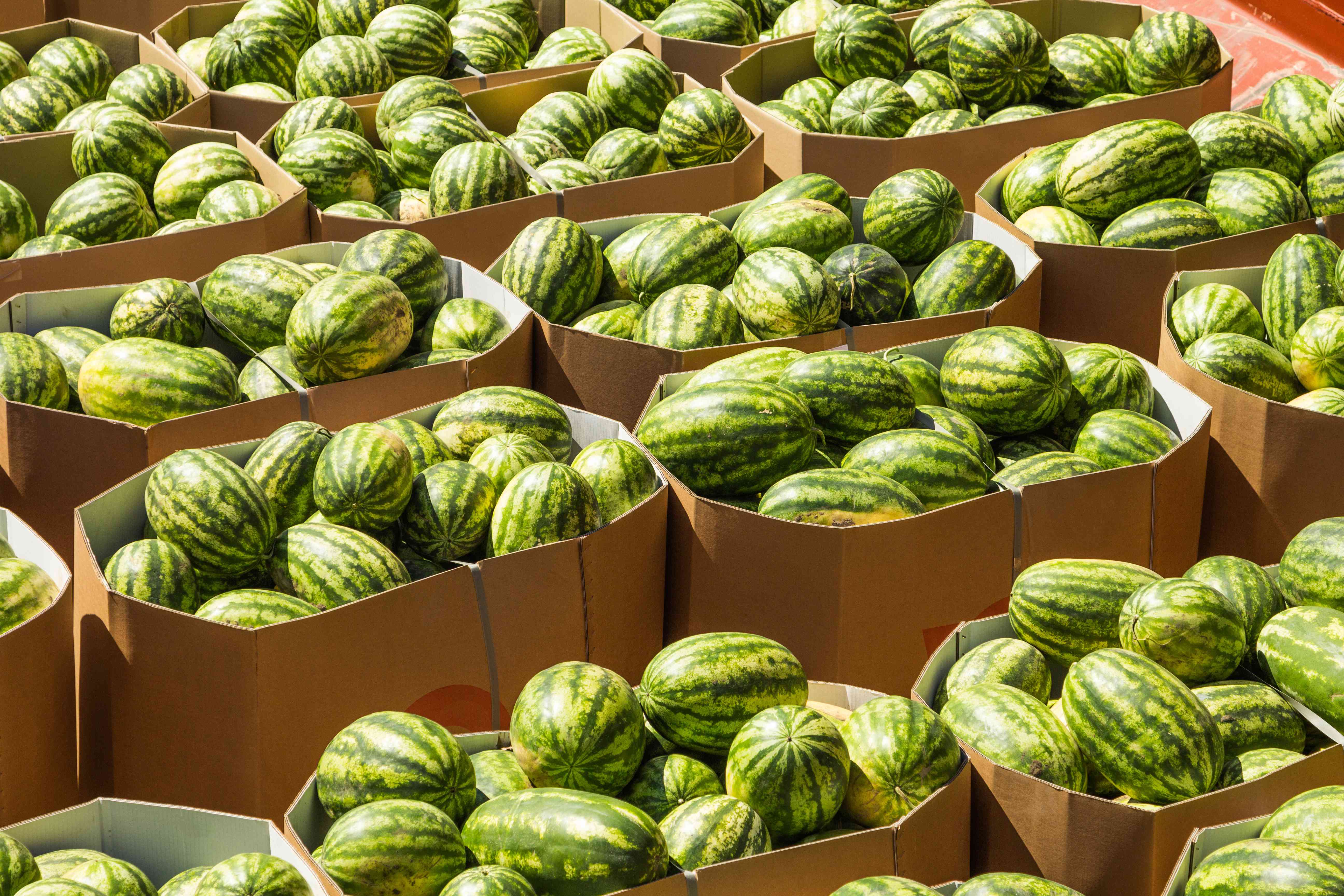
Produce boxes, in this context, refer to large corrugated gaylord boxes used for storing, transporting, and displaying bulk fruits and vegetables. Also known as agricultural bulk bins or produce Gaylords, these containers are often designed around pallet-friendly footprints for handling with forklifts or pallet jacks.
These boxes are common in farming, packing houses, wholesale distribution, food distribution, and retail or farm-stand display. Properly rated produce bins can help protect crops during handling and shipping, support palletized movement, and improve warehouse or truckload efficiency.
Many produce bins include open tops, ventilation slots, printed produce graphics, liners, coatings, or other crop-specific features, but these features vary by listing and manufacturer.
Why use produce boxes for agricultural shipping?
Produce boxes are used to handle heavy, bulky fruits and vegetables in pallet-ready loads. Depending on construction and condition, they can support storage, shipping, forklift handling, and retail display.
Wall strength varies by listing. Some used Gaylord listings use resale shorthand such as 2-wall, 3-wall, or 5-wall, while formal corrugated-board terminology more commonly uses single-wall, double-wall, and triple-wall construction.
Some produce bins are treated, coated, lined, or wax-cascaded for added moisture resistance, but this should be confirmed before use. Untreated corrugated fiberboard can lose strength when exposed to moisture or high humidity.
Ventilation can help airflow and cooling, but vent placement and open area must be balanced against stacking strength. For used bins, always check the box condition, wall count, bottom style, and whether ventilation or moisture-resistant features are actually present.
Looking for budget-friendly options? Take a look at our used bulk bin listings.
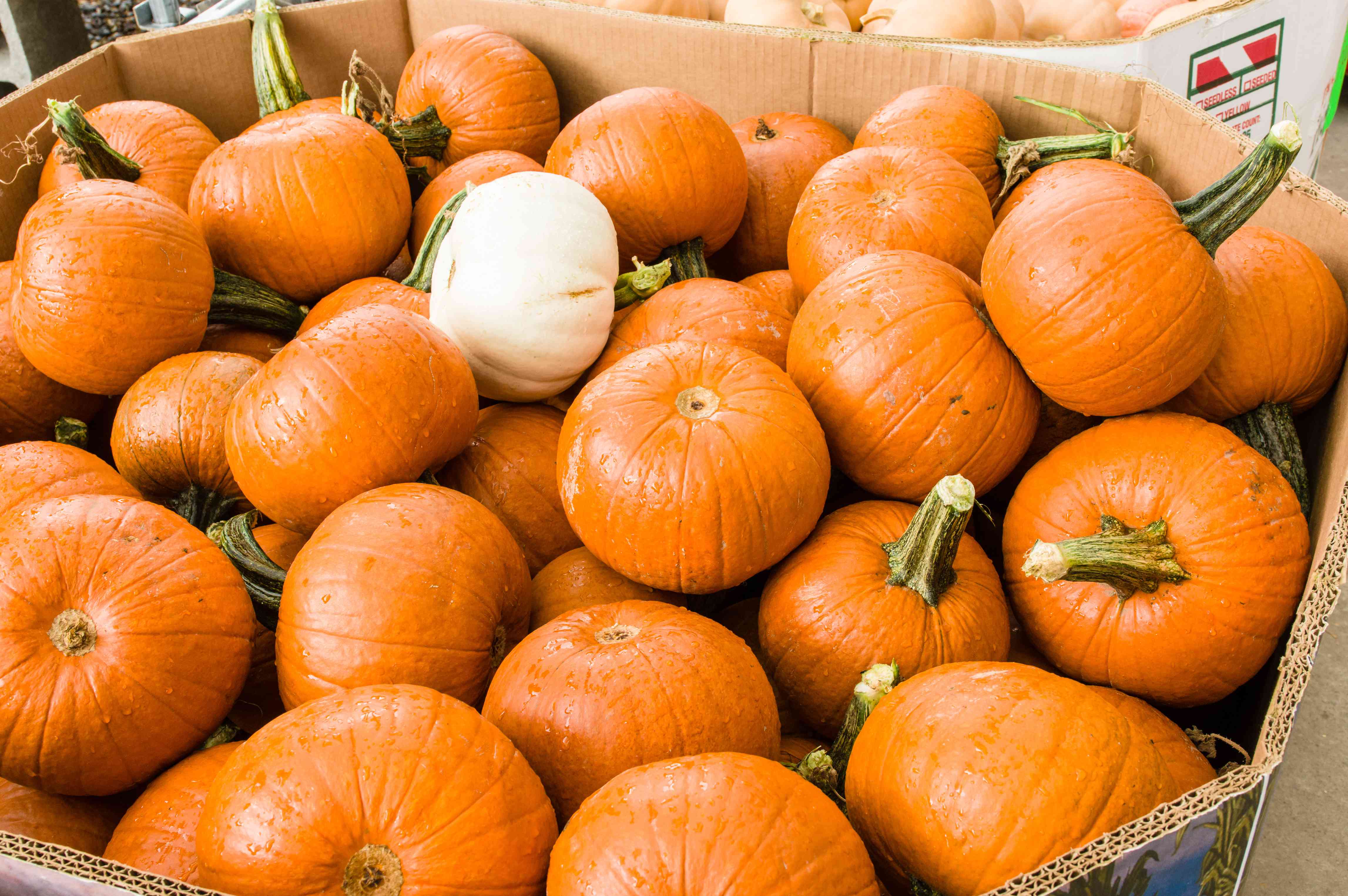
Common applications
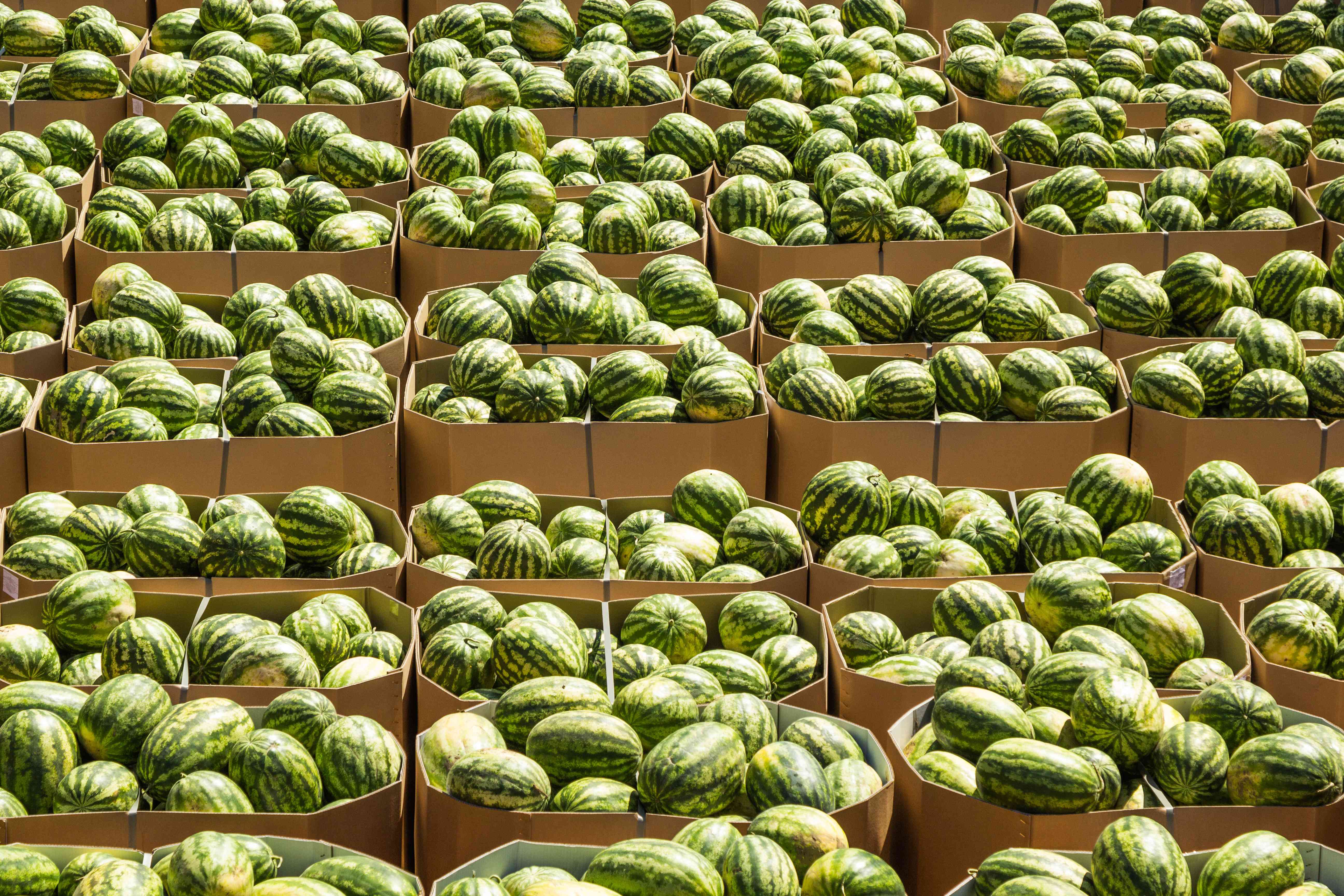
Farmers, packing houses, produce auctions, wholesalers, distributors, food banks, grocers, and farm stands use produce bins to collect, store, ship, and display bulk crops.
These containers are commonly used for bulky or heavier crops such as pumpkins, watermelons, squash, cabbage, melons, and similar produce. The right bin depends on crop weight, ventilation needs, handling method, moisture exposure, and whether the produce will contact the box directly.
Produce-specific designs
Some produce boxes include crop-specific features such as printed pumpkin, watermelon, or produce graphics. These designs can make contents easier to identify and can support retail or farm-stand merchandising.
Other produce-bin features may include ventilation slots, drain holes, liners, coatings, fold-over flaps, reinforced corners, or bulge-resistant construction. These features vary by listing, so buyers should confirm them before ordering.
For crop-specific containers, check out our pumpkin bins and watermelon shipping boxes.
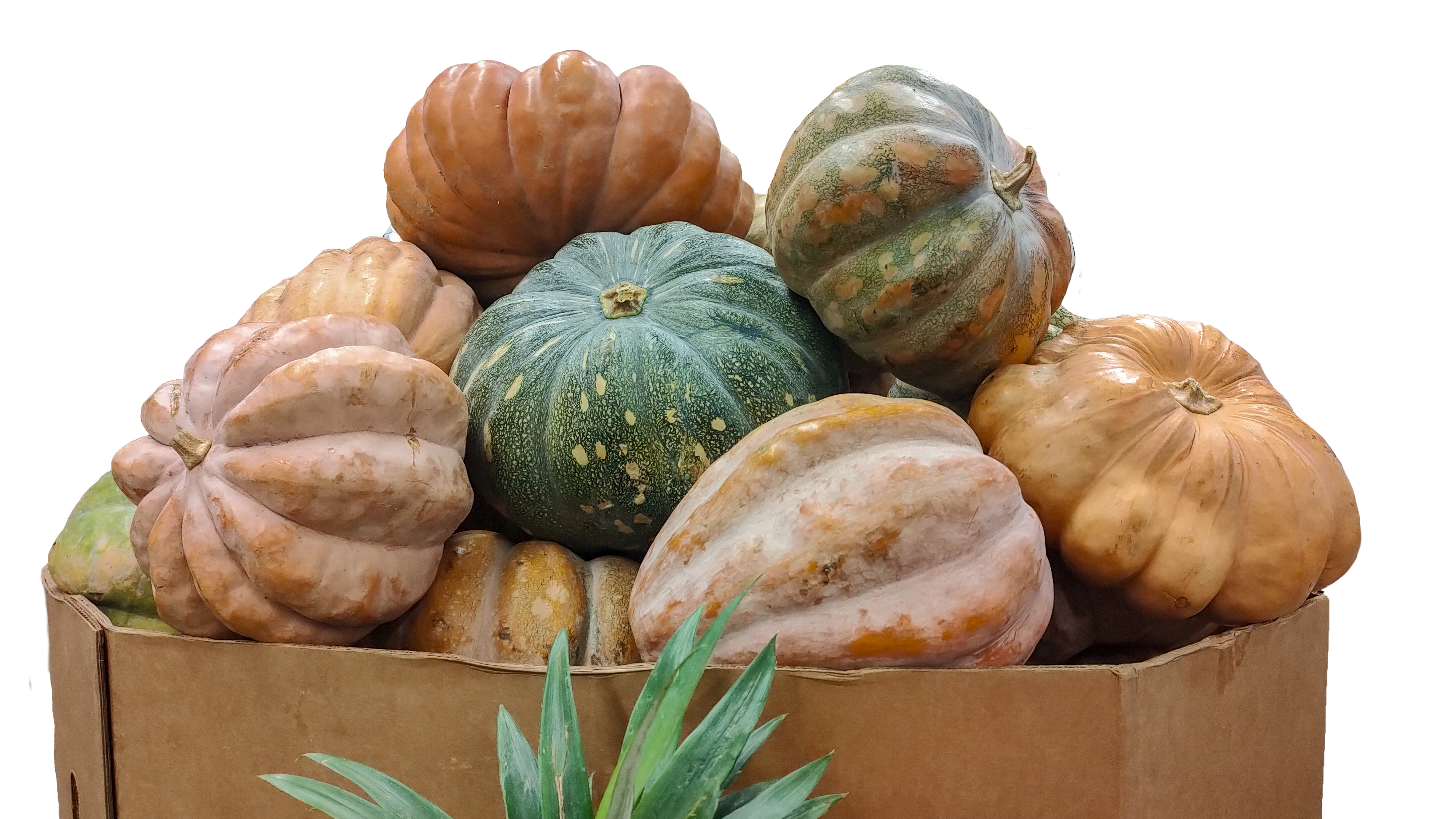
Quick specs for bulk cardboard produce boxes
Whether you are packing pumpkins, watermelons, squash, cabbage, melons, or other bulky crops, produce bins need to match the crop weight, handling method, moisture exposure, and storage environment. The table below outlines common features to check when comparing agricultural Gaylord boxes.
| Feature | Details |
|---|---|
| Common Uses | Pumpkins, watermelons, squash, cabbage, melons, and other bulky produce |
| Typical Construction | Single-wall to triple-wall corrugated, depending on crop weight, handling, and moisture needs |
| Common Shapes | Octagon and rectangular Gaylord styles |
| Pallet Compatibility | Common pallet-friendly footprints include 48" × 40" and similar sizes; verify each listing’s dimensions |
| Weight Capacity | ~1,000–1,400 lbs depending on wall strength |
| Available Styles | Solid bottom, full and partial flaps |
| Ventilation Options | Ventilation holes often available |
| Seasonal Demand | Varies by crop and region; watermelon demand often peaks before summer movement, while pumpkin and fall-crop demand rises before late-summer and fall harvest |
Find produce bins near you
Verde Trader lists used Gaylord box inventory suited for bulk produce in cities across the U.S. Customer pickup is available on most listings. Nationwide shipping and delivery can be arranged - request a quote on any listing for details.
Don't see your city? Browse all locations for the full directory, or request a quote on any listing for delivery anywhere in the United States.
FAQs
Who uses produce bins like these?
Growers, distributors, wholesalers, and retailers rely on heavy-duty Gaylord boxes to store and transport bulk produce safely during harvest and shipment.
What makes these boxes suitable for produce?
They may use single-wall, double-wall, triple-wall, or heavier corrugated construction depending on the crop, load weight, and supplier rating. They are strong enough to support heavy loads while helping reduce shifting and handling damage when the right bin is matched to the crop. Also, they often feature holes for ventilation.
Where can I find these boxes for sale?
Listings for bulk produce shipping bins are available on this page, with details on wall strength, dimensions, and bottom styles.
When is the best time to order?
Order before peak harvest seasons to ensure supply and avoid price surges during high demand.
Why choose Gaylord boxes for produce?
They are lightweight, stackable, reusable, and recyclable, making them an efficient and sustainable solution for transporting bulk produce.
Have produce Gaylord boxes to sell? Get a quote, or schedule a recycling pickup.
Sources
This page draws on two sources: published industry standards that define corrugated construction for produce applications, and Verde Trader's own sold-order records covering produce bin transactions.
Industry standards (what is defined)
- ASTM D4727/D4727M. Specification for corrugated and solid fiberboard sheet stock. Defines board grades, wall construction, and flute combinations underlying every wall-count reference on this page.
- ASTM D5639/D5639M. Practice for selecting corrugated fiberboard materials and box construction based on performance requirements. Used to match wall count and flute type to produce load conditions.
- Fibre Box Handbook (Fibre Box Association). Industry reference covering box styles, carrier rules, and strength requirements for corrugated containers including octagonal produce bins.
Our sales data (what people actually buy)
- Verde Trader sold-order data. More than 8,000 Gaylord box orders through mid-2026, including produce bin transactions across wall counts, footprints, and U.S. regions. The pricing ranges and size patterns on this page come from these records.
