

Types of plastic pallets explained
What each type does, how they differ, and which one is right for your operation.
Published October 14, 2026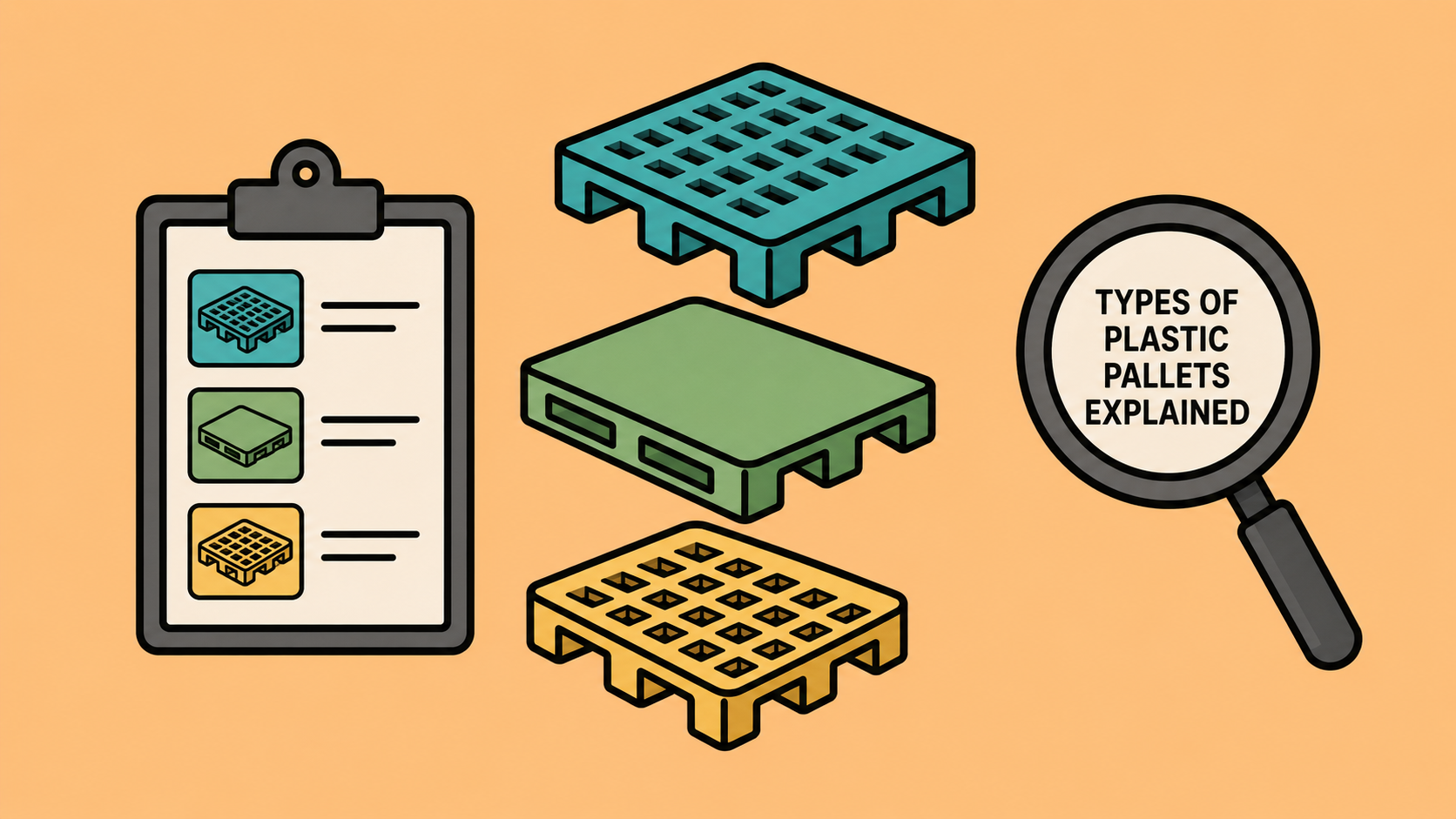
By John Anderson, Owner of Verde Trader
10+ years buying and selling used industrial packaging.
Key takeaways
- Three main structural types: rackable, stackable, and nestable - each designed for a different storage and handling need.
- Deck style matters: open deck, solid top, and perforated deck pallets are suited to different loads, industries, and cleaning requirements.
- Entry points vary: 2-way entry limits forklift access; 4-way entry works from any side and is the most common in U.S. warehouses.
- Material and construction method: most plastic pallets are injection molded from HDPE or polypropylene, which affects weight, durability, and price.
- Export pallets are a distinct category: lightweight, one-trip designs that are ISPM-15 exempt and built to clear customs without fumigation.
Rackable pallets
A rackable pallet is built to span the beams of a pallet rack system without sagging or failing under load. The structure distributes weight across the full length of the pallet so the deck stays rigid when supported only at two or four points on the rack beams - not along its entire bottom surface. This is the most common plastic pallet type in U.S. distribution and warehousing.
Most are injection molded from high-density polyethylene (HDPE) with reinforced runners or a block-style understructure to handle the concentrated stress of rack storage. The trade-off is weight and cost - rackable pallets are heavier and more expensive than nestable or export designs, and they are not efficient to stack empty for return shipping.
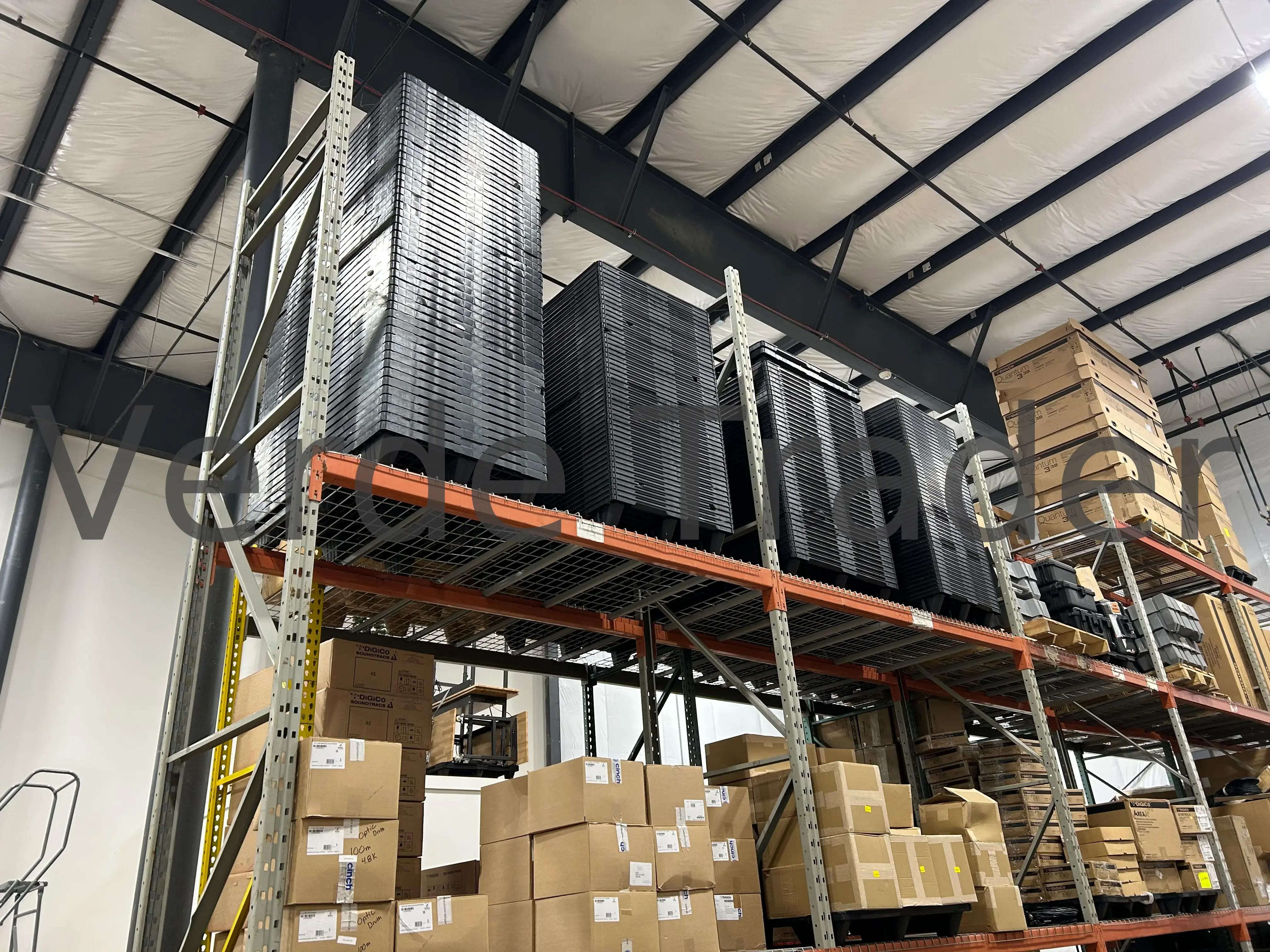
If your pallets go into a beam rack, this is the type you need. A pallet that is not rated as rackable should never be placed on rack beams - deck failure under load is a real risk.
We carry both new and used rackable plastic pallets in standard 48x40 and 48x48 footprints.
Nestable pallets
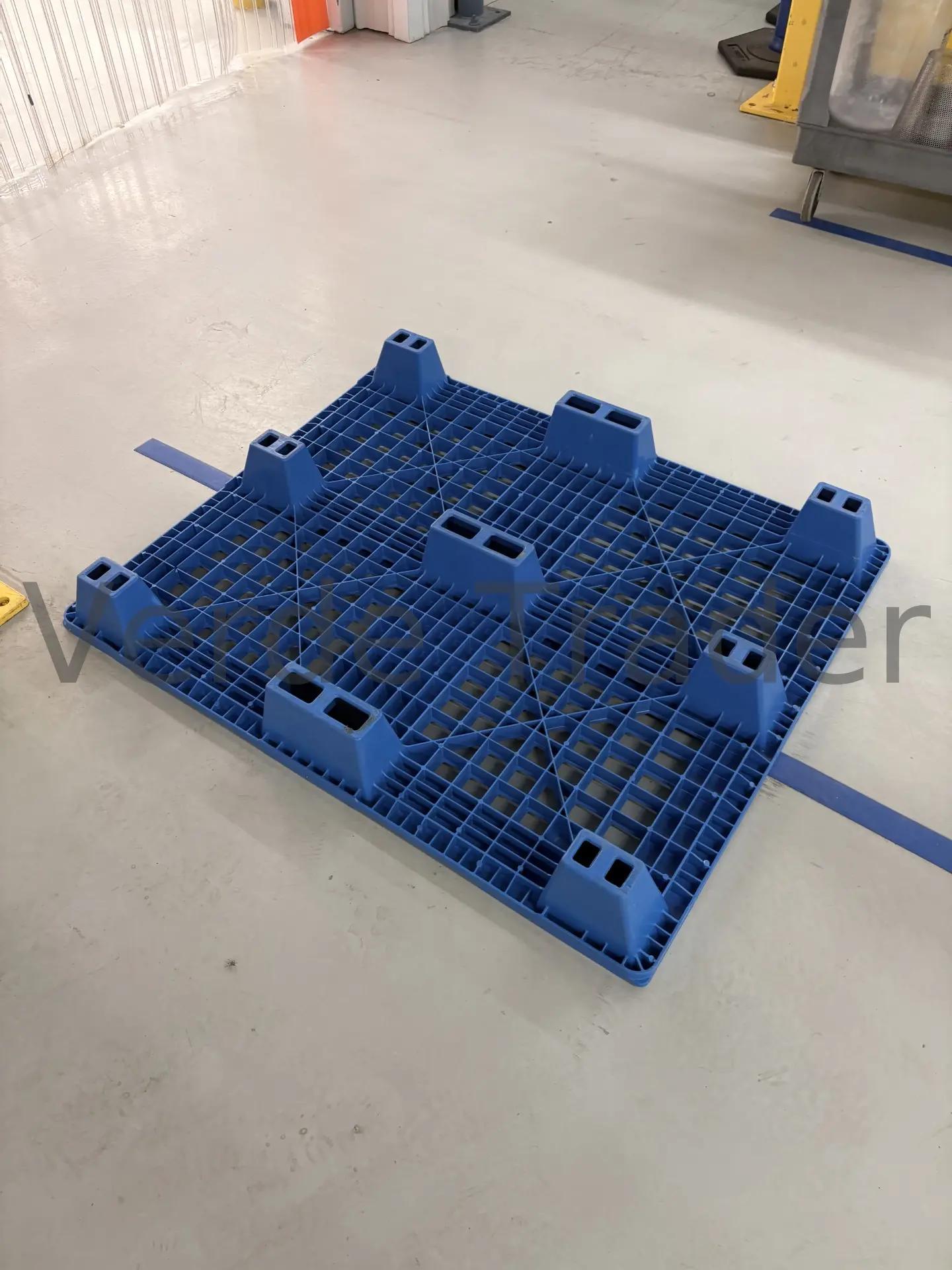
A nestable pallet is shaped so that empty units drop into one another rather than stacking flat. The tapered legs or runners allow one pallet to sit inside the cavity of the one below it, which dramatically reduces the height of an empty stack. Research shows that at the same stack height, you can fit roughly 1.7 times more nestable plastic pallets than standard wooden stackable pallets - a significant freight cost advantage when moving empties.
That space efficiency is why nestable designs dominate applications where pallets travel empty in one direction: retail distribution, e-commerce fulfillment, and export shipping. They are also well suited for pharmaceutical and food applications where moisture resistance matters, since plastic does not absorb water or harbor pests the way wood can.
Nestable pallets are not rackable. The tapered leg design that makes them nest efficiently also makes them unsuitable for beam rack storage. If you need both, you need two pallet types or a hybrid stackable-rackable design.
Browse nestable plastic pallets for sale on Verde Trader.
Stackable pallets
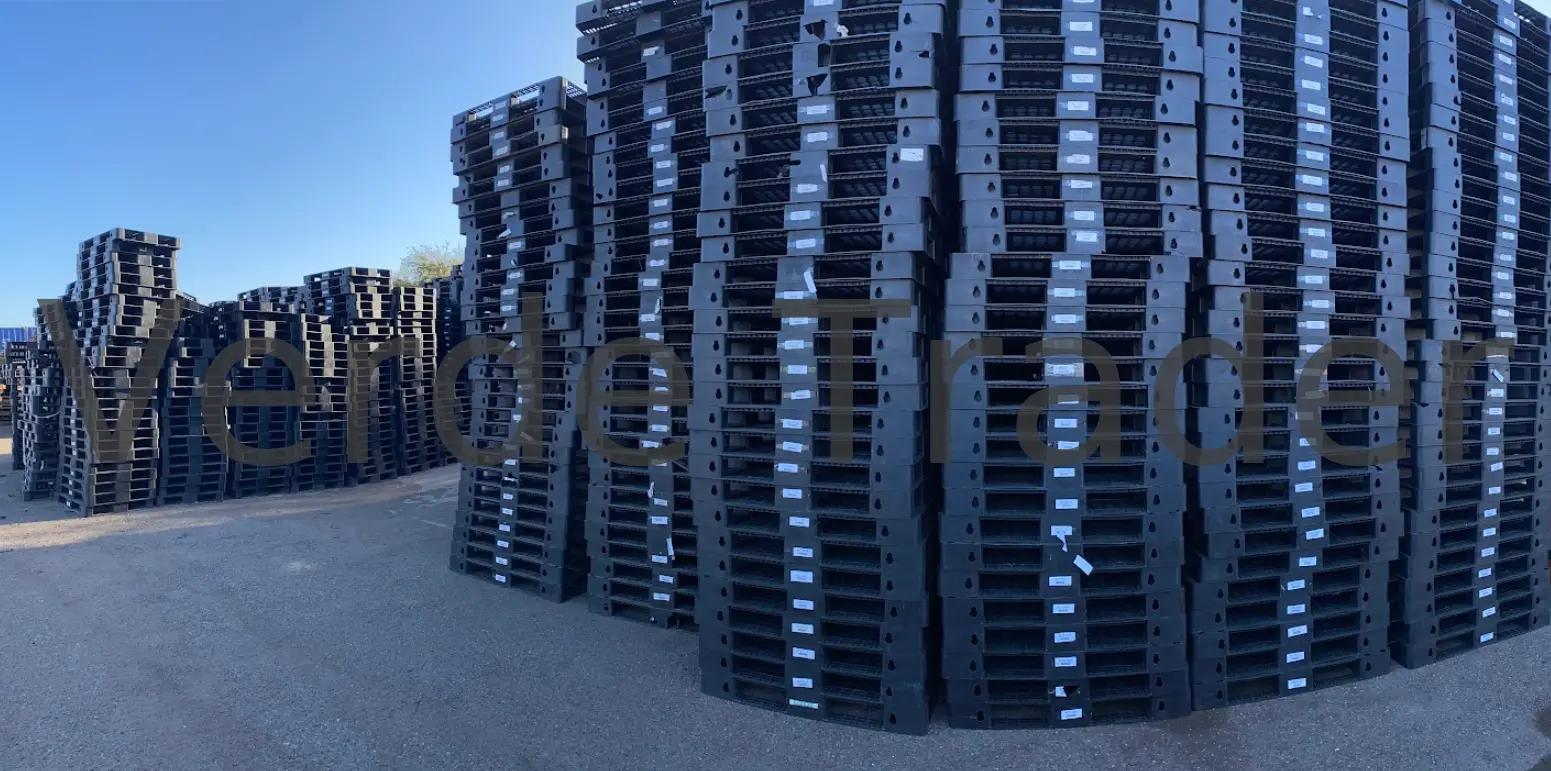
A stackable pallet is designed to support weight when loaded units are placed directly on top of each other. The top deck transfers load through the pallet structure to the floor rather than relying on rack beams. This makes them the right choice for floor storage, block stacking, and warehouses that do not use racking systems.
Stackable plastic pallets come in solid-top and open-deck configurations - solid for small or irregular goods, open for cold storage and drainage. One important distinction: a pallet rated for a high static load in block stacking may still perform poorly in a rack, because the stress distribution is different. Always confirm the rack load rating separately if you plan to use the same pallet in both applications.
Browse stackable plastic pallets for sale on Verde Trader.
Export pallets
Export pallets are built around one core advantage: they are exempt from ISPM 15 phytosanitary treatment requirements. Under ISPM 15, all wood packaging used in international trade must be treated - either by heat treatment or methyl bromide fumigation - to prevent the spread of invasive pests before crossing a border. Plastic pallets require no such treatment, which removes treatment costs, scheduling delays, and customs complications from the shipping process entirely.
Export plastic pallets are typically lightweight, often made from polypropylene or recycled HDPE, and engineered for single-trip or limited-trip use. The design prioritizes low cost per trip and easy nesting for the return journey over the heavy-duty durability of a long-cycle reusable pallet. They are a one-way investment for most international shipments where pallet recovery is not practical.
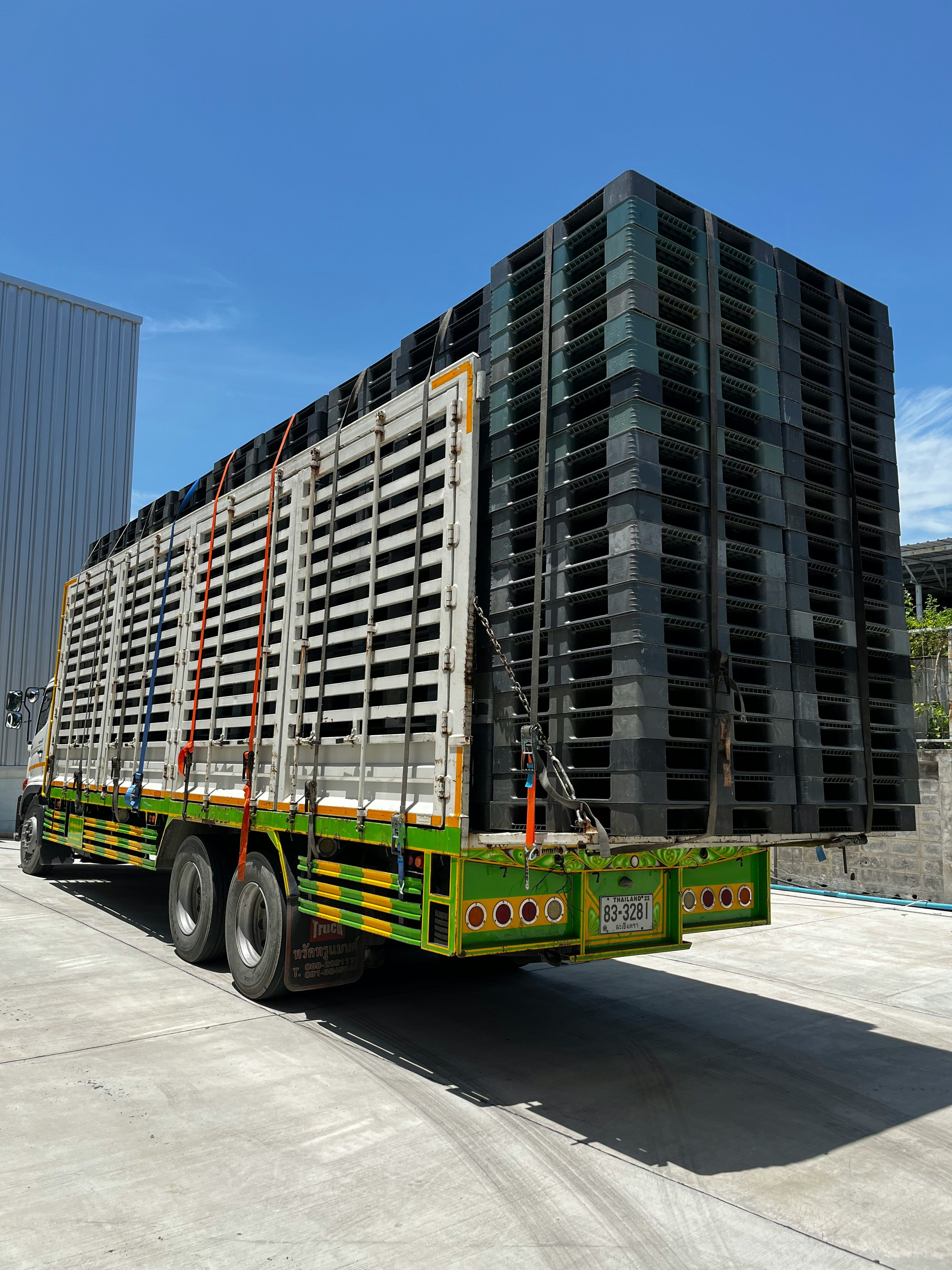
Conventional heat treatment of wooden pallets requires large kilns using fossil fuels. Methyl bromide fumigation emits a gas with significant ozone depletion potential. Plastic export pallets skip both processes - which is the primary reason buyers choose them for international shipments, not just the convenience.
Browse plastic pallets for sale on Verde Trader.
2-way vs. 4-way entry
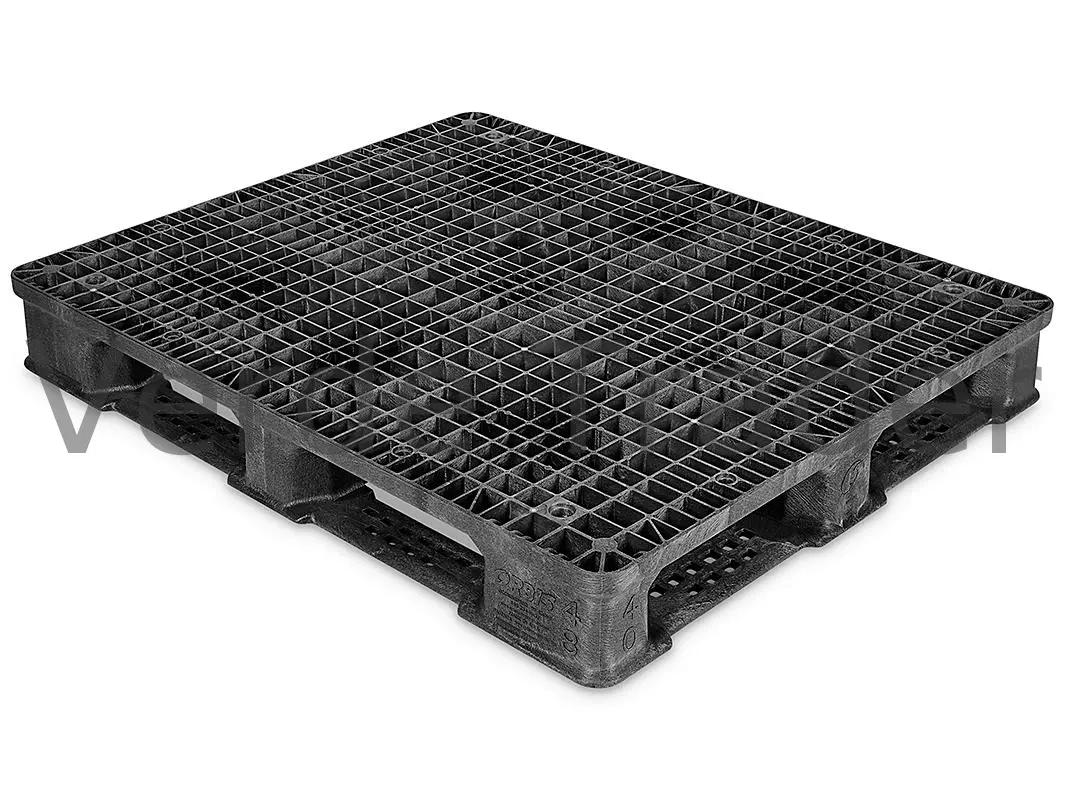
Entry configuration describes how many sides a forklift or pallet jack can access the pallet from. It is a practical detail that gets overlooked until it creates a warehouse bottleneck.
- 2-way entry. Forks can only enter from two opposite sides. The understructure on the other two sides is solid or blocked. Stringer-style pallets work this way - the stringers run the full length between the deck boards and provide additional support over the span, but they close off two sides to forklift access. Common where forklifts always approach from the same direction.
- 4-way entry.Forks can enter from any of the four sides. Block-style pallets often use individual corner and center blocks to support the deck while leaving all four sides open. This is the most flexible configuration and is common in U.S. plastic pallet applications. Some rack, conveyor, AS/RS, and pallet-flow systems require specific entry, runner, or bottom-deck designs, so confirm equipment requirements before assuming any 4-way pallet will work.
Height differences between pallet types
Overall height varies by structural type more than by brand. Nestable pallets run shortest since the tapered-leg design that lets them nest does not need the deck depth a rack load requires. Rackable and stackable designs run taller because that added deck depth is what gives them the stiffness to resist sagging under load.
Height is not just a stacking number either. It sets the tine entry clearance a forklift or pallet jack needs to get under the load, so a taller pallet built for a higher rack rating still has to leave enough clearance for your equipment to engage it cleanly.
These are planning ranges, not a substitute for the spec sheet on a specific model. For exact height figures, tine entry clearance by type, and how height affects truck loading, see our plastic pallet sizes and dimensions guide.
Types of plastic pallets at a glance
Use this table to compare the main plastic pallet types by their primary use case, typical construction, and key limitation. Deck style (open, solid, perforated) and material (HDPE vs. polypropylene) apply across all types - see the dedicated posts on those topics for a deeper look.
Source: Pulgar & Oliveira, Springer (2023); Anil et al., Journal of Industrial Ecology (2020); Weththasinghe et al., Journal of Cleaner Production (2022).
Frequently asked questions about plastic pallet types
Can one pallet be both rackable and nestable?
Yes, but only if the exact pallet is designed and rated for both uses. Traditional low-profile nestable pallets are usually not rackable because the tapered leg design is built for empty nesting, not beam-rack support. However, some manufacturers sell nestable/rackable hybrid pallets with published racking capacities. If your operation needs both, verify the rack load rating, rack span, load distribution, and support condition before using the pallet in beam storage.
Which plastic pallet type actually needs a rack load rating?
Only rackable pallets need a certified rack load rating, since that's the only type designed to span open beam rails under load. Nestable and stackable pallets are tested to static and dynamic ratings instead, because they're built to sit on a solid floor or supported surface rather than bridge an open span. If you're putting any pallet into beam storage, confirm it carries a published rack rating specifically - a high static rating alone doesn't mean it's safe on a rack. For how these ratings are tested and what the numbers mean, see our load capacity guide.
Are certain plastic pallet types harder to find used than others?
Export pallets are the clear exception. Since they're typically built for a single one-way international shipment, they rarely make it back into circulation for resale, which makes them one of the harder types to source secondhand. Rackable, nestable, and stackable pallets used domestically get pulled from service and resold more routinely, so any of those three types show up in the used market with reasonable regularity. For the full decision framework on new versus used, see our buying guide.
Which plastic pallet type is easiest to move with a manual pallet jack?
Rackable and stackable pallets generally give a pallet jack the easiest time, since they're built with taller entry clearance to handle heavier, more concentrated loads. Nestable pallets can be trickier - their lower profile and tapered leg design sometimes leaves less clearance under the deck, which can be too tight for a jack's wheels and forks on some models. If pallet jack compatibility matters in your operation, check the tine entry height on the spec sheet before ordering, especially for nestable styles. See our nestable pallets guide for the specific clearance issue to watch for.
Can I mix plastic pallet types in the same warehouse?
Yes, and many operations do. A common setup is rackable pallets for beam storage and nestable pallets for floor-level receiving or outbound shipping where return density matters. The main thing to manage is making sure pallets do not end up in the wrong application - particularly preventing non-rack-rated nestable pallets from being placed in a rack. Many facilities use different colors for different pallet pools for exactly this reason. Plastic pallets are available in a wide range of colors, which makes visual differentiation practical.
Do all three pallet types come in GMA-spec (48x40) sizing?
Yes - rackable, nestable, and stackable pallets are all manufactured in the 48x40 GMA footprint, since it's the dominant size across U.S. distribution regardless of structural type. What changes by type isn't the footprint, it's the height and weight: a GMA-spec nestable pallet runs lighter and shorter than a GMA-spec rackable pallet built to span beam rails. Confirm both the footprint and the type-specific height before ordering. For the full GMA spec definition, see our plastic pallets guide.
Does a pallet's structural type affect how easily it can be recycled?
Not significantly for the resin itself - HDPE and polypropylene are recyclable regardless of whether the pallet is rackable, nestable, or stackable. What can differ is how quickly a pallet gets processed: rackable pallets often carry embedded steel reinforcement rods in the runners, which have to be separated out before the plastic can be reprocessed, an extra step nestable and stackable pallets typically don't require. For the full recycling process and what happens at end of life, see our recycling guide.
Sources
The pallet type definitions and structural characteristics on this page draw from peer-reviewed life cycle and materials research. Product experience from buying and selling plastic pallets informed the practical notes on use cases and limitations.
Industry standards
- ANSI MH1-2021. The primary U.S. standard for pallets and related equipment. Covers pallet definitions, dimensions, load capacity ratings including static, dynamic, and rack load classifications referenced throughout this post.
- ASTM D1185-98a(2025). Standard test methods for pallets and related structures used in materials handling and shipping. The basis for how pallet load ratings are tested and compared across types.
- ISO 8611 Parts 1-3. International standard for flat pallets used in materials handling. Covers test methods, performance requirements, and maximum working loads - the global reference for pallet structural classification.
Peer-reviewed research
- Anil et al., Journal of Industrial Ecology (2020). Life cycle assessment comparing wooden and plastic pallets in the grocery industry. Source for pallet trip assumptions, HDPE injection molding process details, and ISPM 15 treatment context cited in the export pallets section.
- Weththasinghe et al., International Journal of Life Cycle Assessment (2021). LCA comparison of wooden, plastic, and wood-polymer composite pallets. Source for the nestable space efficiency figure - 1.7 times more plastic pallets fit at the same stack height versus wooden stackable pallets - and the 66-cycle expected lifetime range for plastic pallets.
- Koci, Science of the Total Environment (2019). Life cycle model for wood and plastic pallets including production method comparisons. Source for recycled plastic pallet input ratios and the end-of-life remolding process described in the FAQ.
- Pulgar and Oliveira, Springer (2023). Review of production and material types for pallets. Source for the comparative pallet design table including roto-molded, injection molded, stringer, block, solid deck, and double face characteristics used in the comparison table and type descriptions.
Regulatory reference
- Godley, Thin-Walled Structures (1997). Structural analysis of pallet rack beam design. Background source for the rack load rating explanation and why concentrated beam-point loading differs from static floor loading in the FAQ.
Verde Trader product experience
- Verde Trader sold-order data. Practical notes on used pallet condition, common pallet types in circulation, and buyer use cases on this page draw from our experience buying and selling plastic pallets. For current availability and pricing, browse plastic pallets for sale or request a quote.
