

Plastic Pallet Sizes and Dimensions Guide
The wrong pallet size is an expensive mistake. Here's everything you need to know before you order.
Published October 14, 2026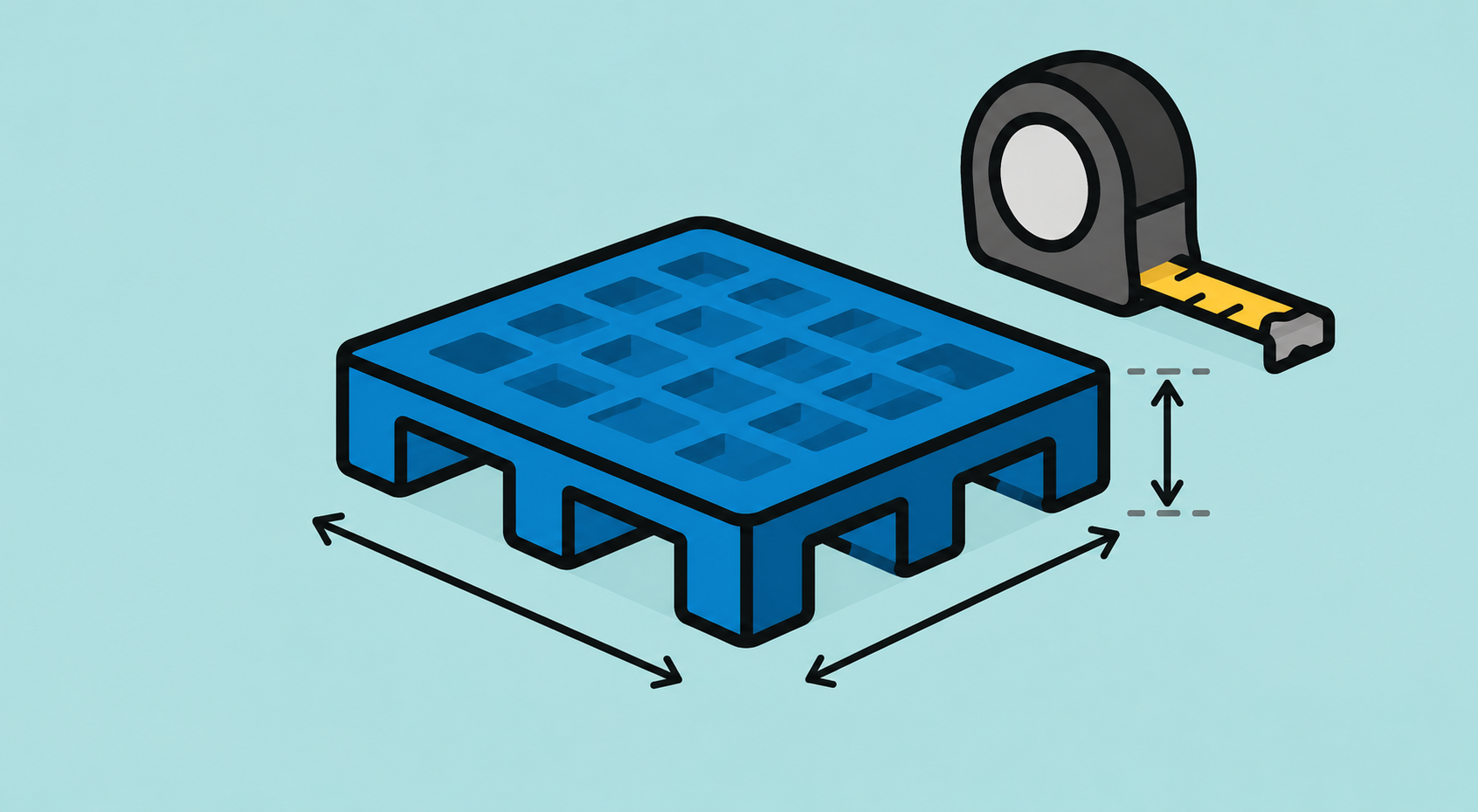
By John Anderson, Owner of Verde Trader
10+ years buying and selling used industrial packaging.
This guide covers common nominal plastic pallet footprints and typical size ranges. Actual outside dimensions, height, weight, entry clearance, and load ratings vary by manufacturer, model, deck design, reinforcement, and application. Always verify the exact spec sheet before buying.
Key takeaways
- Most common size: 48x40 inches - the GMA standard used across grocery, food and beverage, and general warehousing
- Size range: plastic pallets are available from 30x32 up to 56x44 inches depending on pallet type and industry
- Thickness varies by type: nestable pallets run 4-6 inches tall; rackable and stackable pallets typically run 5-7 inches
- Load capacity depends on pallet design and support condition: Static, dynamic, and racking ratings are not interchangeable, so always verify the exact manufacturer rating for the pallet, load, rack span, and use environment.
- No single standard: unlike wood pallets, plastic pallets have no universal size standard - always verify dimensions against your rack beam spacing before ordering
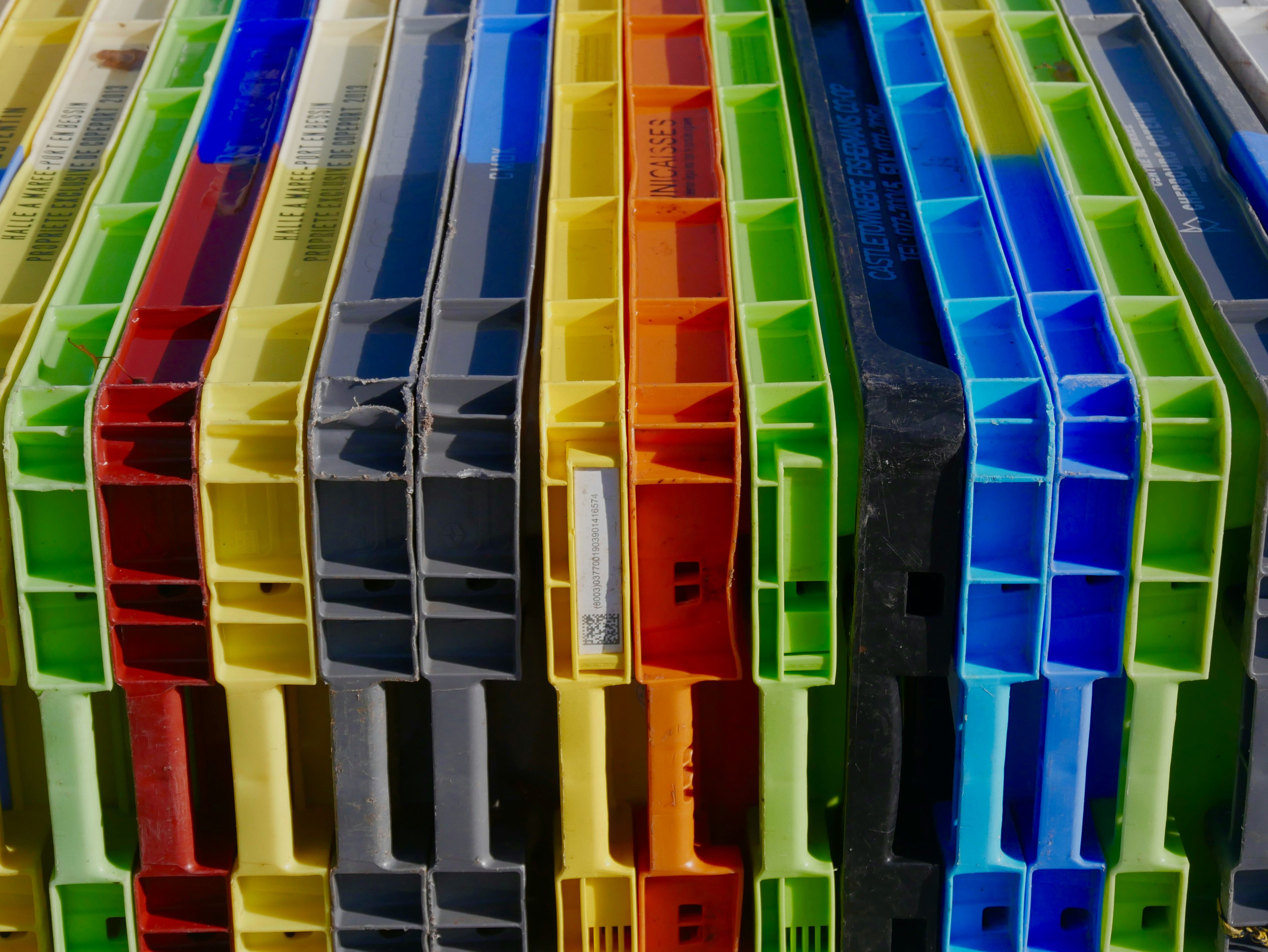
Photo by Manon Leduc / Unsplash
Standard plastic pallet sizes
Plastic pallets are manufactured in a range of footprints, but a handful of sizes account for the majority of what you'll find in the market. The 48x40 inch size is the most widely used in North America, matching the GMA (Grocery Manufacturers Association) standard that most warehouse racking systems are built around. Other common sizes serve specific industries or regions.
The table below covers the most commonly available plastic pallet footprints, their typical applications, and how frequently you'll encounter them when buying used.
Sources: Monoflo International; Rehrig Pacific; Greystone Pallets; iGPS Logistics. Availability reflects used market frequency based on Verde Trader transaction data.
The 48x40 size is dominant in the used market. If you need a different footprint, expect fewer options, longer lead times, and higher prices - especially for sizes below 40 inches in either dimension.
Size by pallet type
The footprint of a plastic pallet tells you part of the story. The other part is the pallet type - nestable, rackable, or stackable. Each type is built differently, and that affects not just height and weight but which sizes are available and what applications they fit.
Nestable pallets
Nestable pallets are designed to stack inside one another when empty, which reduces storage and return freight costs significantly. They have a tapered leg design that allows the legs of one pallet to drop into the openings of the one below it. Because of this design, nestable pallets are typically thinner and lighter than rackable or stackable options.
Planning ranges only. Exact outside dimensions, height, weight, entry clearance, and load rating vary by manufacturer, mold, material, deck style, and duty rating.
Rackable pallets
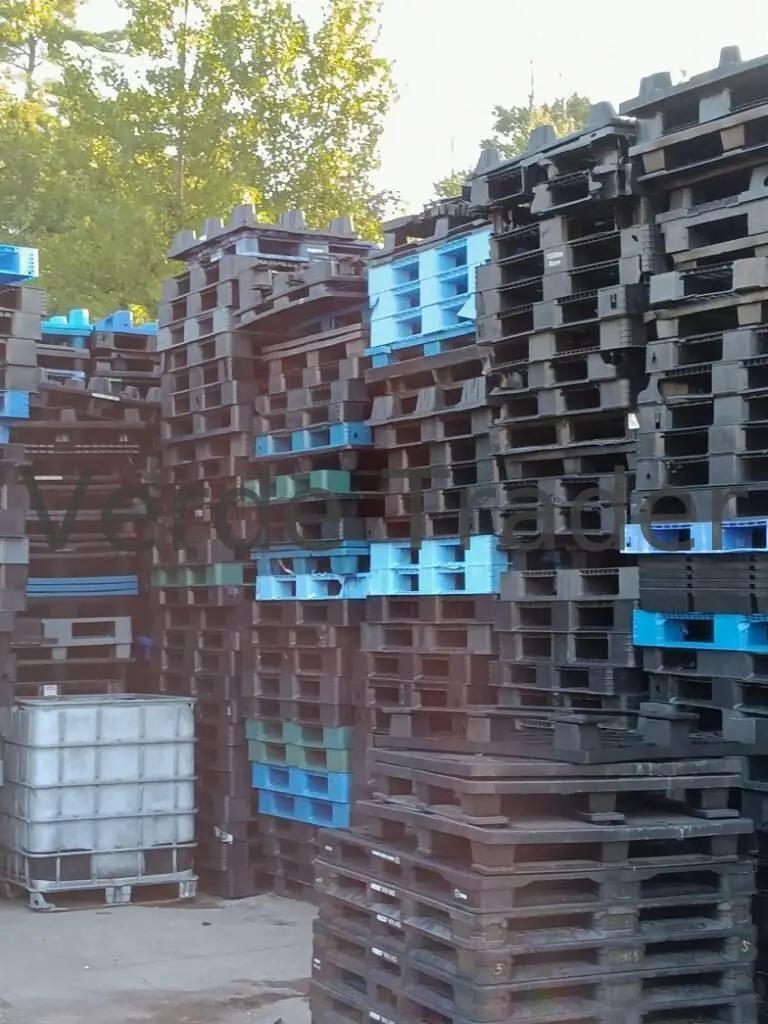
Rackable pallets are built to sit on pallet rack beams with a load on top - a demand that puts significant stress on the pallet's span. They use a solid or reinforced deck with structural runners underneath, which makes them taller and heavier than nestable pallets of the same footprint. Most rackable plastic pallets in the market are 48x40, matching standard GMA rack beam spacing.
Planning ranges only. Racking capacity depends on pallet design, reinforcement, rack span, load distribution, temperature, and support condition. Always verify the exact racking rating before ordering.
Stackable pallets
Stackable pallets are designed to stack flat on top of one another when loaded or empty. They don't nest, so they take up more return space than nestable pallets, but they offer a more stable, flat deck surface. Stackable pallets are often found in larger footprints and are common in beverage and retail applications where a wide, stable base is needed.
Planning ranges only. Exact outside dimensions, height, weight, and load rating vary by manufacturer, mold, material, deck style, and duty rating.
Pallet thickness and height
Pallet height matters more than most buyers realize. It directly affects how many pallets fit in a truck, how high a loaded pallet sits in a rack, and whether your forklift tines can actually get underneath it. Plastic pallets range from around 4 inches to over 7 inches tall depending on type and design.
There are two height measurements worth knowing: overall height (the full height of the pallet from floor to top deck) and deck height (the clearance between the floor and the underside of the top deck, which determines forklift tine entry). Most spec sheets list overall height - deck height is sometimes listed separately as entry height or tine clearance.
Sources: Monoflo International Nestable and Rackable spec sheet; Rehrig Pacific 44x56 Stackable; Greystone Pallets GS 48x48. Ranges reflect typical values across manufacturers - always verify against the specific product spec sheet before ordering.
Why height matters for truck loading
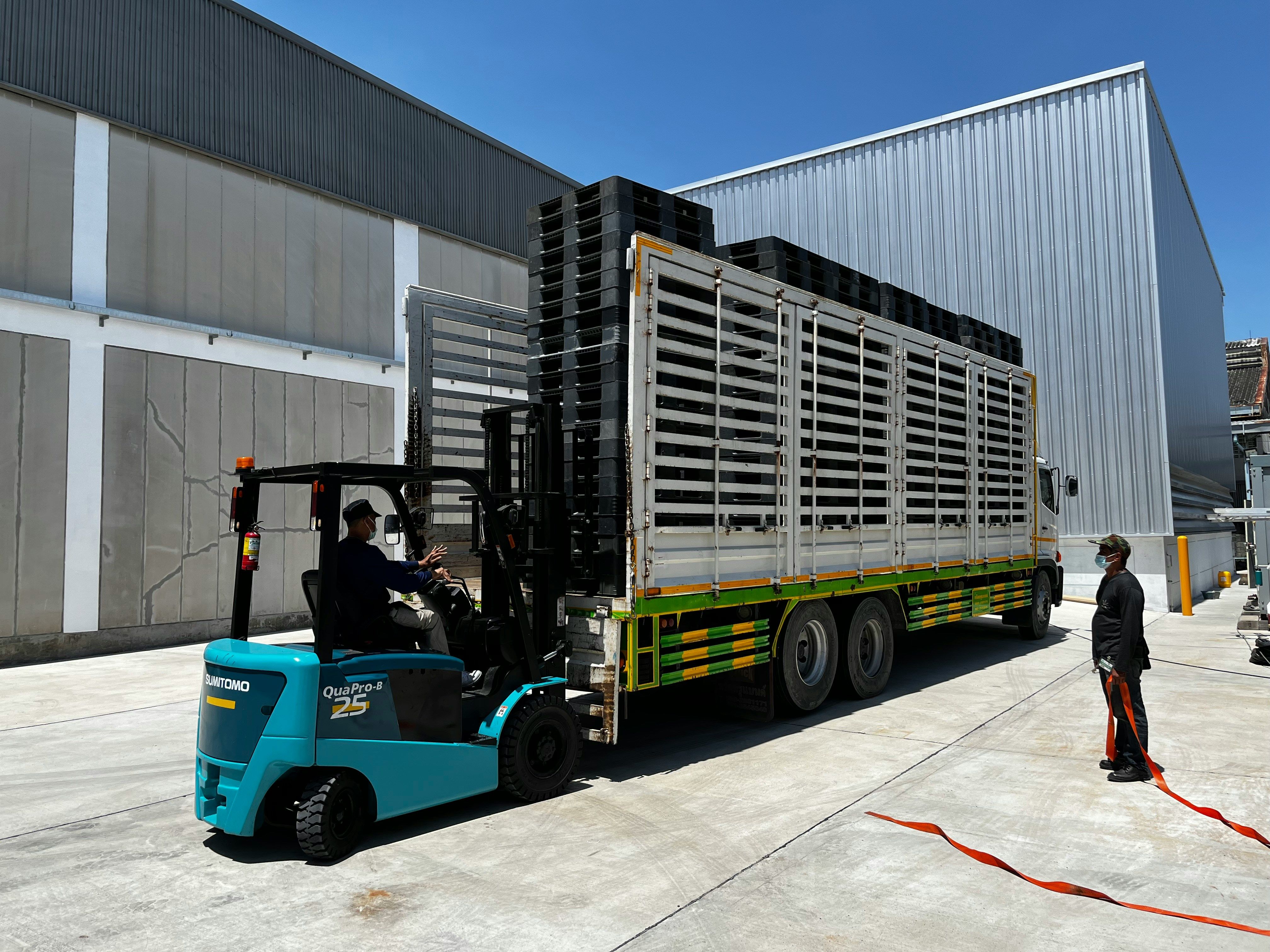
A standard 53-foot dry van has an interior height of roughly 110 inches. A loaded pallet sitting on a 6-inch plastic pallet needs to clear that ceiling including the load on top. If you're double-stacking empty pallets on the return trip, every inch of pallet height compounds - 20 nestable pallets at 5.3 inches each is a very different stack height than 20 rackable pallets at 6.5 inches each.
Nestable pallets are the most efficient for return freight precisely because of their lower collapsed height. If you're running a closed loop where empty pallets ship back regularly, the height difference between nestable and rackable adds up fast in freight costs.
Industry-specific sizes
Certain industries have settled on specific pallet sizes that match their packaging, racking, and handling equipment. If you're buying for one of these industries, matching the right size is not optional - the wrong footprint won't fit the line, the rack, or the truck configuration.
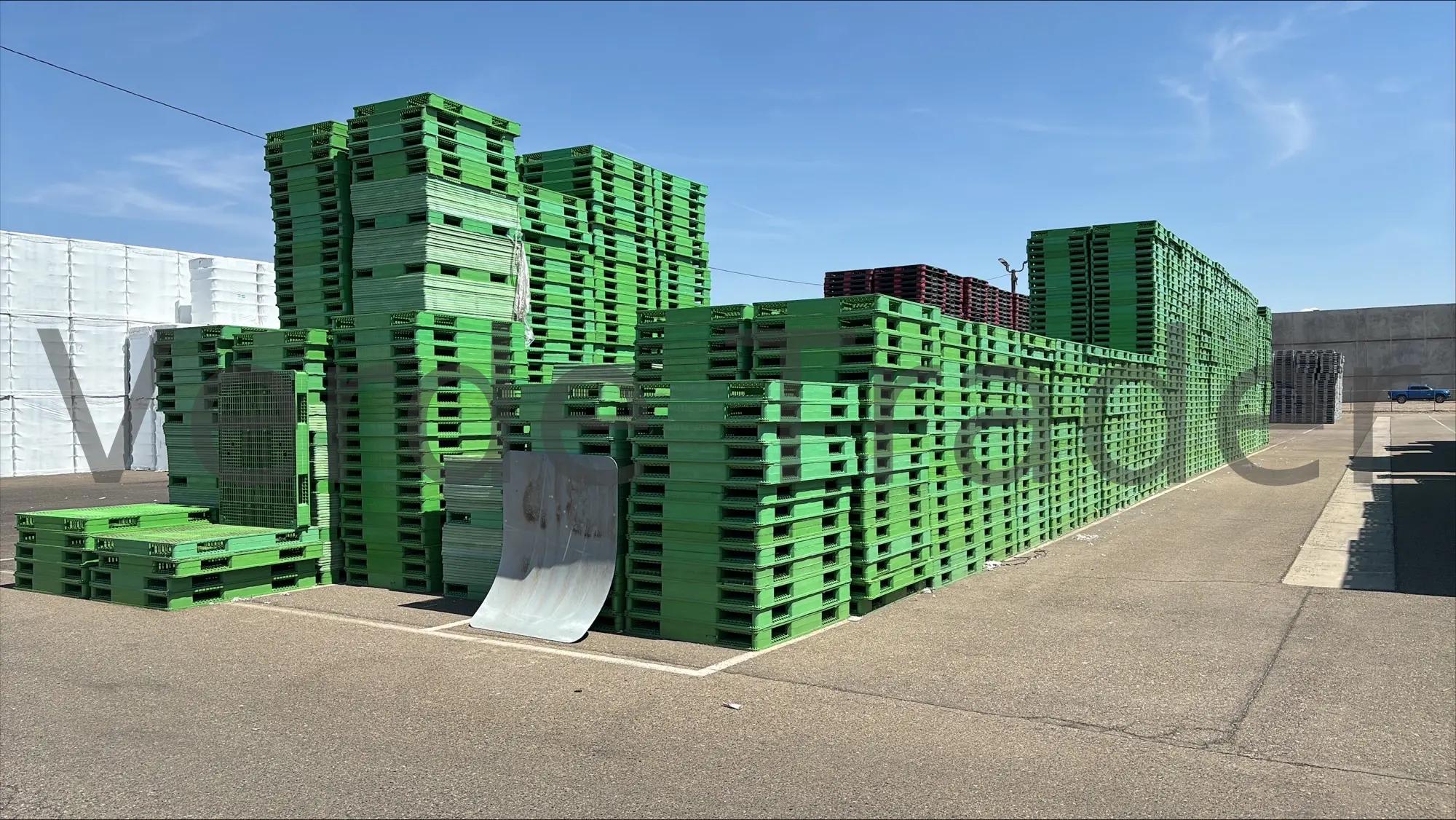
Grocery and food and beverage - 48x40
The 48x40 GMA size is the dominant standard in grocery and food and beverage supply chains. Most warehouse racking in these sectors is built around 48-inch beam spacing, and most stretch-wrapped unit loads in this industry are built to a 48x40 footprint. If you're buying plastic pallets for a grocery distribution center or food manufacturing facility, 48x40 is almost certainly what you need.
Beverage - 48x45
The beverage industry commonly uses several pallet footprints depending on the system, including 37x37, 32x37, 44x56, 48x40, and sometimes 48x45. Confirm the required footprint with the filler, distributor, pallet pool, or receiving program before ordering.
Dairy - 40x40
Dairy operations often use a 40x40 square footprint, which fits the standard dairy case and crate configurations used in milk and other refrigerated product distribution. The square shape allows for easy rotation without repositioning. Rehrig Pacific's Wide Stringer Dairy Pallet is one of the most commonly used products in this category.
Automotive - 45x48
Automotive parts distribution often uses a 45x48 footprint - essentially a rotated version of the beverage size. The slightly wider deck accommodates parts packaging configurations common in auto manufacturing. Greystone's Auto 45x48 pallet is a well-known product in this space.
Drums and chemical - 48x48
A 48x48 square pallet is a common starting point for 55-gallon drum loads. IBC totes are usually built on their own 40x48-style pallet base, so confirm the container footprint before selecting a plastic pallet. The square footprint centers the load evenly and prevents drums from overhanging the edge. Chemical and industrial applications favor plastic pallets in this size specifically because they don't absorb spills and can be cleaned or decontaminated more easily than wood.
Retail and display - 32x40
The 32x40 half-pallet size is used in retail display and pharmacy applications where a full 48x40 footprint is too large for the floor space. It fits standard retail gondola bays and is commonly used for point-of-sale displays, seasonal merchandise, and small-format retail replenishment.
Sources: Rehrig Pacific 40x40 Dairy Pallet; Monoflo International 48x45 Nestable; Greystone Pallets Auto 45x48; Greystone Pallets GS 48x48; Rehrig Pacific 32x40.
How to choose the right plastic pallet size
Most buyers come in knowing they need a plastic pallet but not which size. The right answer usually comes down to four things: your rack beam spacing, your load footprint, your handling equipment, and whether you're buying new or used.
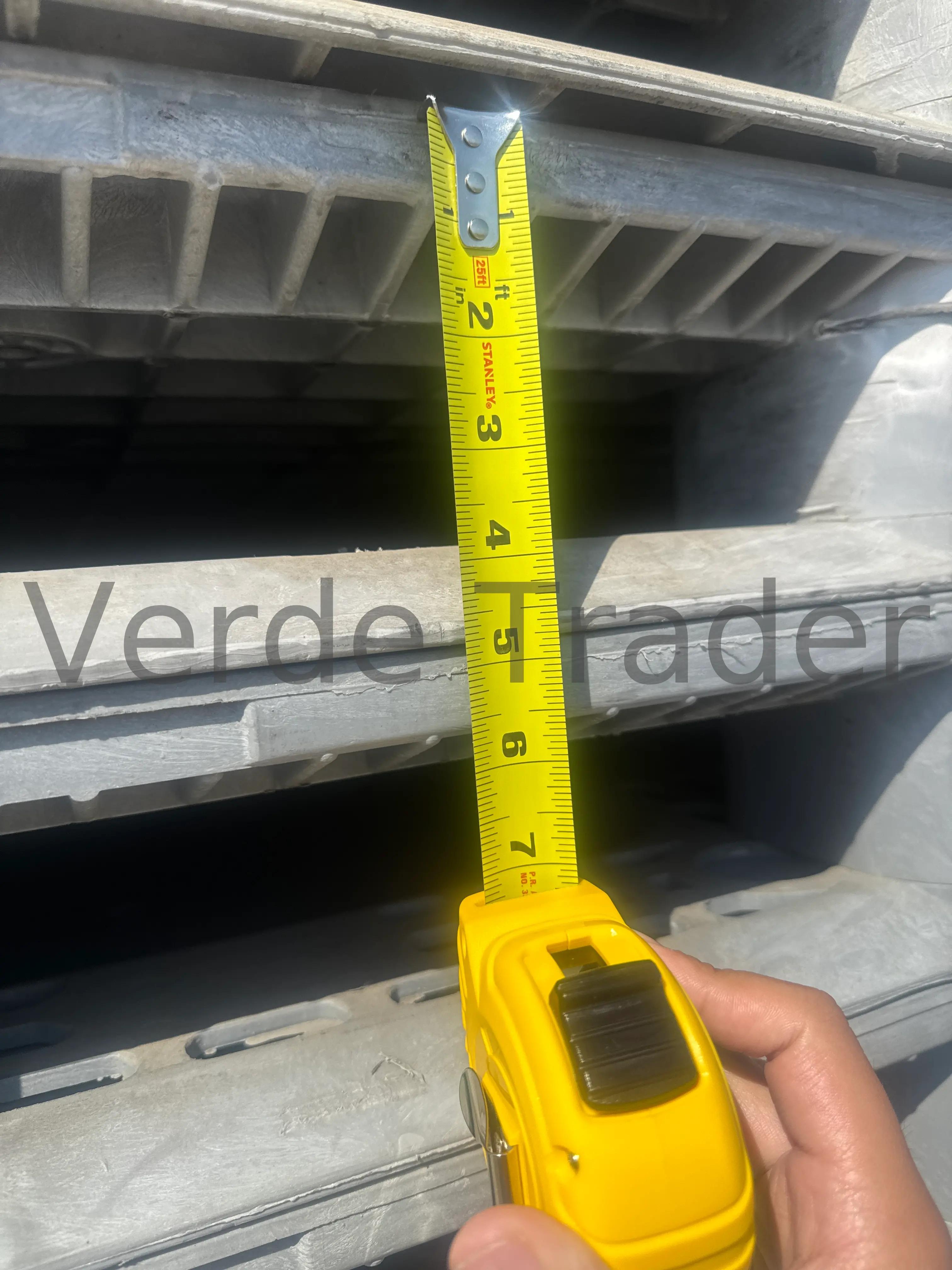
1. Match your rack beam spacing first
If your pallets are going into selective pallet racking, beam spacing is the first constraint. A common setup for a 48-inch-deep pallet is a 42-inch-deep rack frame, which leaves about 3 inches of pallet overhang at the front and back. Always confirm rack frame depth, beam length, beam capacity, pallet orientation, and the pallet's published racking rating before ordering. Measure your current beam spacing before ordering - if you're running a non-standard rack configuration, a 48x40 may not fit without adjustment. The pallet length should always span at least two beams with overhang on each side of no more than 4 inches per the standard racking guidelines.
2. Match your load footprint
The pallet should match or slightly exceed the footprint of the load being placed on it. A load that overhangs the pallet edge creates instability during transit and increases the risk of product damage. A pallet that's significantly larger than the load wastes deck space and can make stretch wrapping difficult. For most general warehouse applications, 48x40 accommodates standard case configurations. For drum loads, 48x48 is the correct match.
3. Confirm forklift and pallet jack compatibility
Standard forklift tines are 4 inches wide and typically 42-48 inches long. Most 48x40 and larger pallets accommodate standard tine widths without issue. The concern is tine entry clearance - the gap between the floor and the underside of the top deck. Nestable pallets with lower overall heights can have tighter entry clearance, which may not be compatible with all pallet jacks. Check the spec sheet for the tine entry dimension before ordering if you're running manual pallet jacks.
4. Factor in used market availability
If you're buying used, size availability matters as much as size preference. The used plastic pallet market is heavily weighted toward 48x40. Specialty sizes like 30x42, 32x37, and 45x48 come up far less frequently and typically at higher prices per unit. If your operation can work with 48x40, you'll have more options, better pricing, and faster turnaround. If you need a specific non-standard size, plan for a longer sourcing timeline and expect to pay a premium.
Based on Verde Trader transaction data and manufacturer spec sheets including iGPS Logistics, ORBIS Corporation, and Nelson Company.
Not sure which size fits your operation? Browse our plastic pallet listings or request a quote and we'll help you identify the right size based on your rack specs and load requirements.
Frequently asked questions about plastic pallet sizes and dimensions
What does "48x40" mean on a plastic pallet - is it length x width or width x length?
Pallet dimensions are typically listed length x width, so a 48x40 pallet is 48 inches long and 40 inches wide. However, manufacturers are not always consistent - some list the longer dimension first regardless of orientation, and others list width x length. When in doubt, check the spec sheet for the specific product. For racking purposes, what matters is confirming which dimension spans the beams, not just the numbers themselves.
Can I mix plastic pallet sizes in the same warehouse?
You can, but it creates complications. Different sizes may not fit the same rack beam spacing, making it difficult to standardize slot assignments. It also increases the risk of picking the wrong pallet for a given load. Most operations that run multiple sizes keep them in designated zones with clear labeling to avoid mix-ups.
Do plastic pallets come in metric sizes?
Some manufacturers produce pallets in metric dimensions for international markets. The Euro pallet standard is 1200x800mm (roughly 47x31 inches), and the ISO standard includes several metric footprints. In North America the market is almost entirely imperial. If you're shipping internationally and need metric-compatible pallets, confirm the exact dimensions against your destination country's racking and handling specs before ordering.
How do I measure a plastic pallet to confirm its size?
Measure length and width at the widest points of the top deck, not the runners or legs underneath. Some nestable pallets have legs that extend slightly beyond the deck edge, which can make the overall footprint slightly larger than the listed deck size. For height, measure from the floor to the top of the deck surface on a flat surface. Always compare your measurements against the manufacturer spec sheet if you're trying to confirm a specific model.
Are plastic pallets the same size as wood pallets?
The most common sizes overlap - 48x40 is the dominant size in both wood and plastic. However, plastic pallets are manufactured in a wider range of footprints than wood pallets, and their height and thickness differ significantly by type. A wood pallet is typically 5.5 to 6 inches tall. A plastic nestable pallet can be as low as 4.5 inches, while a rackable plastic pallet runs closer to 6 to 6.5 inches.
What is the smallest plastic pallet size commonly available?
The smallest sizes you'll regularly encounter in the market are 30x32 and 32x37 inches. These are specialty sizes used in closed-loop systems and specific industrial applications. They are not widely available in the used market. For anything below 40 inches in either dimension, expect limited availability and higher per-unit costs compared to standard sizes.
Sources
The sizing and specification data on this page comes from two places: manufacturer spec sheets for published dimensions and load ratings, and Verde Trader's own transaction records for availability and market context. They answer different questions, so we keep them separate.
Industry standards
- ANSI MH1-2021. The American National Standard for pallets, slip sheets, and other bases for unit loads. Defines pallet terminology, performance test methods, and dimensional standards referenced throughout this page.
- ISO 8611 (Parts 1-3). International standard covering flat pallets for materials handling, including performance requirements and test methods. Relevant for international size and load capacity comparisons cited in the metric sizes FAQ answer.
- ASTM D1185-98a(2025). Standard test methods for pallets and related structures employed in materials handling and shipping. Covers how pallet load capacity ratings are tested and defined - background for the load capacity figures cited on this page.
Manufacturer spec sheets
- Monoflo International - Nestable and Rackable Pallets spec sheet. Published dimensions, heights, and weights for nestable and rackable 48x40 and 48x45 plastic pallets. Used for the nestable and rackable size tables on this page.
- Rehrig Pacific - 40x40 Wide Stringer Dairy Pallet. Spec sheet for the standard dairy pallet. Source for the 40x40 dairy industry size reference.
- Rehrig Pacific - 44x56 LD Stackable Pallet. Spec sheet for the standard stackable pallet in the extended size range. Used for the stackable pallet size and height table.
- Rehrig Pacific - 32x40 Pallet. Spec sheet for the half-pallet size used in retail and pharmacy applications.
- Greystone Pallets - GS 48x48. Spec sheet for the 48x48 square pallet used in drum and chemical applications.
- Greystone Pallets - Auto 45x48. Spec sheet for the automotive industry 45x48 pallet.
- Monoflo International - 48x45 Nestable Pallet. Published dimensions and weight for the standard beverage industry nestable pallet.
- Monoflo International - 30x42 Nestable Pallet. Spec sheet for the specialty 30x42 nestable footprint referenced in the standard sizes table.
- iGPS Logistics - Pallet spec sheet. Published specifications for the iGPS 48x40 plastic pallet used in closed-loop pooling programs. Referenced for GMA standard size context.
- ORBIS Corporation - 40x48 Odyssey HD Open Deck. Product specifications for a widely used rackable plastic pallet. Referenced for rackable pallet size and load capacity context.
Our sales data (what we see in the market)
- Verde Trader sold-order data. More than 5,000 plastic pallet orders through mid-2026. Availability ratings and market frequency notes on this page come from these records. Archived and dead-deal orders are excluded.
