

Stackable Plastic Pallets Explained
What stackable actually means, how it's built, and when it beats nestable or rackable.
Published October 14, 2026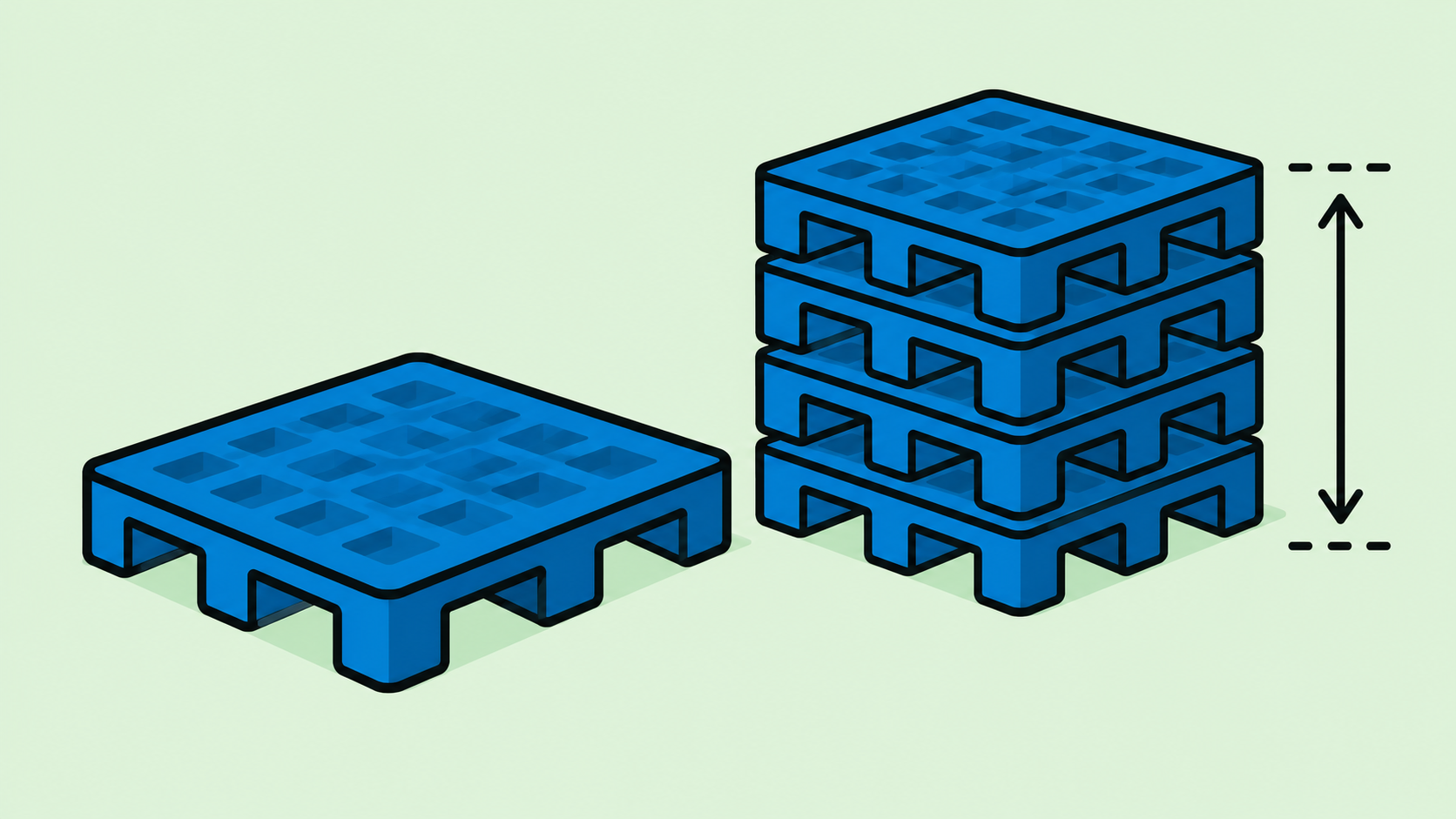
By John Anderson, Owner of Verde Trader
10+ years buying and selling used industrial packaging.
A stackable plastic pallet is built to carry a loaded pallet directly on top of it, floor to ceiling, without a rack underneath. That single design requirement, full support with no gaps, is what separates it from a nestable pallet made for empty storage or a rackable pallet made to span open beams.
We sell and recycle plastic pallets across every stacking style, so we see firsthand which designs hold up and which ones get returned as damaged. This page breaks down what makes a pallet stackable, how it differs from nestable and rackable designs, and when it is the right call for your operation.
The short version
- What it means: a solid, flat-decked pallet designed to be loaded and then stacked directly on another loaded pallet, floor to ceiling.
- Not the same as nestable: nestable pallets are built to nest into each other empty to save space, not to carry stacked loads.
- Not the same as rackable: rackable pallets are reinforced to span open rack beams with no support underneath, which most stackable pallets are not built for.
- Common footprint: 48" x 40" is the most common size, though stackable pallets are made in many footprints.
- Where it's used: floor storage and warehouses without racking, where vertical stacking is how space gets saved.
What makes a pallet stackable
A stackable pallet is built around one job: hold a full load, then take another loaded pallet directly on top of it. That means a solid or evenly ribbed deck with no soft spots, and a bottom surface designed to interlock with the top of the pallet below it so a stacked load cannot slide or walk during handling.
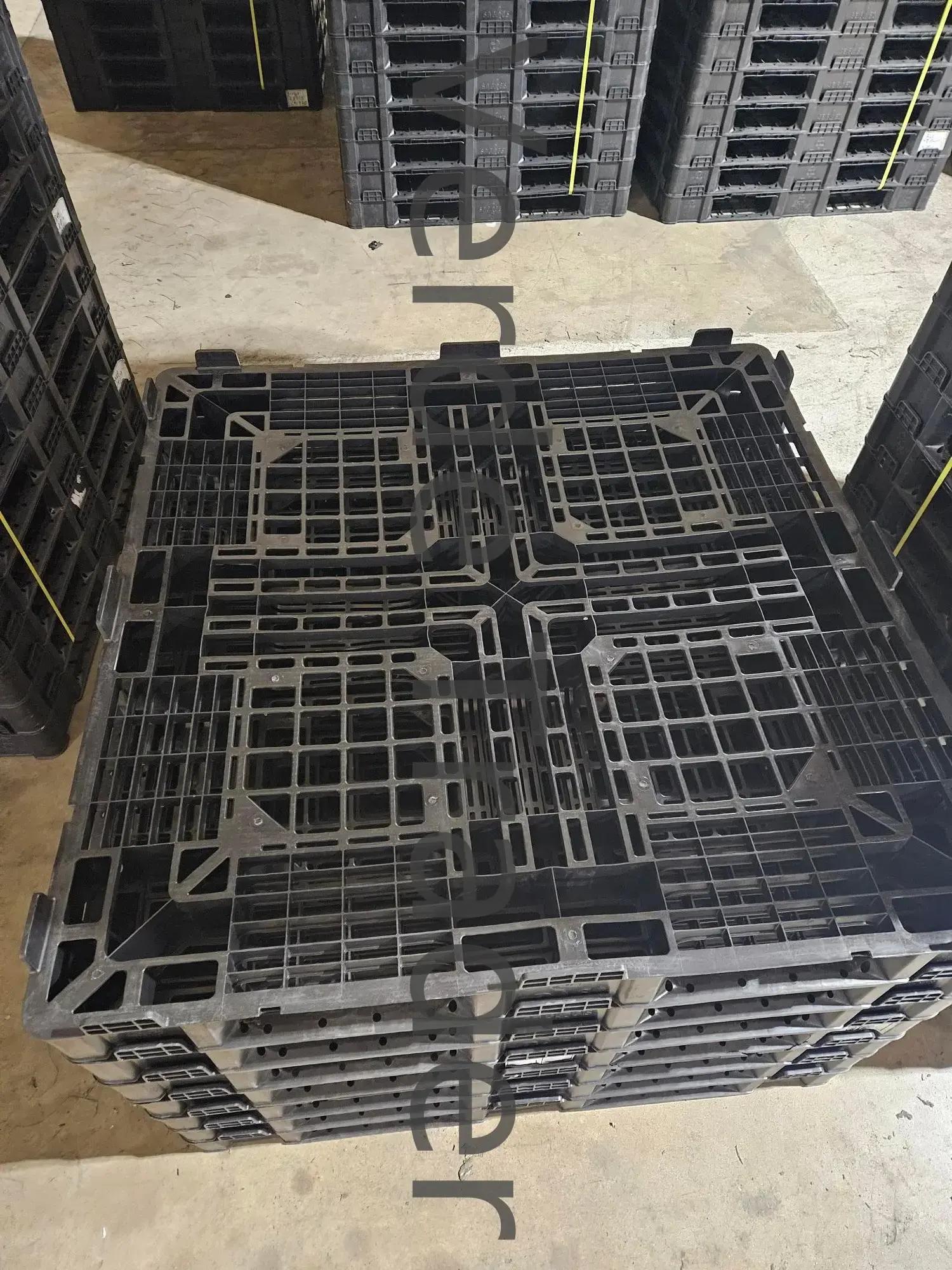
Most stackable pallets use a grid of feet or short runners rather than the full-length runners on a rackable pallet. The feet sit inside the top rim of the pallet beneath it, which is what keeps a stack square instead of leaning. This is also why stackable pallets do not need a rack: the floor, or the pallet underneath, is the support.
The 48" x 40" GMA footprint is the most common size in this category because it matches standard rack, truck, and dock dimensions across the U.S. supply chain, but stackable pallets are made in plenty of other footprints for specific loads and industries.
How stacking height and safety work
There is no single "safe stacking height" that applies to every stackable pallet. The real limit is the pallet's static load rating, how evenly the load sits on the deck, and how level and firm the floor underneath is. A pallet rated for a heavy static load can safely carry several loaded pallets above it; one rated lighter cannot, even if it looks identical.
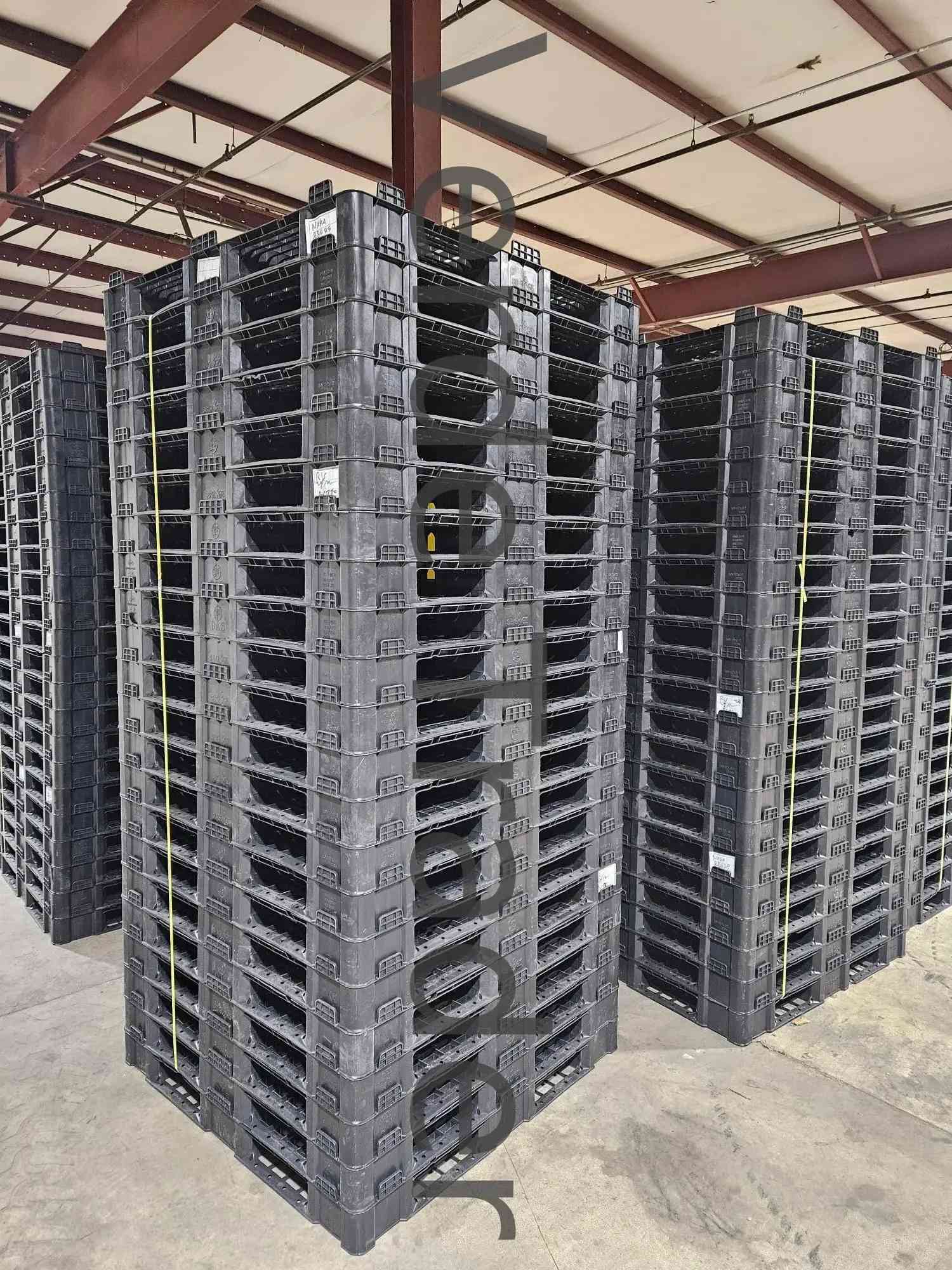
A few things determine whether a stack is actually stable, not just tall:
- Load distribution. A load spread evenly across the deck stacks far more predictably than one concentrated in the center or on one side.
- Column alignment. Each pallet in the stack should sit squarely on the one below it so weight transfers straight down through the interlocking feet, not at an angle.
- Floor condition. An uneven or sloped floor throws off every pallet above it, even if each individual pallet is rated correctly.
- Manufacturer rating. The static load number on the spec sheet is the ceiling for that model. It is not a suggestion.
For the actual static, dynamic, and rack load numbers by pallet style, we cover that in detail in how much weight can plastic pallets hold.
Calculating how high a stack will actually reach
Load rating tells you how many pallets you are allowed to stack. It does not tell you whether that stack fits your building. A separate calculation, one warehouses skip more often than they should, is the physical height math: pallet height, plus load height, multiplied by the number of units in the stack, has to clear your ceiling, your sprinkler heads, and your forklift's mast lift height, with margin to spare.
Stackable plastic pallets typically run 6.0 to 7.5 inches tall. On a load stacked four units high, that pallet height alone adds 24 to 30 inches to the total stack, before counting a single inch of product. In a facility with 20-foot clear height and standard 18-inch sprinkler clearance requirements, that pallet height difference can be the deciding factor in whether a fifth stacked unit fits at all.
Before committing to a stacking plan, run the math with your actual pallet height, your tallest expected load height, your ceiling clearance, and your forklift's maximum lift height, not just the static load rating on the spec sheet. For overall height figures across pallet types, see our sizes and dimensions guide.
When stackable pallets make the most sense
The deciding factor is almost always your storage setup, not your industry. Stackable pallets tend to be the right call in a few specific situations:
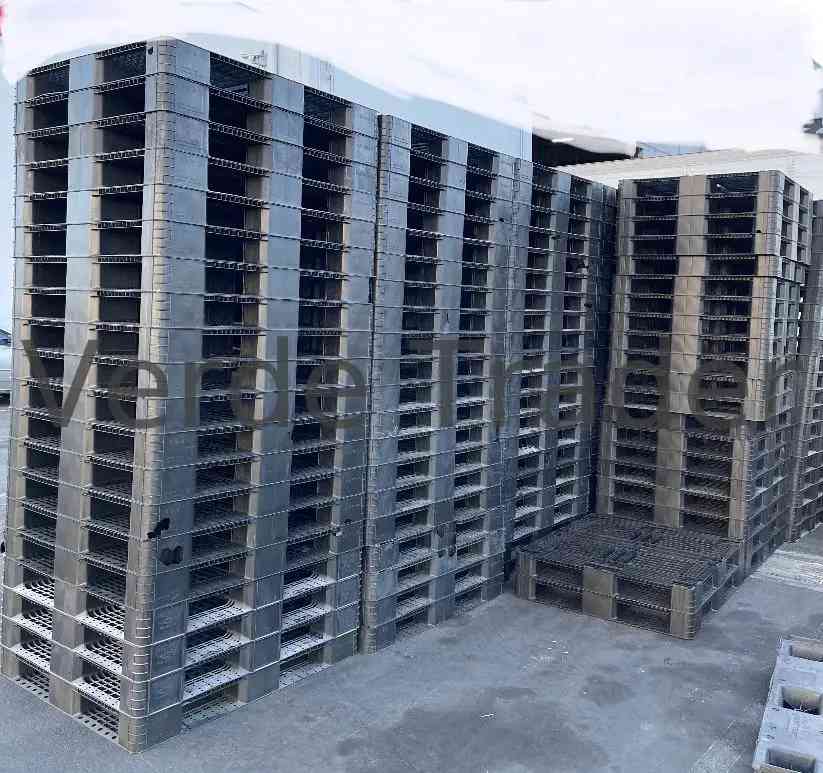
- No racking infrastructure. If your facility stores product on the floor rather than in rack beams, stackable is built for exactly that.
- Overflow or seasonal storage. Stacking loaded pallets straight up is a fast way to add vertical storage without installing racking.
- Simpler handling needs. Stackable pallets are generally lighter and less expensive to produce than rackable pallets, since they skip the reinforced runners a rack beam requires.
- Closed-loop pooling between stops. Pallets that get loaded, shipped, unloaded, and restacked on the floor at each stop benefit from a design made to stack safely without a rack at either end.
If your facility runs pallet racking, a rackable pallet built to span open beams is usually the safer fit. If you are shipping empty pallets back and forth, nestable saves freight space that stackable cannot.
Pros and cons of stackable pallets
Pros
- Lower cost to produce. Simpler deck and foot design than a rackable pallet, which usually means a lower purchase price.
- Maximizes floor space. Lets a facility go vertical without the capital cost of installing pallet racking.
- Stable, predictable stacking. The interlocking foot design keeps a stack square, which reduces shifting during handling.
Cons
- Not rack-compatible. Most stackable pallets are not reinforced to span open rack beams safely.
- No space savings when empty. Unlike nestable pallets, stackable pallets do not collapse or nest down when there is no load on them.
- Stack height still has a real ceiling. Vertical storage is a benefit, but it is still capped by the pallet's static load rating and floor conditions.
Frequently asked questions about stackable plastic pallets
Can you mix different brands or models of stackable pallets in the same stack?
It's not recommended. Foot and deck patterns vary between manufacturers, so a pallet from one brand may not seat evenly on a different brand below it. Mismatched patterns increase the chance of a stack shifting, even when each pallet is individually rated for the load.
What happens if you stack loads above a pallet's rated capacity?
The pallet can deflect, crack, or fail outright, and the risk compounds with every pallet added above it. Overloading also shortens the pallet's usable life even when it doesn't fail right away, since repeated stress beyond the rating weakens the material over time.
Are stackable plastic pallets food and FDA safe for stacked storage?
Pallets made from FDA-compliant HDPE or polypropylene resin are approved for direct food contact and are commonly used in floor-stacked food and beverage storage. Stacking itself doesn't change the food-safety rating, but the pallet still needs regular cleaning and inspection in that kind of environment.
Can stackable pallets be used outdoors or in unheated storage?
Yes, but temperature affects performance. Cold makes plastic stiffer and more prone to cracking under sudden impact, while heat can soften it and reduce load capacity. If pallets sit outdoors or in an unheated space, it's worth checking the manufacturer's temperature range before stacking to full capacity.
How do you tell if a pallet is stackable just by looking at it?
Check the underside. Stackable pallets have a grid of feet or short runners that sit fully on a flat surface, rather than full-length runners built to span open beams (rackable) or tapered legs built to nest into another pallet (nestable).
How long do stackable plastic pallets typically last in floor-stack use?
Plastic pallets generally outlast wood in repeated floor-stack cycles since they don't absorb moisture or splinter, but actual lifespan depends on load levels, handling, and how often the rated capacity gets pushed. Regular inspection for cracking or foot wear is the best way to catch a pallet before it's stacked past its useful life.
Sources
This page stands on three legs: the industry standard that defines what stackable actually means, manufacturer spec sheets for real stackable pallet designs, and Verde Trader's own sold-order records. They answer different questions, so we keep them separate.
Industry standards (what is defined)
- ANSI MH1-2021. Pallets, slip sheets, and other bases for unit loads. The industry standard that defines pallet terminology, including how stackable, nestable, and rackable are distinguished from each other.
- ISO 8611 (Parts 1 to 3). Pallets for materials handling, flat pallets, test methods. Covers how pallets, including stackable designs, are tested for load and stacking performance.
Manufacturer specifications (stackable pallet designs)
- Rehrig Pacific, 44 x 56 LD Stackable Pallet spec sheet. A real stackable pallet design, used as a reference for deck and foot construction described on this page.
- Rehrig Pacific, 44 x 56 High Deck Stackable Pallet spec sheet. A second stackable model, used to confirm that the interlocking foot pattern described on this page is consistent across stackable designs.
Regulatory and testing standards
- ASTM D642. Standard test method for determining compressive resistance of shipping containers, components, and unit loads. Relevant to how stacking and static load performance are actually measured.
- ASTM D6179. Standard test method for rough handling of unitized loads and large shipping cases and crates. Background for the handling and stability points covered in the stacking safety section.
- U.S. FDA, packaging and food contact substances. The basis for the food-safety FAQ answer on this page regarding FDA-compliant HDPE and polypropylene pallets.
Our sales data (what people actually pay)
- Verde Trader sold-order data.
