

What is a 4-runner plastic pallet?
What the label means, the two designs behind it, and what to confirm before you buy
Published October 21, 2026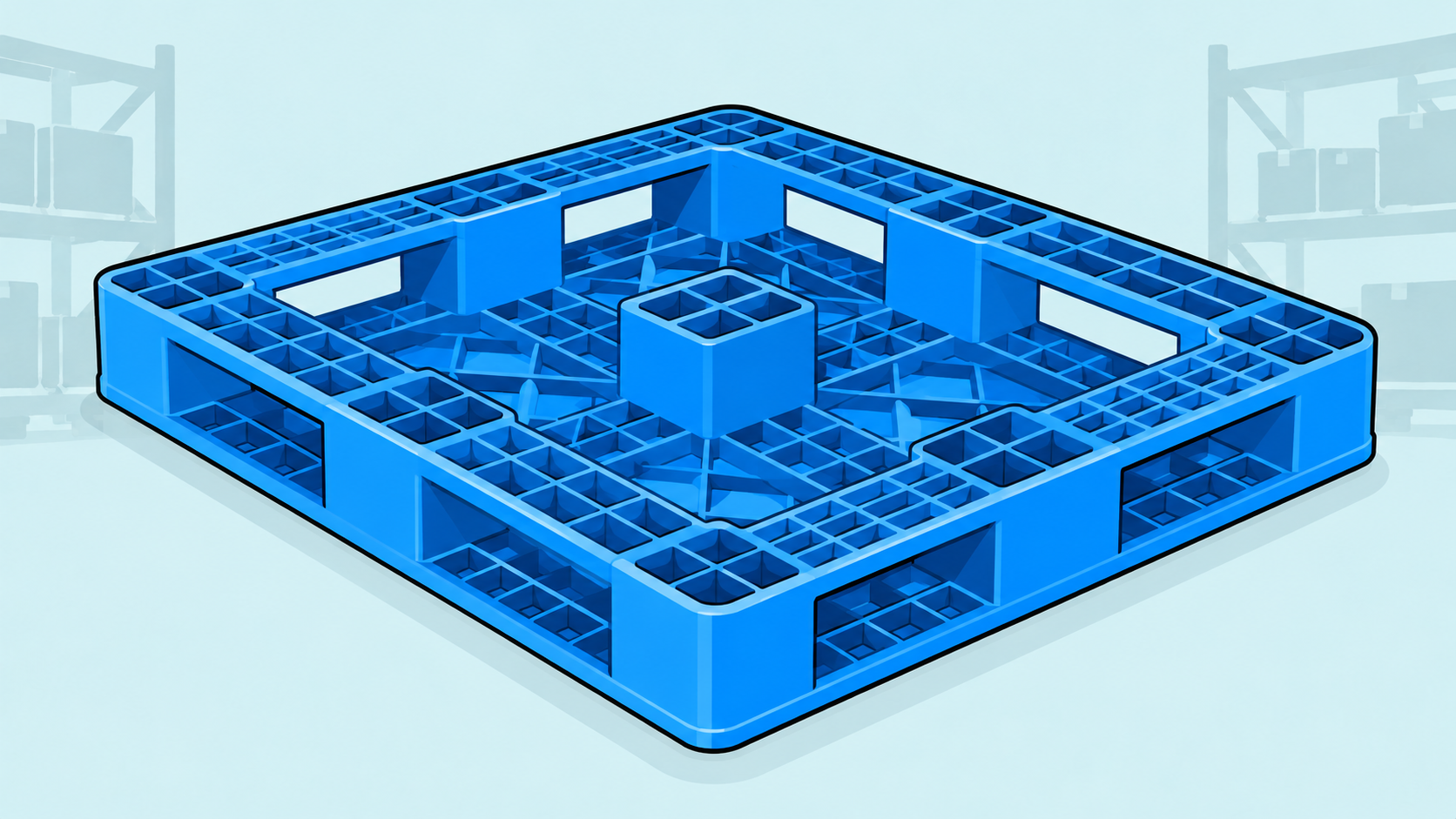
By John Anderson, Owner of Verde Trader
10+ years buying and selling used industrial packaging.
A 4-runner plastic pallet is a label, not a standard design. It appears on nestable pallets sold under a 4-runner name, and some sellers also use it for picture-frame pallets, which have a frame of runners around the base. The two are built and rated differently, and neither should be confused with a pallet that has 4-way entry. For the simpler bases, see our guides to 2-runner and 3-runner pallets.
I have spent more than 10 years buying and selling used industrial packaging, so I look at pallets the way a buyer does: how they are built, how they are handled, and what they are rated to carry. This page explains what the label means, how the two designs are built, how they compare with other bases, and what to confirm before you buy one.
The short version
- Build: A label used on two kinds of pallet: nestable pallets sold as 4-runner, and picture-frame pallets with a frame of runners around the base.
- Entry: Many listings show 4-way entry, but some do not say, and some limit hand trucks to two sides. The runner count alone does not tell you.
- Typical range: Full-size models only. Nestable: about 17 to 22 lb, 2,500 to 3,000 lb dynamic, 6,000 to 10,000 lb static. Picture-frame: about 35 to 59 lb, 4,000 to 6,000 lb dynamic, 10,000 to 30,000 lb static.
- Rating note: Rack ratings are a fraction of static ratings: about 2,200 to 2,500 lb on the nestable models and 600 to 4,400 lb on the picture-frame models, using the lowest figure printed for each.
- Best fit: Nestable: empty pallets that must be stored or returned in compact stacks. Picture-frame: loads that go into racks, once the rack rating matches the load.
How a 4-runner plastic pallet is built
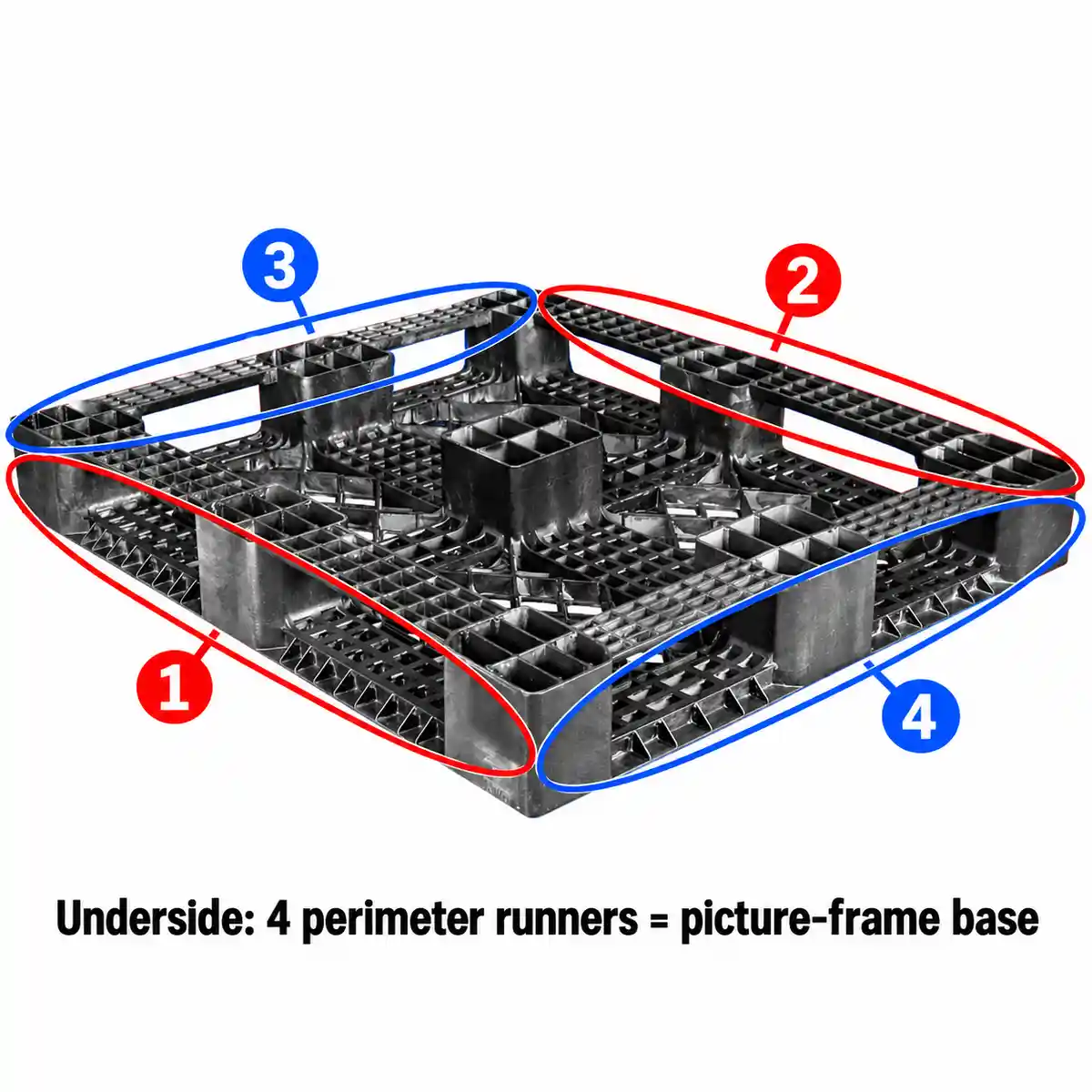
Every plastic pallet has a top deck, a base that lifts the deck off the floor, and the resin it is molded from. On a 4-runner pallet, the base is the part the name describes.
The 4-runner pallets that are most common that I could confirm have a picture-frame base. It wraps a frame of runners around the outside edge, which some makers describe as runners on all four sides, and some add cross members. Only some 4 runner plastic pallets are listed as nestable.
No standard defines the layout, so the ranges below come from makers' own listings. For how deck style and base design affect ratings in general, see our guide to how much weight plastic pallets can hold.
Full-size (48 x 40 in) models only. Rack figures use the lowest value printed for each model, and the top of the rack range is for models with reinforcing rods. Ratings vary by model and load conditions.
A 4-runner name does not guarantee four runners. In one spec table I checked, a pallet sold under a 4-runner model name lists three runners under the base. Treat the name as a label, not a count.
How a 4-runner base compares with other bases
The runner count is shorthand for how a base is built, and it changes how a pallet is entered, nested and racked. The table sets the two 4-runner designs next to the other full-size bases a buyer might be weighing. It compares designs and does not rank them. For how racking works, see our guide to rackable pallets.
Swipe sideways to compare the other designs.
Full-size models only: 48 x 40 in, except the 2-runner figures, which are for 1200 x 1000 mm (about 47 x 39 in) models. Rack figures use the lowest value printed for each model. Ranges come from the models checked, and individual models vary.
Against a 2-runner pallet, the picture-frame design lists higher dynamic and static ratings in the models checked, and the nestable design lists higher rack ratings. Going the other way, a 2-runner pallet lists lower ratings than the picture-frame design, and its entry is not always stated, so confirm it. Our 2-runner guide covers that base.
Against a 3-runner pallet, the picture-frame design overlaps on weight and ratings, so the runner count tells you more about layout than about strength. One difference to confirm is entry: a 3-runner pallet is 4-way only if its runners are notched, while many 4-runner listings state 4-way entry. Our 3-runner guide covers how that varies.
Pallet guides also use the word skid for some of these bases. One pallet pool's guide calls 3-runner pallets technically skids because they have no bottom deck and says the same of nine-legged pallets. The pallet test standard also uses the word in its scope. A listing that says skid may point to a runner or leg base, but it does not say how many runners.
Some sources call a picture-frame base a six-runner or cruciform base, so the picture-frame column and the 6-runner column can describe the same pallet. Compare the base description and the specs, not the runner count.
Where a 4-runner pallet works
Where a 4-runner pallet works depends on which design it is. The fits below come from what makers list for each design and from how pallet guides describe 4-way pallets in general, so read them as common uses rather than guarantees for any one pallet.
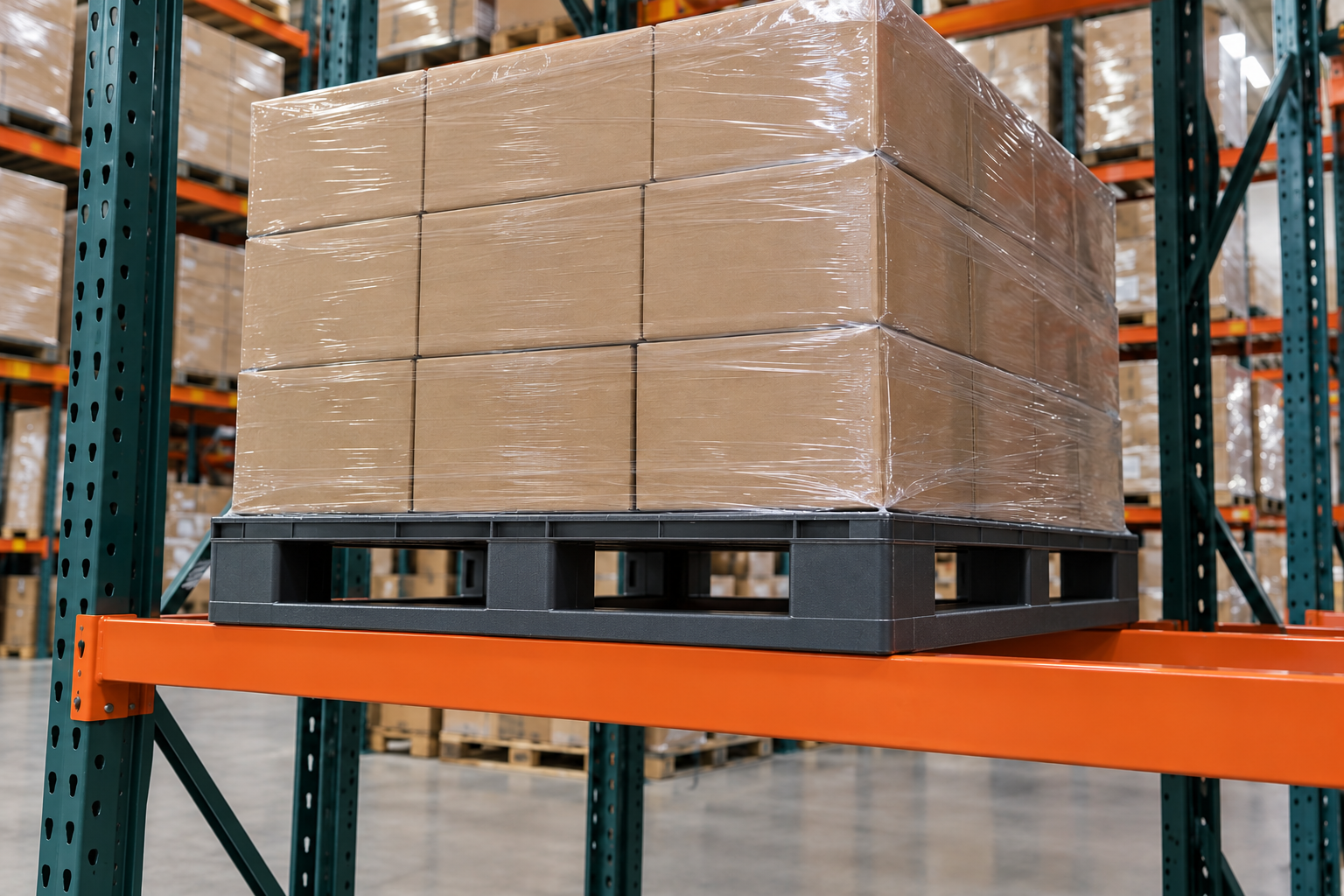

Uses are drawn from what makers list and from guides on 4-way pallets in general. They are not a rating for every 4-runner pallet.
The two designs fit different jobs. Picture-frame pallets suit heavy racked and conveyed loads, and nestable pallets suit loops where empties need to stack compactly.
Where a 4-runner pallet falls short
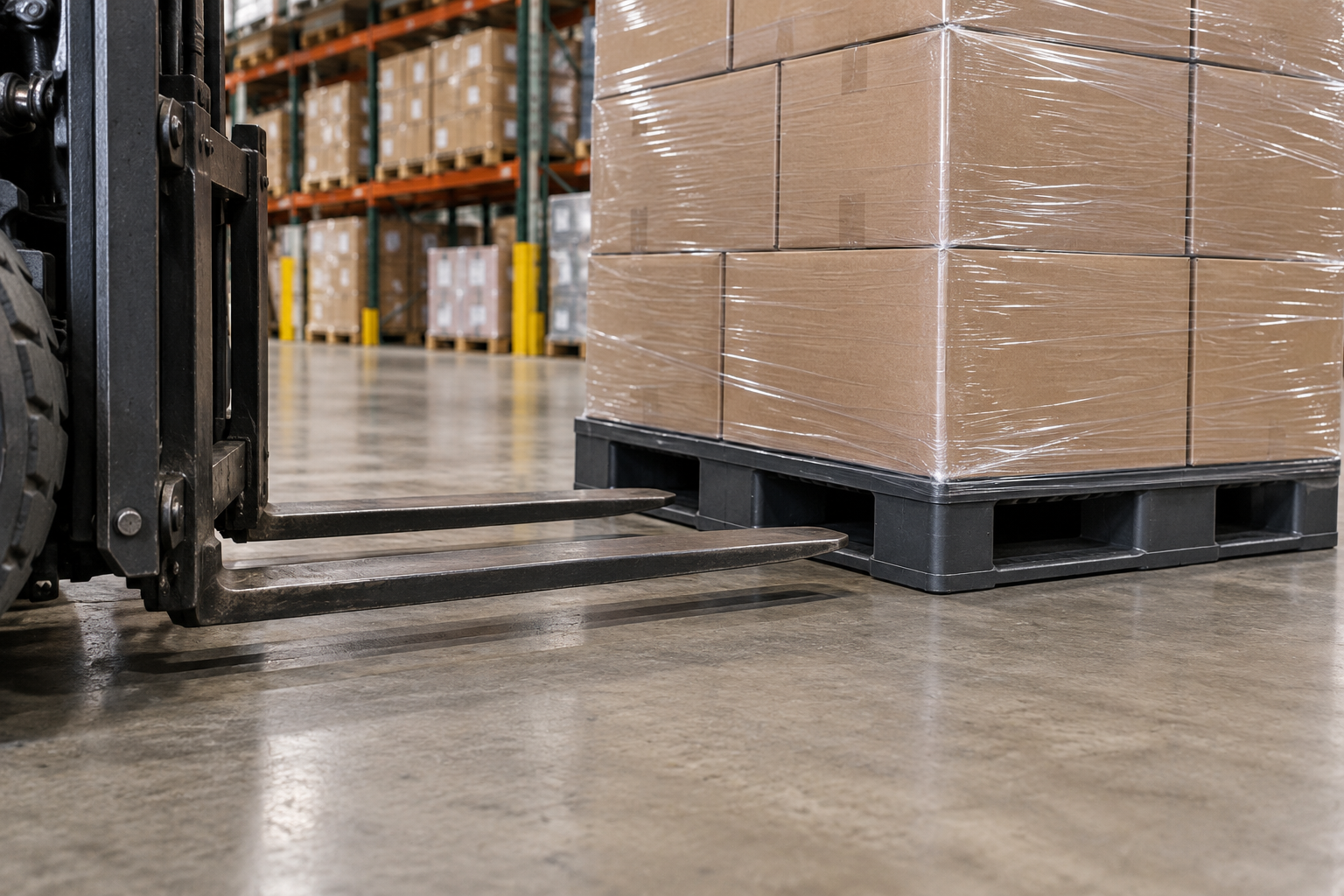
Most of the shortfalls come down to how a listing states entry and racking, and to the trade-off each design makes between weight, strength and nesting.
The rack rating is usually the tightest number. In the models checked, it is at or below the dynamic rating, and on picture-frame models it is no more than a fifth of the static rating. Some makers print more than one rack figure, or only an edge-rack figure, and some state a direction, so a single figure rarely tells the whole story.
Full-size models only. Rack figures use the lowest value printed for each model, and individual models vary.
These limits are where two pallets with the same label differ most: entry, rack rating and nesting. The 4-runner name tells you none of the three.
What to check before you buy
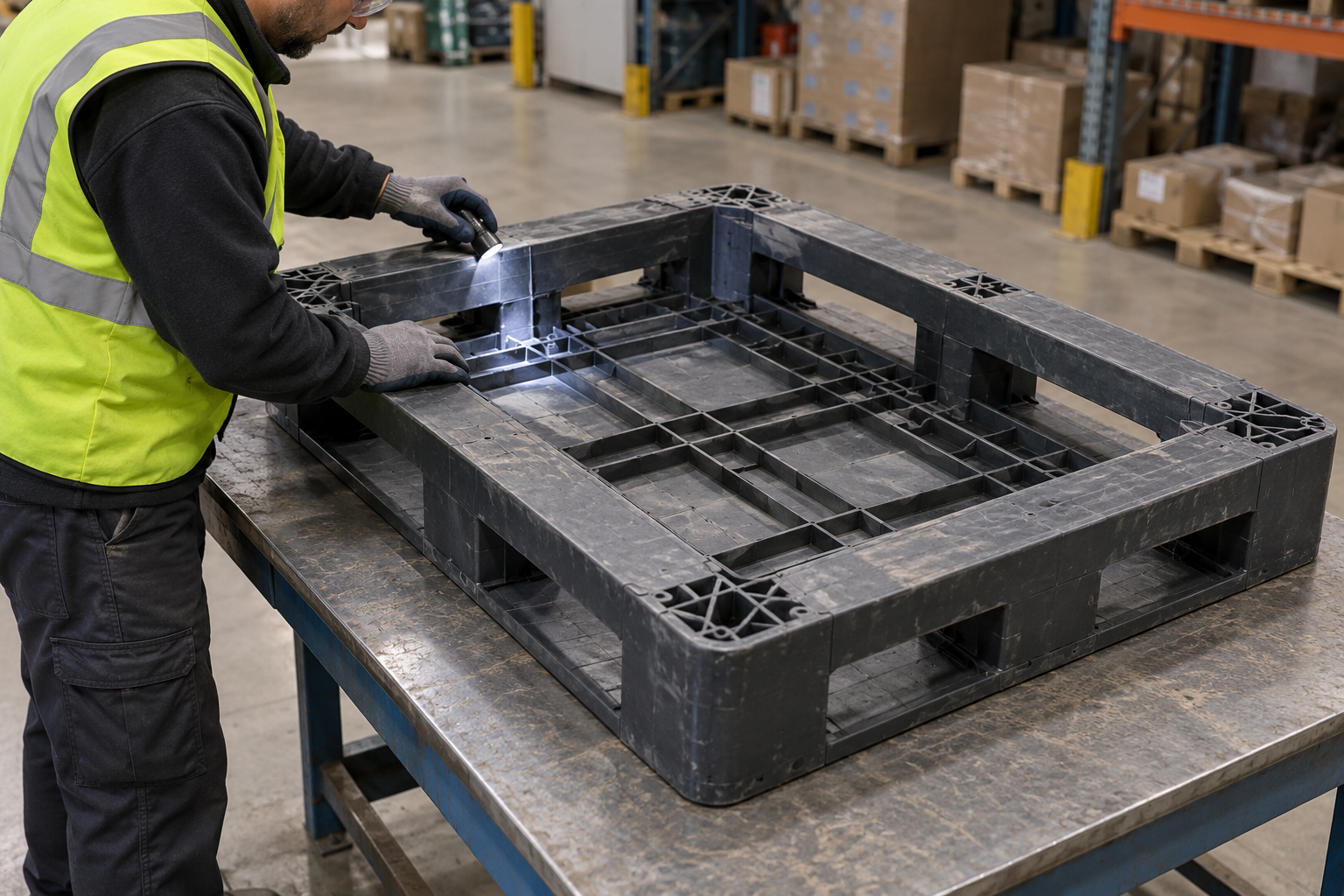
A 4-runner pallet adds a few checks to the usual buying list. For the usual ones, such as reading the three load ratings, deck style and food-grade needs, see our guide to what to check before you buy plastic pallets.
The checks below cover what the 4-runner label leaves open. Where a seller can put the answers on a spec sheet or in writing, keep them with the order, because two pallets sold under the same label can differ on every point.
Two pages for the same pallet family can disagree. In the listings checked, some makers print different rack figures for the same family on different pages or sheets, so ask which sheet is current.
Frequently asked questions about 4 runner plastic pallets
How can I tell which kind of 4-runner pallet a listing means?
Look at the words around the label. In the listings checked, the model codes 4R and 4RB appeared only on nestable pallets, while the picture-frame pallets were described as picture frame or cruciform. A nesting count also points to the nestable design, because picture-frame pallets are not listed with one. Weight is another clue: the heaviest nestable model checked weighs well under the lightest picture-frame model. These are clues, not proof, so ask the seller which design it is before you order.
Can I mix both kinds of 4-runner pallet in one stack or rack?
It is best not to. The two designs differ in height by about an inch, in weight, and in rated load, so a mixed stack or rack position is only as strong as its weakest pallet, and uneven heights can make a load sit unevenly. If a lot sold as 4-runner turns out to hold both designs, sort them into separate groups before you put them to work.
Can I stack loaded 4-runner pallets?
Work from the static rating, which is the load a pallet can hold when it is not moving. In a stack, the pallet at the bottom carries the weight of everything above it, and some listings say their ratings assume the load is spread evenly. The nestable listings I checked give a static rating but no stack height for loaded pallets, so ask the seller for the stacking limit and keep the total below the rating with some margin. For more on stacking, see stackable plastic pallets explained.
Why do two listings for the same 4-runner pallet show different weights?
Weights printed for the same model or family can differ by a few pounds from one page or sheet to the next, and some listings give a range instead of one figure. If freight cost or a hand-lift limit matters, ask the seller for the weight of the exact pallet you will receive.
Can I buy used 4-runner pallets?
Yes, but a used pallet may not match the figure printed for a new one of the same model, because age, damage and repairs can all affect how much a pallet carries. Plan your loads below the printed rating, and get the design, entry and rack figure confirmed for the batch you are buying, since pallets sold under the same label can differ on all three. For the full buying list, see before you buy plastic pallets.
Sources
This page draws on two test standards, manufacturer spec pages and pallet pool guides. Ranges cover full-size models only (48 x 40 in, or 1200 x 1000 mm where noted). Where a page prints more than one rack figure, or two pages disagree, the lower figure is used. Kilogram figures are converted to pounds and rounded. Manufacturer pages were accessed October 2026. An asterisk marks a sheet hosted by a shop, dealer or catalog rather than the maker.
Industry standards and research (what is defined)
- ISO 8611-1:2025: Pallets for materials handling, flat pallets, Part 1: Test methods. Test methods for flat pallets. It does not mention runner counts or base designs. With ASTM D1185, the source for the statement that no standard defines either design.
- ASTM D1185: Standard test methods for pallets and related structures employed in materials handling and shipping. Static and dynamic test methods (current listing D1185-98a(2025)). Its scope names skids, bases, platforms and bins. A test method, not a design definition.
Manufacturer specifications
- Cabka: NestRack US OD-4R; Nest US5 OD-3R, OD-6R and OD-9F; Eco i5 OD-3R and OD-5R; Endur i9 OD-5R. Nestable, 3-, 5- and 6-runner and nine-legged models: weight, entry, loads, pallets per stack and per US truck. The NestRack table lists three runners under its 4R name. Eco i5 and Endur i9 are 1200 x 1000 mm. Racking with no printed unit is read as kilograms.
- Rhino pallet, sold through the Snyder Industries shop*: RHPIM4840SLW-4RB product page; brochure. Nestable pallet: weight, material, loads, a 2,500 lb rack rating stated for the 48 inch direction, 60 per stack, 1,800 per 53-foot trailer, 42 inch deep racks. The listing says 4-Runners, the brochure only the -4RB suffix.
- Dolav USA: RACX; RACX HD; RACX-HD with three rods and plugs; RACX-HD solid deck three-runner. Picture-frame pallets with runners "on all four sides", 4-way entry, HDPE, weight and loads, plus one 3-runner base. RACX HD reinforced rack figures have no units, so the standard version is used. Weights with no unit are read as pounds, except on the 3-runner page, where the weight is not used.
- Decade Products, sheet hosted by Cisco-Eagle*: picture-frame pallet sheet. Same RACX family. Its 2,200 lb unsupported rack figure differs from Dolav's 600 lb, and the lower is used.
- Rehrig Pacific: 40 x 48 rackable pallet. "Full picture frame and cruciform bottom", four-way entry, copolymer polypropylene, weight, loads, automated handling wording. Rack figure is labeled edge rack.
- ORBIS: RackStar II 40 x 48; Odyssey HD closed deck; Odyssey 3-Runner. Weight, loads and entry where stated. Edge and supported rack figures are both printed, and the lower is used. Odyssey HD offers "Full Picture Frame bottom or 3-runner style" under one model name. RackStar mentions picture frame only in a photo caption.
- Craemer: E3 and E3-5. 3- and 5-runner weight, loads and "in racking" figures. Entry is not stated, and the rack footnote is empty.
- Greystone: GS 48x40 6 runner; GS MVP 48x40 6 runner; WDP 48x40 5-runner; Nestable 3 Runner; GS 48x40 6 runner data sheet, hosted by the Snyder Industries shop*. 5- and 6-runner and nestable 3-runner models, with and without rods: weight, loads, racking. The shop-hosted sheet prints higher racking and weights than Greystone's own page, and the lower are used.
- Buckhorn: PM48400633; PU48400633. 6-rail pallets: weight, loads, edge rack; PU is a 4-way entry design. The PM page says capacity assumes evenly distributed loads and depends on application and use environment, that elevated temperatures and concentrated loads can affect it, and recommends testing for unsupported edge rack use.
- Naeco Packaging: FLAT 1210-C2, DirectIndustry catalog*; FLAT 1210-C9, Empack trade-fair page*. 2-runner and nine-legged models in 1200 x 1000 mm: weight and loads. The C2 icon legend reads "Closed 4-way entry", so entry is treated as not stated.
- Inka Palet: IKP1991012CD2R. 2-runner, 1200 x 1000 mm: loads rated evenly distributed at 20 C. Entry and new-or-used status are not stated.
Terminology and background
- iGPS: Plastic Pallets: Your Definitive Guide. Three-runner and nine-legged pallets being technically skids, notched runners for 4-way entry and solid for 2-way, 6-runner pallets also called cruciform or picture frame, nine legs letting pallets nest. General guidance, does not use the term 4-runner.
- iGPS: The 4-Way vs. the 2-Way Pallet: How to Choose a Pallet Type. How 4-way and 2-way pallets differ for jack entry, forklift repositioning and conveyor or automated handling. General, not 4-runner specific.
- iGPS: Static Load Vs. Dynamic Load: Demystifying Pallet Load Ratings. Definitions of static, dynamic and edge-rack ratings, capacity coming from material and basic design, and age, damage and repairs affecting capacity. Compares wood and plastic in general.
No standard or pool guide checked defines the term 4-runner, and the maker pages checked use it only on the nestable pallets. The overview's remark that some sellers also use it for picture-frame pallets rests on seller listings not cited here.
