

What Are Plastic Pallets?
The foundation: what they are, what they're made of, and how they ended up in every warehouse in the country.
Published October 14, 2026
By John Anderson, Owner of Verde Trader
10+ years buying and selling used industrial packaging.
A plastic pallet is a flat, rigid platform made from molded polymer, most commonly high-density polyethylene (HDPE) or polypropylene (PP), used to support, store, and move goods through a supply chain. It does the same job as a wooden pallet: it gives a forklift, pallet jack, or conveyor system a consistent interface for lifting and transporting a unit load. The difference is in the material. Plastic pallets don't absorb moisture, don't splinter, don't harbor pests, and don't vary in weight or dimension the way wood does. Those properties are why they show up in food processing, pharmaceutical manufacturing, automated distribution centers, and international export shipping.
We buy and sell plastic pallets every day at Verde Trader. This post covers the fundamentals: what plastic pallets are, where they came from, what they're made of, how they're built, and where they fit in the supply chain. Each section links out to the deeper posts on this site where you can go further on any specific topic.
Key takeaways
- What they are: rigid molded polymer platforms used to support and move unit loads - the plastic alternative to a wooden pallet
- Main materials: most are made from HDPE or polypropylene (PP), either virgin or recycled resin
- How they're built: molded as a single piece or assembled from molded components - not nailed or assembled from lumber like wood pallets
- Key properties: moisture resistant, non-porous, no nails or splinters, consistent weight and dimensions across units
- Where they're used: food and beverage, pharmaceutical, export shipping, and automated warehousing - anywhere hygiene, consistency, or ISPM-15 exemption matters
What is a plastic pallet?
A plastic pallet is a flat, rigid platform used to support, stack, and move goods through a supply chain. It gives forklifts, pallet jacks, and conveyor systems a standardized interface for lifting and transporting a unit load - a single, stable bundle of product that can be moved as one piece. The pallet is what makes that possible. Without it, every box, drum, or bag in a warehouse would need to be handled individually.
The plastic version does the same job as a wooden pallet but is manufactured differently, from different materials, and with different performance characteristics. A plastic pallet is molded from polymer resin - most commonly high-density polyethylene (HDPE) or polypropylene (PP) - rather than assembled from lumber and nails. That distinction in construction is what drives most of the practical differences between the two: plastic pallets don't absorb moisture, don't splinter, don't harbor pests, and don't vary in dimension or weight between units the way wood does.
Pallets facilitate over 80% of global trade. The United States alone holds an estimated 1.8 billion pallets in circulation, with wood accounting for the large majority of that volume and plastic making up a smaller but growing share used where hygiene, consistency, or international shipping requirements make it the preferred choice.
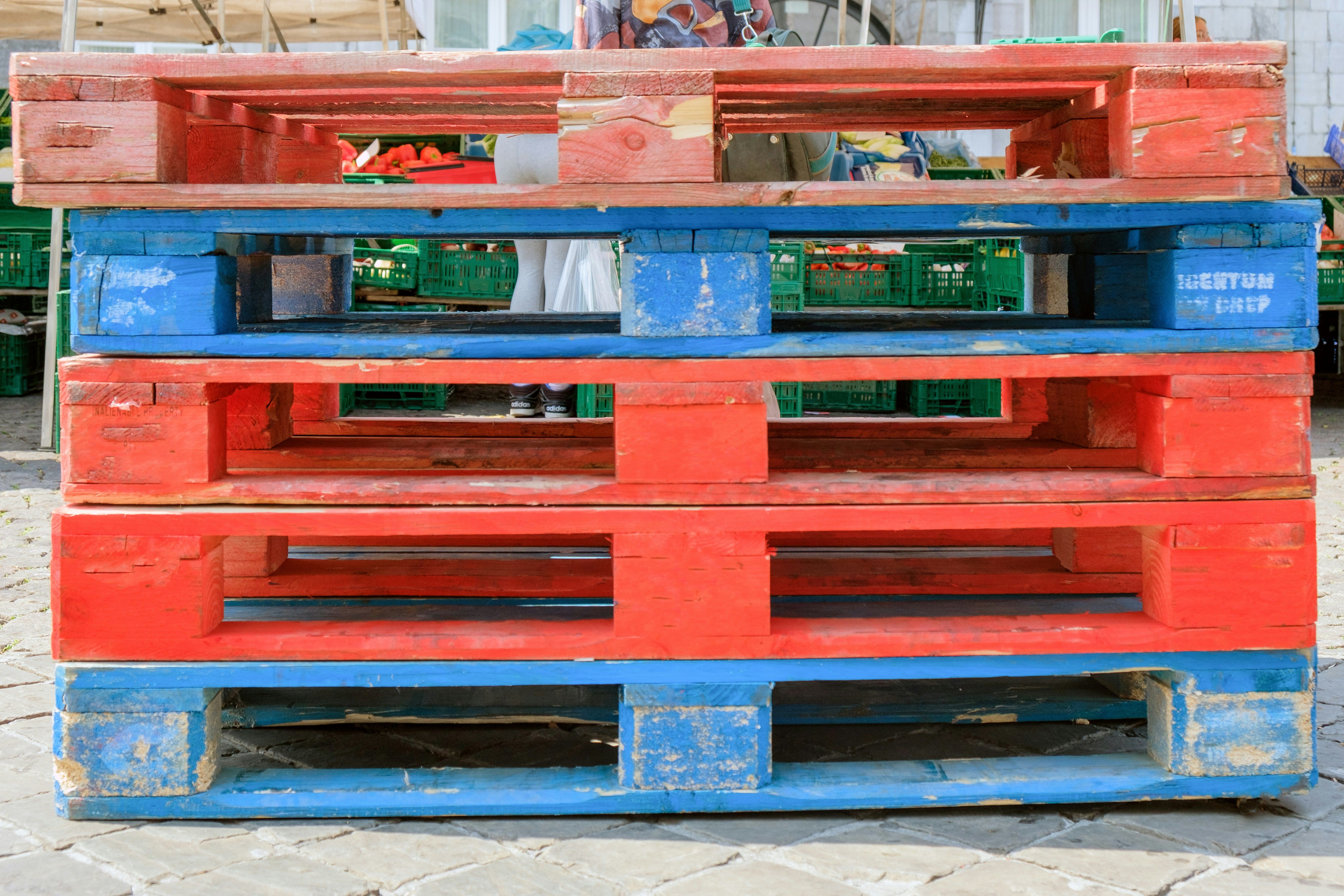
The term "plastic pallet" covers a wide range of products - from lightweight nestable export pallets weighing under 15 lbs to heavy-duty rackable pallets built to span beam racks under loads of several thousand pounds. What they share is the material and the manufacturing method. Everything else - structure, size, entry type, deck style - varies by application. Those variations are covered in the dedicated posts linked throughout this page.
A brief history of plastic pallets
The pallet itself is a 20th-century invention. The modern wooden pallet took shape in the 1930s and 1940s alongside the development of the forklift, which needed a consistent platform to engage. The two technologies evolved together: forklifts needed pallets, and pallets needed forklifts to be useful. By the end of World War II, the military had standardized wooden pallet usage for logistics at scale, and the design spread rapidly into commercial warehousing through the 1950s.
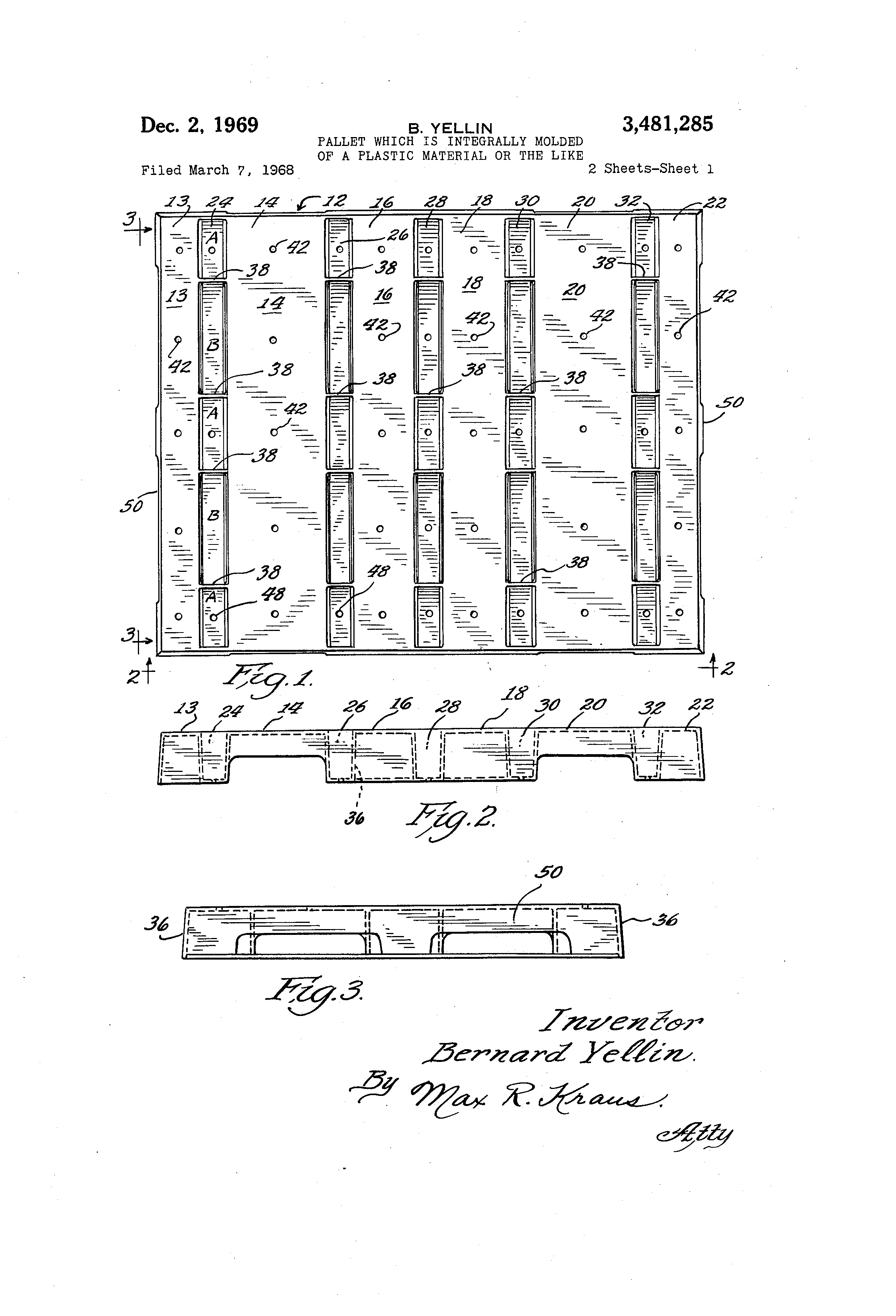
Plastic pallets emerged shortly after, with some sources dating their earliest commercial use to the period immediately following the Second World War. The first plastic pallet patents appeared in the 1960s - US patent 3,481,285, filed in 1966, is among the earliest documented plastic pallet designs in the U.S. patent record. These early designs explored molded polymer construction as a way to address the known limitations of wood: inconsistent dimensions, moisture absorption, pest harboring, and the labor cost of repair.
The patent activity that followed through the 1970s, 1980s, and 1990s reflects the industry working through the same fundamental engineering challenges that plastic pallets still navigate today - how to achieve adequate structural rigidity across a large unsupported span using a molded polymer, how to reduce weight while maintaining load capacity, and how to design the understructure for both racking and nesting. Patents on file in the U.S. and European records from this period cover injection-molded block pallets, structural foam designs, composite deck construction, and co-extruded pallet components.
Adoption remained limited through the 1980s and early 1990s, largely because plastic pallets cost significantly more per unit than wood. The economics shifted as the industry identified the right use cases - closed-loop systems where the higher upfront cost is recovered over many reuse cycles, and industries like food processing and pharmaceuticals where the hygienic properties justify the premium. The growth of pallet pooling programs from the 1990s onward also helped: a pooled plastic pallet spread its cost across hundreds of trips and multiple users rather than being expensed on a single journey.
The ISPM-15 phytosanitary regulation, which came into effect internationally in the early 2000s and requires all wood packaging in international trade to be treated before crossing borders, gave plastic pallets a significant structural advantage in export applications. Plastic is inherently exempt - it cannot harbor the wood pests the regulation targets. That exemption is now one of the primary reasons buyers in international supply chains specify plastic over wood, and it is covered in full in the dedicated post on export plastic pallets.
What plastic pallets are made of
Most plastic pallets are made from one of two thermoplastic resins: high-density polyethylene (HDPE) or polypropylene (PP). These are the same base materials used across a wide range of industrial containers, pipes, and packaging - both are well-understood, widely available, and recyclable. The choice between them affects the pallet's stiffness, temperature tolerance, chemical resistance, and cost. That comparison is covered in full in the dedicated HDPE vs. polypropylene plastic pallets post. What follows here is the orientation.
HDPE (high-density polyethylene)
HDPE is the most common material for heavier-duty plastic pallets, particularly rackable designs. Its density and rigidity make it well-suited to applications where the pallet needs to span beam racks under significant loads. Most 100% virgin plastic pallets manufactured for grocery and distribution supply chains use HDPE, as confirmed by life cycle studies comparing it to wooden alternatives. Virgin HDPE resin is produced from crude oil and natural gas through a polymerization process; the resulting resin is then melted and injected into a mold to form the pallet in a single production cycle.
Polypropylene (PP)
Polypropylene is lighter than HDPE and is commonly used for export and nestable pallets where reducing weight per trip matters more than maximizing load capacity. It is also found in recycled-content pallets, where the input material is a blend of PP and PE granulates from post-consumer or post-industrial plastic waste. A recycled plastic pallet typically combines plastic granules from municipal waste (predominantly PP and PE), industrial plastic residues, and crushed used pallets in a ratio of roughly 70% granulate, 20% industrial residue, and 10% recycled pallet material.
Virgin vs. recycled resin
Virgin resin produces pallets with more consistent mechanical properties and is the standard for food-grade and pharmaceutical applications where traceability of materials matters. Recycled resin reduces material costs and the demand for new petroleum-based feedstock, but the blend composition can vary, which introduces more variability in stiffness and impact resistance. Most high-cycle reusable pallets in demanding supply chains use virgin HDPE. Recycled content is more common in export pallets and lower-duty-cycle applications where predictable long-term performance under heavy rack loads is not the primary requirement.
Source: Anil et al., Journal of Industrial Ecology (2020); Koci, Science of the Total Environment (2019).
How plastic pallets are built
The fundamental difference between a plastic pallet and a wooden one is in construction. A wooden pallet is assembled - boards are cut to length and nailed together. A plastic pallet is molded - resin is melted and injected or pressed into a shaped tool, producing the entire pallet (or major components of it) in a single production cycle. There are no nails, no separate boards, and no assembly labor. The shape, structural geometry, and surface texture are all determined by the mold.
There are several molding methods in common use, each producing pallets with different structural characteristics and suited to different applications. The dedicated how plastic pallets are made post covers each method in depth. The brief version:
- Injection molding. The most common method for high-quality, high-cycle pallets. Molten HDPE or PP is injected into a closed steel mold under high pressure. The result is a dense, dimensionally precise pallet with consistent wall thickness. Injection-molded pallets are heavier but stronger and more durable than other types. Most rackable pallets and food-grade pallets are injection molded.
- Structural foam molding. A variation of injection molding that introduces a foaming agent into the resin, producing a pallet with a solid outer skin and a lower-density foam core. Structural foam pallets are lighter than solid injection-molded pallets of the same size and are commonly used for export and nestable designs where reducing weight matters more than maximizing load capacity.
- Thermoforming. A sheet of plastic is heated and formed over or into a mold using pressure or vacuum. Thermoformed pallets tend to be thinner-walled and lighter, suited to lower-duty or single-trip applications.
- Extrusion. Plastic is forced through a die to produce a continuous profile, which is then cut and assembled into a pallet. Less common than injection molding for standard pallets but used for specific corrugated or hollow-board designs.
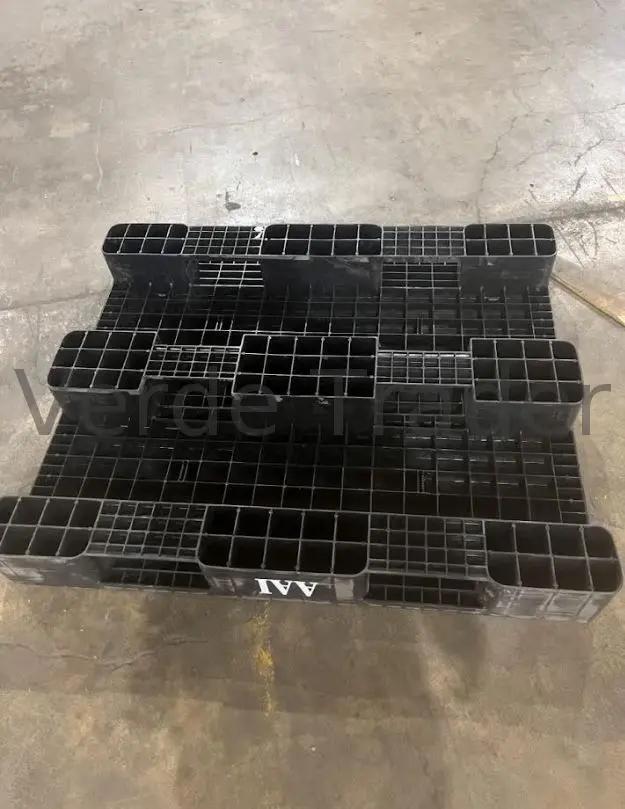
The molding method is one of the most important factors in a pallet's price and performance. An injection-molded rackable pallet costs more than a structural foam export pallet of the same footprint because the tooling, cycle time, and material density are all higher. When comparing pallets by price alone, confirming the manufacturing method tells you a lot about what you're actually buying.
The defining properties of plastic pallets
The properties below are what differentiate plastic pallets from wood in practical use. They show up repeatedly as the reasons buyers in specific industries choose plastic - not as abstract advantages, but as solutions to concrete operational problems. Each one links to an area of the site where that property is explored in more depth.
Moisture resistance
Plastic is non-porous. It does not absorb water, does not swell or warp in wet environments, and does not rot. A plastic pallet in a cold storage facility, a wash-down food processing environment, or an outdoor staging area maintains its dimensional stability and structural integrity where a wood pallet would degrade. This is one of the primary drivers of plastic adoption in food, beverage, and dairy operations.
No nails, no splinters, no foreign material contamination
A wooden pallet can shed nails, splinters, and wood fragments - all of which are foreign material contamination risks in food and pharmaceutical manufacturing. A plastic pallet has no fasteners and no fibrous material to shed. This is a compliance advantage in regulated environments, and it is the reason plastic pallets are required or strongly preferred under many food safety programs and food-grade plastic pallet specifications.
Consistent weight and dimensions
Every unit produced from the same mold is dimensionally identical. A wood pallet varies in weight and dimension based on moisture content, wood species, and how it was assembled. For automated handling systems - conveyors, AS/RS (automated storage and retrieval systems), and robotic palletizers - that consistency is not a preference, it is a technical requirement. Systems designed around a fixed pallet footprint and height cannot tolerate the variability inherent in wood.
No phytosanitary treatment required
Under ISPM-15, all wood packaging used in international trade must be treated - either by heat treatment or methyl bromide fumigation - to prevent cross-border transmission of invasive wood pests. Plastic pallets are exempt because plastic cannot harbor these organisms. This removes treatment costs, scheduling delays, and documentation requirements from international shipments. The full ISPM-15 explanation is in the dedicated post on why plastic pallets don't need ISPM-15 treatment.
Long service life in closed-loop systems
Plastic pallets do not need the repair that wood pallets require. A wooden GMA block pallet has an estimated service life of around 33 handling cycles before requiring repair; plastic pallets in comparable use have been modeled at 100 trips in life cycle studies, with some manufacturer claims of 200-250 round trips before retirement. In a closed-loop pooling program where pallets make many trips and the cost is amortized over that full service life, the economics shift considerably in plastic's favor despite the higher purchase price.
These properties don't mean plastic is always the right choice. Wood pallets outperform plastic on purchase price, repairability, and carbon footprint per unit in single-use scenarios. The plastic vs. wood comparison covers that trade-off in full.
The main types at a glance
Plastic pallets are manufactured in several structural configurations, each designed for a different storage and handling context. This is an orientation only - each type has its own dedicated post linked below.
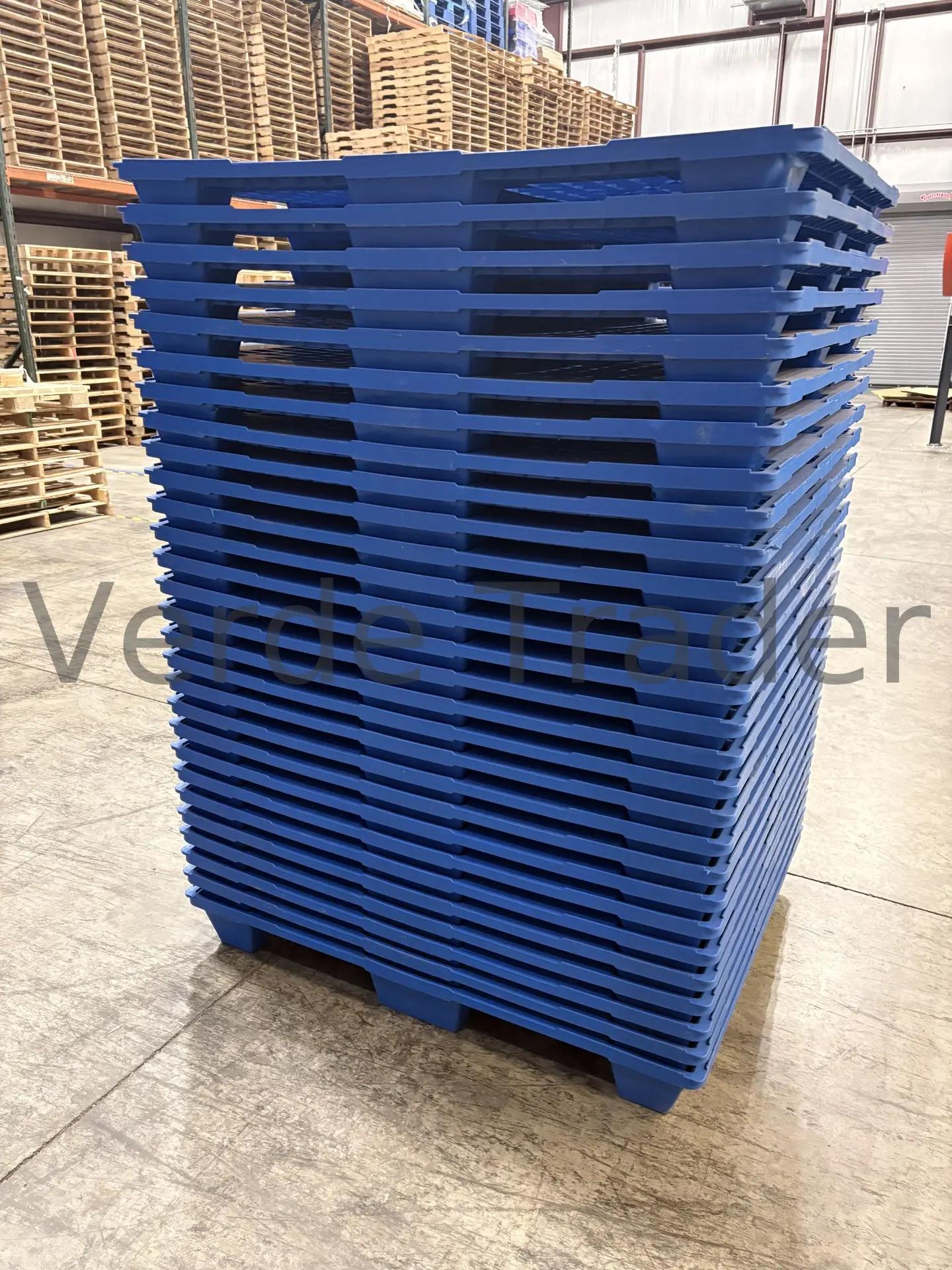
Nestable pallets - stacked for return shipping
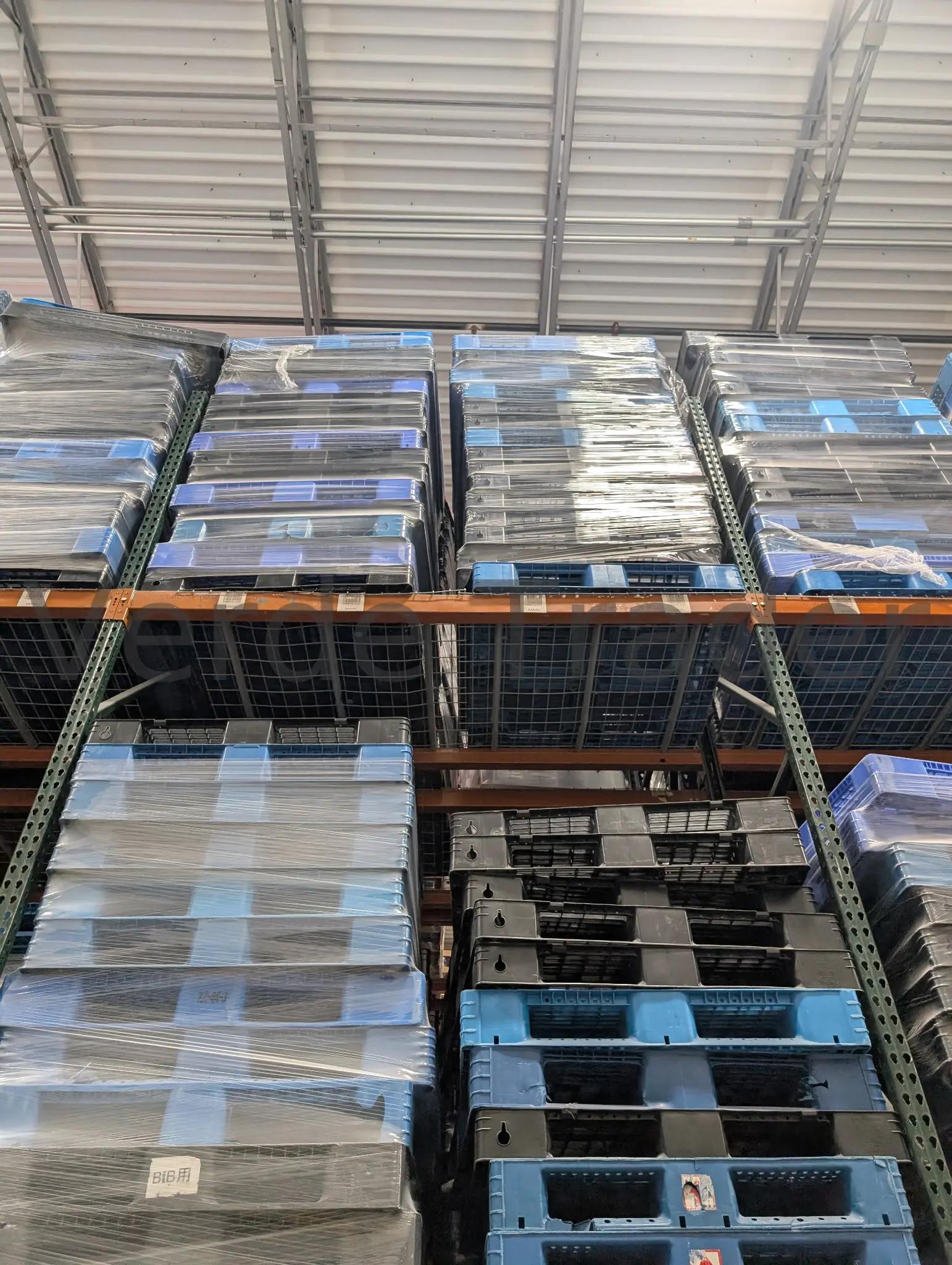
Rackable pallets - spanning beam rack storage
- Rackable. Built to span the beams of a pallet rack system without sagging under load. The most common type in U.S. distribution and warehousing. Heavier and more expensive than other types. Full detail: rackable plastic pallets.
- Nestable. Tapered legs allow empty units to drop inside each other, dramatically reducing return freight volume. Not typically rackable. Common in retail distribution, pharma, and export. Full detail: nestable plastic pallets.
- Stackable. Designed to support the weight of loaded pallets stacked directly on top of each other for floor storage. Full detail: stackable plastic pallets.
- Export. Lightweight, usually nestable, built around ISPM-15 exemption for international shipping. Typically single-trip or limited-cycle. Full detail in the dedicated export pallets post.
Within those structural categories, pallets also vary by deck style (open deck, solid top, perforated) and fork entry configuration (2-way or 4-way). The types of plastic pallets explained post covers each combination and when it matters.
The type is the most important specification decision when buying plastic pallets. Getting it wrong - using a non-rackable pallet in a beam rack, for example - is a safety issue, not just a performance issue. Confirm the type before the size.
A quick note on height
Unlike wood pallets, which settle around a fairly consistent 5.5 to 6 inch height regardless of manufacturer, plastic pallet height varies by structural type, from roughly 4.5 inches on a nestable design up to 7.5 inches on some stackable models. That range matters beyond the spec sheet: it determines the tine entry clearance a forklift or pallet jack needs to engage the pallet, and whether a loaded unit clears your rack beams or trailer ceiling. For the full height breakdown by type, see our plastic pallet sizes and dimensions guide.
How plastic pallets fit into the supply chain
A pallet is an interface device. Its job is to translate between the handling equipment - forklift, pallet jack, conveyor, robotic arm - and the load sitting on top of it. Every system that touches a pallet is designed around specific assumptions about the pallet's footprint, height, entry configuration, and load capacity. When those assumptions hold, the whole system works efficiently. When they don't - wrong size for the rack, wrong entry type for the conveyor, wrong load rating for the product weight - the pallet becomes the problem.
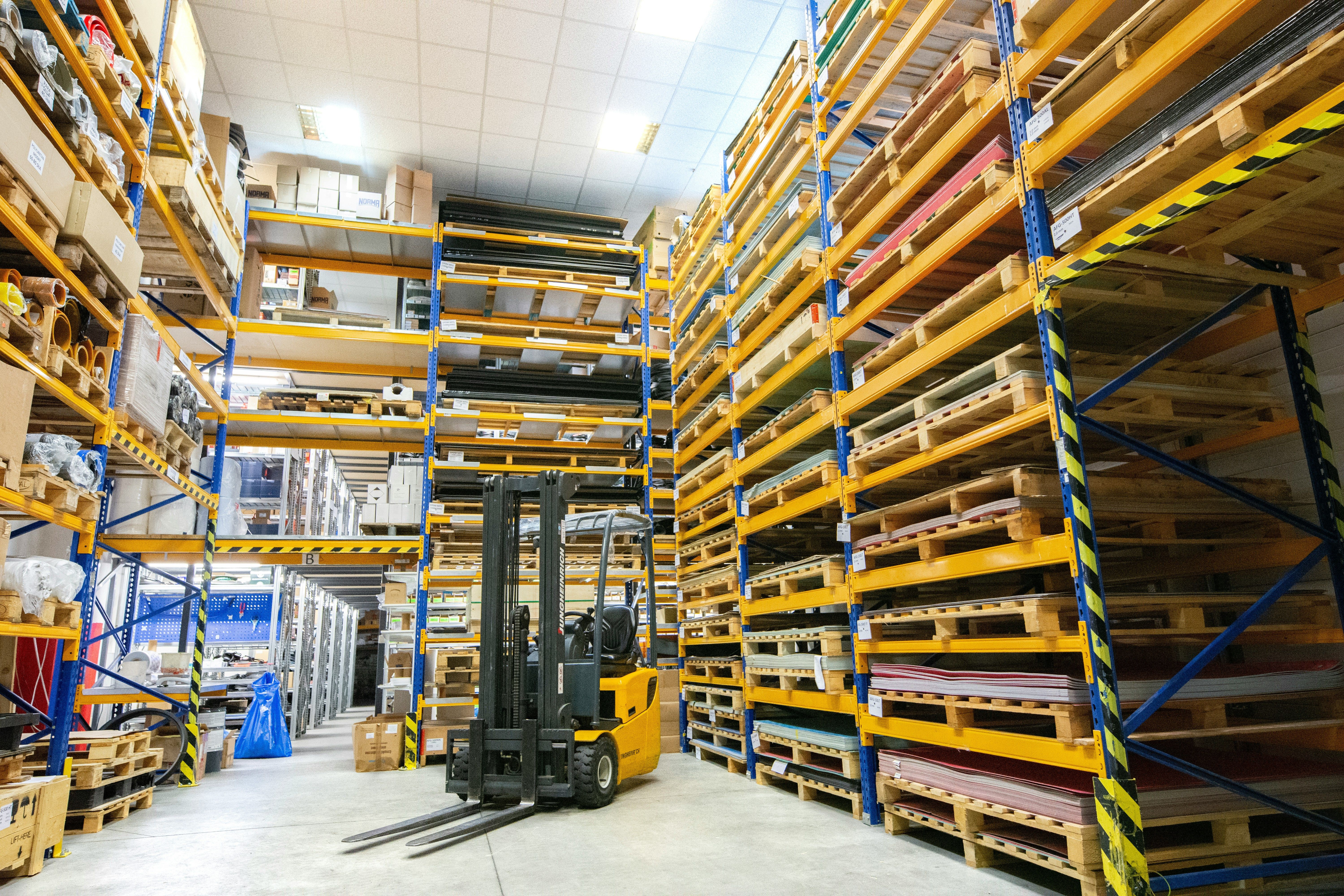
Plastic pallets are used across every major segment of the supply chain where their specific properties give them an advantage over wood. The key contexts:
Food, beverage, and pharmaceutical manufacturing
These industries use plastic pallets because they can be cleaned, sanitized, and inspected in ways that wood cannot. A plastic pallet can go through a pressure wash or chemical sanitization cycle without absorbing the cleaning agent or retaining moisture. It produces no wood fragments or loose nails. In facilities operating under FDA, USDA, or third-party food safety audit programs, plastic is often the required material - not just preferred. The full compliance context is in the food-grade plastic pallets post.
Automated distribution and AS/RS systems
Automated conveyor systems, robotic palletizers, and automated storage and retrieval systems all operate within tight tolerances. The sensors, guides, and transfer points in these systems are calibrated to specific pallet dimensions. Plastic pallets - being molded from a single tool - maintain those dimensions consistently across every unit and across years of use. A wood pallet warped by moisture or damaged by a forklift can jam a conveyor line or misfire a sensor. Plastic pallets are the standard in high-automation facilities for this reason.
International export shipping
Plastic pallets move goods across borders without the treatment requirements that apply to wood. For exporters shipping to countries that enforce ISPM-15 - which now includes most major trading partners - plastic removes the phytosanitary treatment step entirely from the shipping process. The pallet does not need to be heat treated, documented, or re-inspected at the border for wood pest compliance.
Closed-loop pooling programs
In a closed-loop system, pallets travel a defined circuit - from manufacturer to distributor to retailer and back - rather than being sold with the product or discarded at the destination. Plastic pallets are well-suited to pooling because they last longer without repair, can be tracked and audited more easily than wood, and their condition is easier to assess visually. The higher upfront cost of a plastic pallet becomes economical when it completes enough circuits to amortize that cost below what the equivalent volume of single-trip or short-cycle wood pallets would cost.
For a breakdown of which industries use which pallet types and sizes, see the dedicated plastic pallets for different industries post.
Frequently asked questions about plastic pallets
Is a plastic pallet the same as a plastic skid?
Not exactly. A pallet has both a top deck and a bottom deck (or feet/runners), which allows forks to enter from underneath with full clearance on all sides. A skid has only a top deck supported directly by runners that sit on the floor - there is no bottom deck and the clearance for fork entry is limited. Most products described as plastic pallets in the market have enough understructure clearance to qualify as pallets rather than skids, but the terms are sometimes used interchangeably in casual use. If entry clearance matters for your handling equipment, check the spec sheet rather than relying on the label.
What is the difference between a plastic pallet and a slip sheet?
A slip sheet is a thin flat sheet of plastic (or corrugated fiberboard) used as a pallet substitute in applications where the overhead clearance, weight, or cost of a conventional pallet is not practical. Slip sheets require a special push/pull forklift attachment to handle. They cannot be used with a standard forklift or pallet jack. Plastic pallets are rigid, self-supporting platforms compatible with standard forklift tines. They serve the same purpose in the supply chain but are entirely different products.
Are all plastic pallets the same?
No. Plastic pallets vary significantly in material (HDPE vs. PP, virgin vs. recycled), manufacturing method (injection molded vs. structural foam), structural type (rackable vs. nestable vs. stackable), deck configuration (open vs. solid), entry type (2-way vs. 4-way), footprint, height, and load rating. Two pallets that look similar and share the same nominal size can have very different rack load ratings, entry clearances, and service life expectations. Always verify the spec sheet for the specific model before buying.
Why are plastic pallets more expensive than wood pallets?
The upfront cost difference comes down to manufacturing. A plastic pallet requires a steel injection mold that costs hundreds of thousands of dollars to produce, and the injection molding process itself is energy and capital intensive. A wooden pallet is assembled from lumber using relatively simple equipment. The plastic pallet's higher purchase price is typically justified over its service life - it lasts longer, requires no repair, and in the right application recovers that cost advantage over many cycles. For one-way or short-cycle use, wood usually wins on total cost. For pricing, see the dedicated post.
Can plastic pallets be repaired if they break?
Not in the way wooden pallets can be repaired. A cracked board on a wooden pallet can be replaced with a new board and nails. A cracked plastic pallet cannot be structurally repaired in the field - the material needs to be melted and remolded to recover its properties. In practice, a damaged plastic pallet is either retired and sent for recycling or, in some pooling programs, returned to the manufacturer for reprocessing. This is one reason why condition assessment matters when buying used plastic pallets - a crack in a load-bearing section is not a repairable defect.
What does "GMA spec" mean on a plastic pallet?
GMA stands for Grocery Manufacturers Association. A GMA-spec pallet is a 48x40 inch footprint - the dominant size in U.S. grocery, food and beverage, and general warehousing supply chains. Most warehouse racking in those industries is built around 48-inch beam spacing to match this footprint. When a pallet is described as "GMA spec," it means it matches the 48x40 footprint standard. It does not describe a load rating, material, or structural type - confirm those separately from the manufacturer spec sheet.
Do plastic pallets work outdoors?
Yes, with caveats. Plastic is inherently resistant to moisture and will not rot, warp, or absorb water the way wood does. However, UV exposure degrades plastic over time - most commercial plastic pallets include UV stabilizers added during manufacturing to slow this process, but extended outdoor storage still shortens service life compared to indoor use. Temperature is also a factor: HDPE and PP both soften at elevated temperatures, which can reduce load capacity in very hot outdoor environments. For occasional outdoor staging, plastic performs well. For permanent outdoor storage under heavy loads, verify the pallet's temperature rating and UV stabilizer specification.
Sources
This page draws from two source types: peer-reviewed research and published standards for the factual claims about materials, manufacturing, and supply chain context, and U.S. patent records for the historical timeline. Verde Trader's own transaction experience informs the practical notes throughout.
Industry standards
- ANSI MH1-2021. The primary U.S. standard for pallets and related equipment. Defines pallet terminology, dimensional standards, and load capacity classifications including static, dynamic, and rack load ratings. Background standard for the pallet definitions and type descriptions used throughout this post.
- ISO 8611 (Parts 1-3). International standard for flat pallets used in materials handling. Covers test methods, performance requirements, and maximum working loads. Referenced for the global pallet context and supply chain role described in this post.
- ASTM D1185-98a(2025). Standard test methods for pallets and related structures used in materials handling and shipping. Covers how pallet load ratings are tested and defined - background for the properties and performance claims on this page.
Peer-reviewed research
- Anil et al., Journal of Industrial Ecology (2020). Life cycle assessment comparing wooden and plastic pallets in the U.S. grocery industry. Primary source for the HDPE virgin resin manufacturing process description, the injection molding production details, pallet service life assumptions (100 trips for plastic vs. 33 cycles for wood), and the ISPM-15 treatment energy and emissions data cited in the properties section.
- Koci, Science of the Total Environment (2019). Life cycle model for wood and plastic pallets. Source for the recycled plastic pallet input ratios (70% granulate, 20% industrial residue, 10% crushed used pallets) and the description of the recycled resin production process in the materials section.
- Weththasinghe et al., International Journal of Life Cycle Assessment (2021). Comparative LCA of wooden, plastic, and wood-polymer composite pallets. Source for the 200-250 round trip manufacturer claim for plastic pallet service life referenced in the properties section, and for the closed-loop pooling economics context.
- Pulgar and Oliveira, Springer (2023). Review of production and material types for pallets. Source for the manufacturing method descriptions (injection molding, structural foam, thermoforming, extrusion) and the molded construction vs. assembled construction distinction in the how they're built section. Also the source for the global trade figure (pallets facilitate over 80% of global trade).
- Zhang et al., Resources, Conservation and Recycling (2024). Comprehensive circular economy evaluation of pallet types in China. Source for the U.S. pallet inventory figure (approximately 1.8 billion pallets in circulation) and the global pallet market context in the definition section.
- Weththasinghe et al., Journal of Cleaner Production (2022). Carbon footprint comparison of wooden and plastic pallets in Australia. Source for the HDPE injection molding manufacturing process details and the material sourcing context (most plastic pallets use virgin and recycled HDPE and PP) referenced in the materials section.
Patent records
- U.S. Patent 3,481,285 (filed 1966). One of the earliest documented plastic pallet designs in the U.S. patent record. Referenced in the history section as evidence of plastic pallet development beginning in the 1960s.
- U.S. Patent 4,029,728. An early injection-molded plastic pallet patent from the 1970s. Part of the patent era context in the history section covering the industry's development of molded polymer pallet construction.
- U.S. Patent 4,809,618. 1980s-era plastic pallet design patent. Referenced as part of the ongoing patent activity through that decade covering block pallets and understructure engineering.
- U.S. Patent 6,659,020 (USPTO). Co-extruded composite pallet deck patent. Referenced in the history section as part of the later-generation manufacturing innovation in plastic pallet construction.
Verde Trader product experience
- Verde Trader sold-order data. More than 8,000 orders through mid-2026. Practical notes on pallet condition, common types in circulation, closed-loop economics, and buyer use cases on this page draw from our experience buying and selling plastic pallets. For current availability, browse plastic pallets for sale or request a quote.
