

Are plastic pallets recyclable?
What actually happens to a plastic pallet when it's done being a pallet
Published October 14, 2026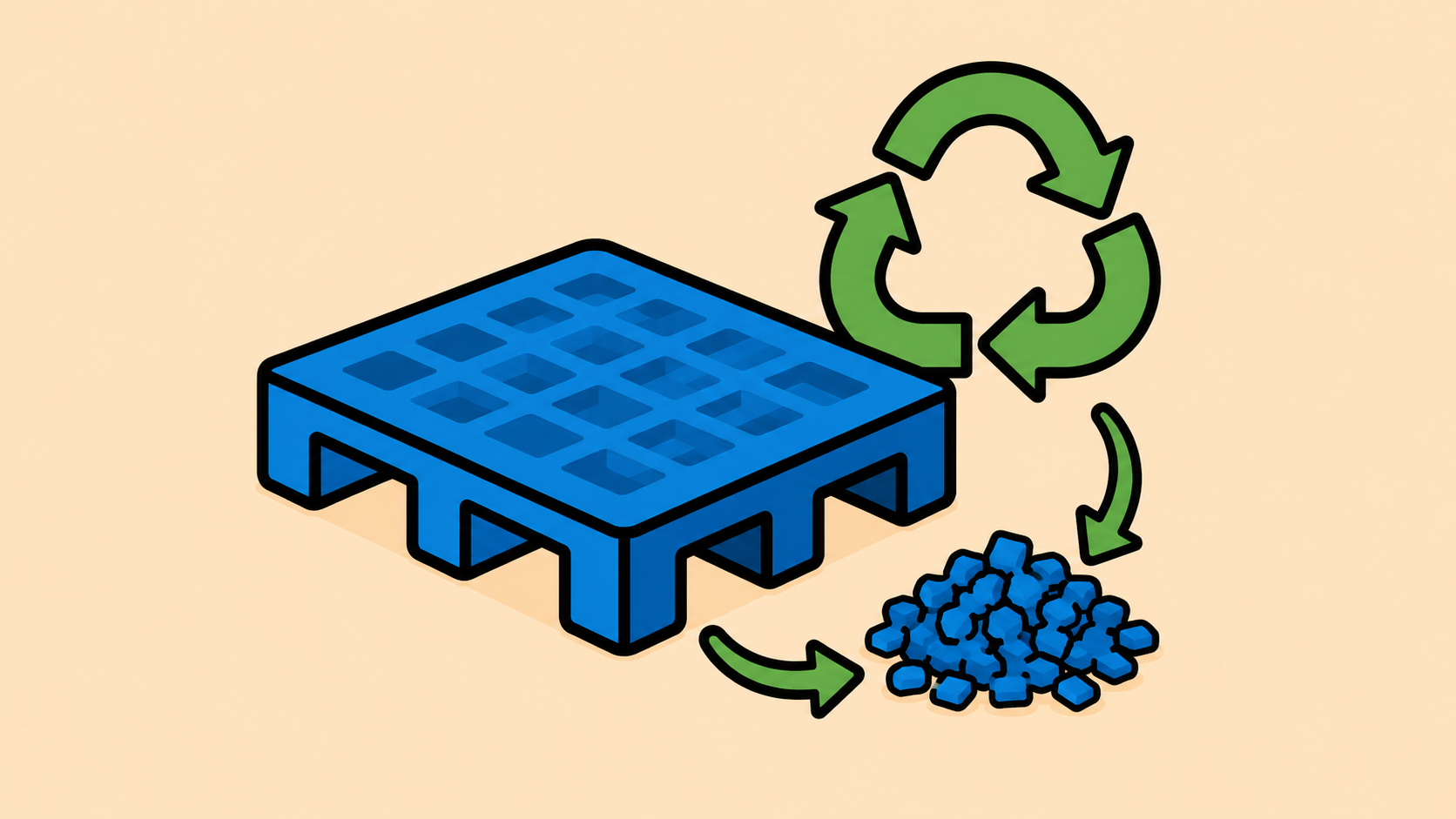
By John Anderson, Owner of Verde Trader
10+ years buying and selling used industrial packaging.
Plastic pallets are made from recyclable resins, mostly high-density polyethylene (HDPE) or polypropylene (PP), so the short answer is yes. But almost none of the plastic pallets we buy and sell at Verde Trader go straight into a recycling bin. Most get repaired, repooled, or resold several times over before anyone even considers melting one down.
This page covers what "recyclable" actually means for these pallets, why reuse almost always happens first, what the real end-of-life process looks like, and what stands in the way of recycling some pallets.
Key takeaways
- Yes, technically: most plastic pallets are HDPE or PP, both widely recyclable thermoplastics.
- Reuse comes first in practice: reusable plastic pallets may complete dozens of trips before reaching end of life, depending on their design, handling conditions, and application.
- Recycling means regrinding, not remolding whole: end-of-life pallets are shredded into regrind and used in new pallets or other molded products.
- Contamination is the real barrier: mixed resins, metal reinforcement, and heavy staining can keep a damaged pallet out of the recycling stream.
- Buy-back and take-back programs exist: several manufacturers and pooling companies will take damaged pallets back for recycling credit.
What "recyclable" means for plastic pallets
Almost every plastic pallet on the market is made from one of two thermoplastics: high-density polyethylene (HDPE) or polypropylene (PP). Both are commodity resins with established recycling markets, which is why the material itself is not the problem. HDPE and PP are thermoplastics that can be melted and reprocessed. However, repeated processing, contamination, and material degradation can reduce their mechanical properties, so recycled resin may be blended with virgin material or used in less demanding applications.
What "recyclable" does not mean is that a used pallet gets tossed in a single-stream bin and comes back as a new pallet a week later. Recycling a plastic pallet is an industrial process: the pallet is shredded into flake or regrind, sorted and cleaned, then reintroduced into the manufacturing stream, usually blended with virgin resin rather than used alone.
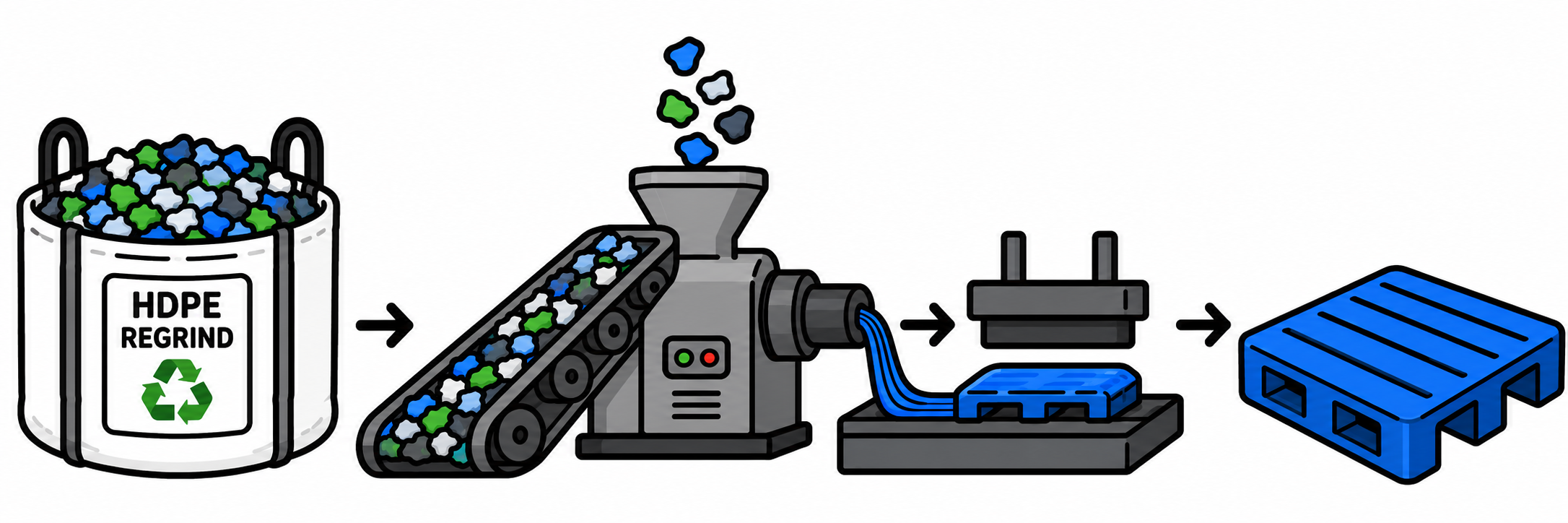
Some pallet-production systems blend recycled pallet material with virgin resin and other manufacturing scrap. The exact recycled-content percentage varies by manufacturer, pallet design, resin quality, and intended use. A particular production blend should not be treated as a universal limit on how recyclable plastic pallets are.
Why most plastic pallets are reused before they're ever recycled
A plastic pallet is expensive to make and cheap to repair, which flips the usual waste hierarchy in its favor. Reuse costs less than recycling, and it keeps more value in the pallet than melting it down ever could. That is why the plastic pallets we buy and sell at Verde Trader have almost always been through several ownership cycles, not zero.
Life cycle research comparing wood and plastic pallets modeled plastic pallets completing 66 to 99 trips over their working life, compared to 10 to 30 trips for a wood pallet in the same study.1 Every one of those trips is a cycle where the pallet stays in service instead of entering any waste stream, recycled or otherwise. The same body of research modeled end-of-life scenarios ranging from 50% landfill and 50% recycling up to 100% recycling, which is a wide range precisely because so few plastic pallets reach true end of life in a predictable way.1
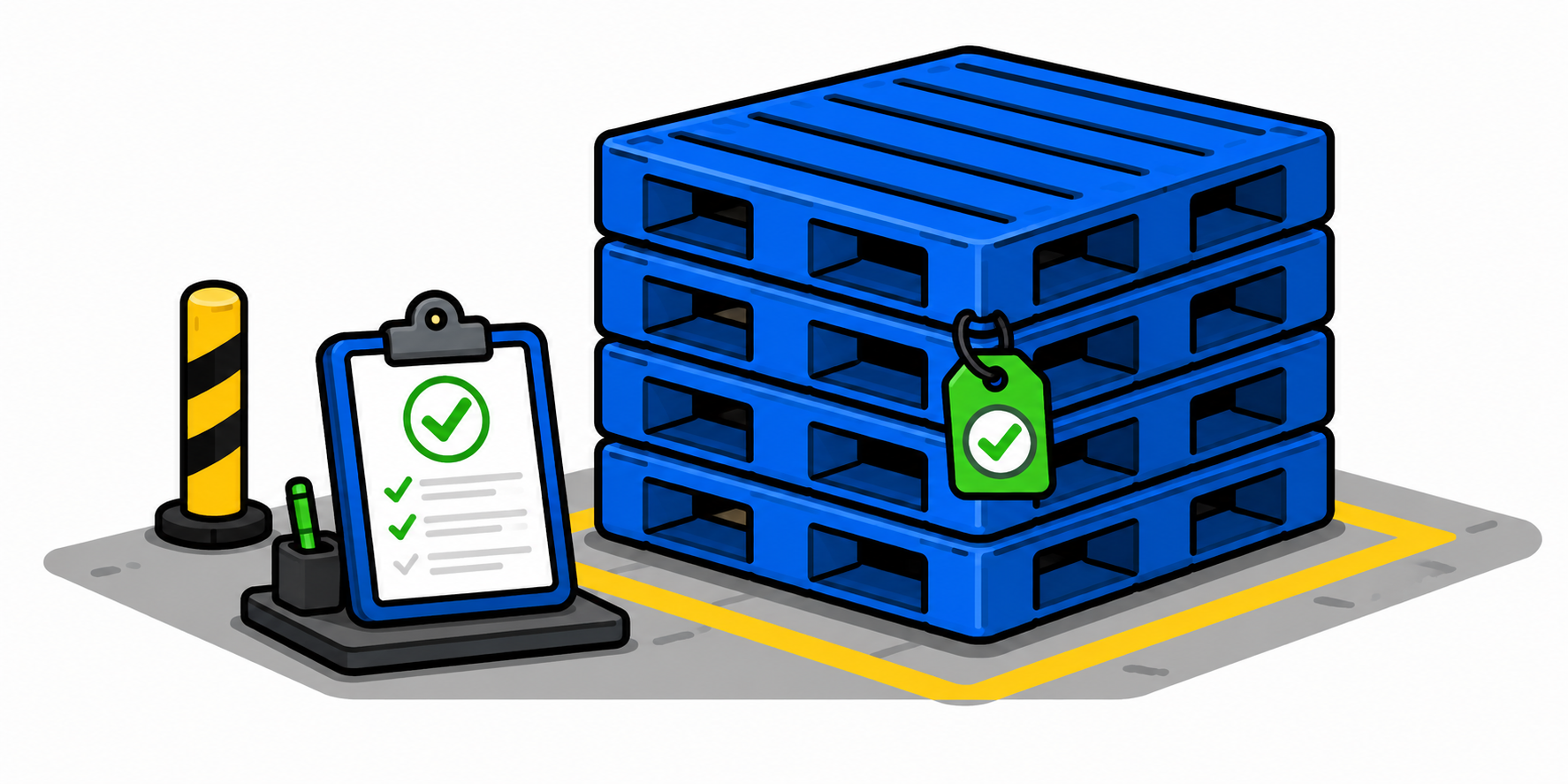
A damaged plastic pallet is more often sold, repaired, or downgraded to a lighter-duty role than it is shredded. Recycling is usually the last stop, not the first.
This is also where resale value and recyclability connect. A pallet with enough life left to resell is worth more sold whole than sold as scrap resin, and that price gap is exactly what keeps pallets circulating through pooling programs, secondary markets, and repair shops before anyone considers the recycling stream.
What happens to a plastic pallet at end of life
When a plastic pallet is finally too damaged to repair or resell, it is dismantled into HDPE and its other components rather than discarded whole.1 The recycling process itself follows a consistent industrial sequence:
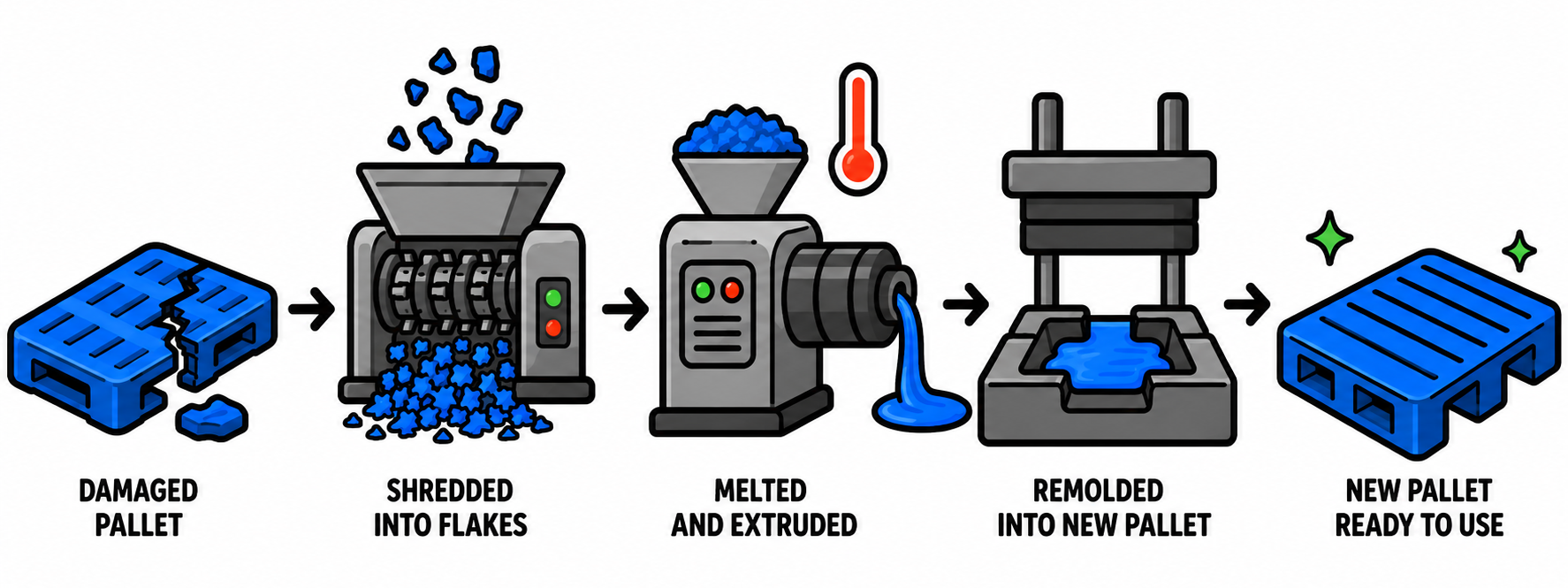
- Collection and inspection. Damaged pallets are pulled from circulation and sorted by resin type and condition.
- Crushing. Pallets are mechanically crushed into flake or regrind, reducing them to a manageable feedstock size.2
- Melting and compounding. Clean regrind is heated and processed at temperatures appropriate for the resin and manufacturing system.2
- Remolding and cooling. The processed material may be injection-molded, compression-molded, or otherwise formed into new pallets or other plastic products.2
- Reintroduction. The resulting material is blended with virgin resin and industrial scrap to produce new pallets, slip sheets, and other lighter-use molded products.1
This is also why recycling sits below reuse in the EPA's sustainable materials management hierarchy.3 Every step above - crushing, heating, re-extruding - consumes energy and degrades the polymer slightly, which is exactly why the industry keeps a pallet in service as long as possible before running it through this process.
What can't some plastic pallets be recycled?
Not every plastic pallet that reaches end of life is a clean candidate for recycling. A few things keep a damaged pallet out of the regrind stream entirely:
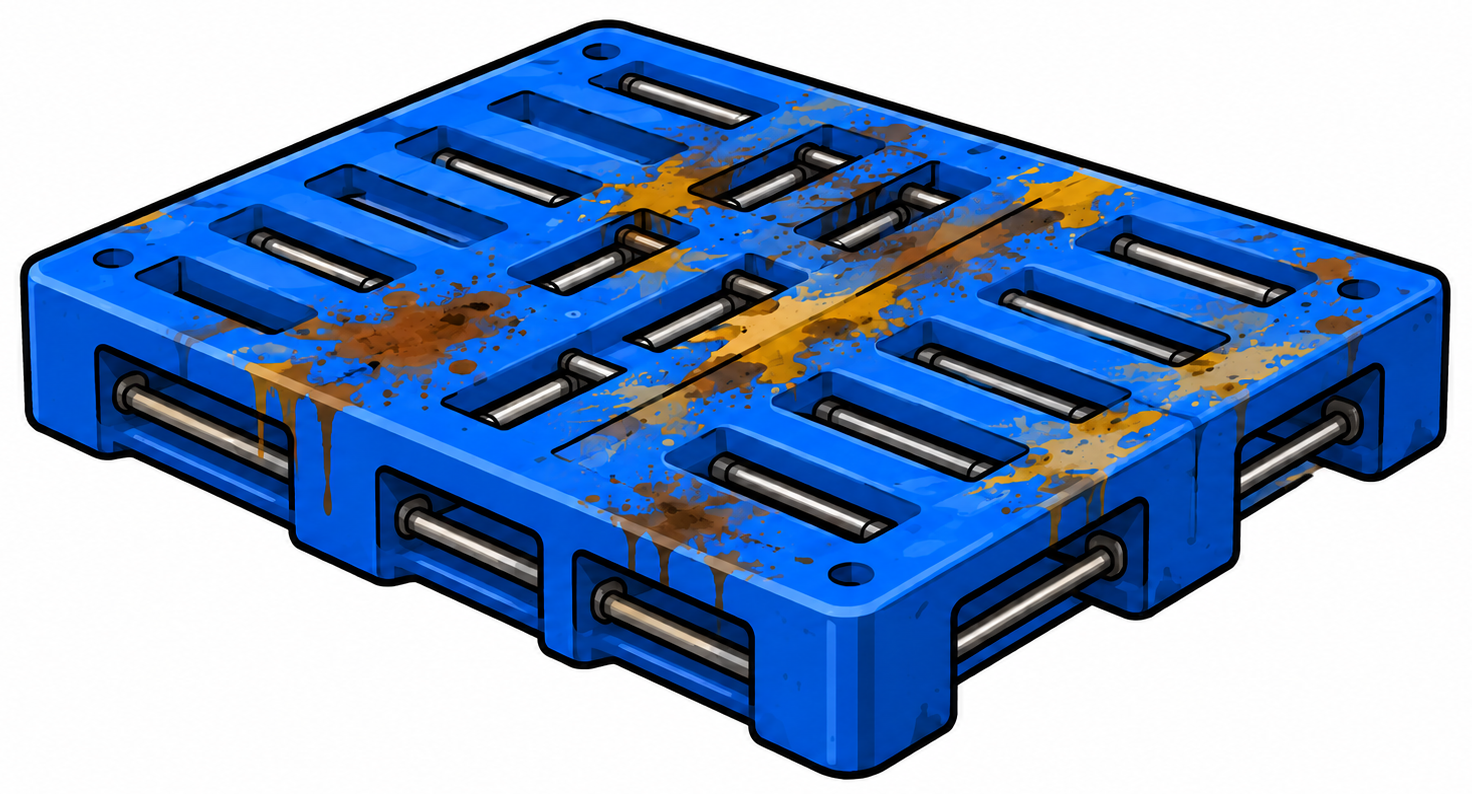
- Metal reinforcement. Rackable pallets with embedded steel rods or rebar need to be separated from the plastic before shredding, which adds labor cost that some recyclers won't take on for a single pallet.
- Mixed or unknown resins. A pallet built from more than one plastic type, or one whose resin can't be identified, is harder to sort into a clean feedstock and is more likely to be rejected.
- Additives and fire retardants. Some specialized plastic pallets may contain flame retardants, fillers, colorants, or other additives. These substances can complicate sorting and may restrict how the recovered resin can be reused.
- Heavy chemical staining or contamination. Pallets used to move certain chemicals or contaminated goods may carry residue that a recycler can't fully clean out, which rules out food-grade or cosmetic reuse of the regrind.2
- Severe structural degradation. UV exposure and repeated stress break down the polymer over time; a pallet that has degraded too far can produce regrind that doesn't hold up to remolding.
None of this means these pallets are unrecyclable forever - it means they need a recycler equipped to handle that specific complication, which not every facility is. This is exactly the gap that buy-back and take-back programs exist to close.
How to recycle your plastic pallets
If you have plastic pallets that are too damaged to repair or resell, here's the practical order of operations before they go to a recycler:
- Check for resale value first. A cracked deck or missing runner doesn't always mean the pallet is done - see our plastic pallet value guide to check whether it's worth more sold than scrapped.
- Sort by condition and type. Separate rackable pallets with metal reinforcement from nestable and stackable pallets that are pure resin - it speeds up processing and avoids rejected loads.
- Consolidate before you call anyone. Most recyclers and buy-back programs work in volume. A single damaged pallet is rarely worth a pickup; a pallet load of them usually is.
- Use a service built for this. Verde Trader's plastic pallet recycling program takes damaged pallets off your hands directly, so you don't have to find and vet a resin recycler yourself.
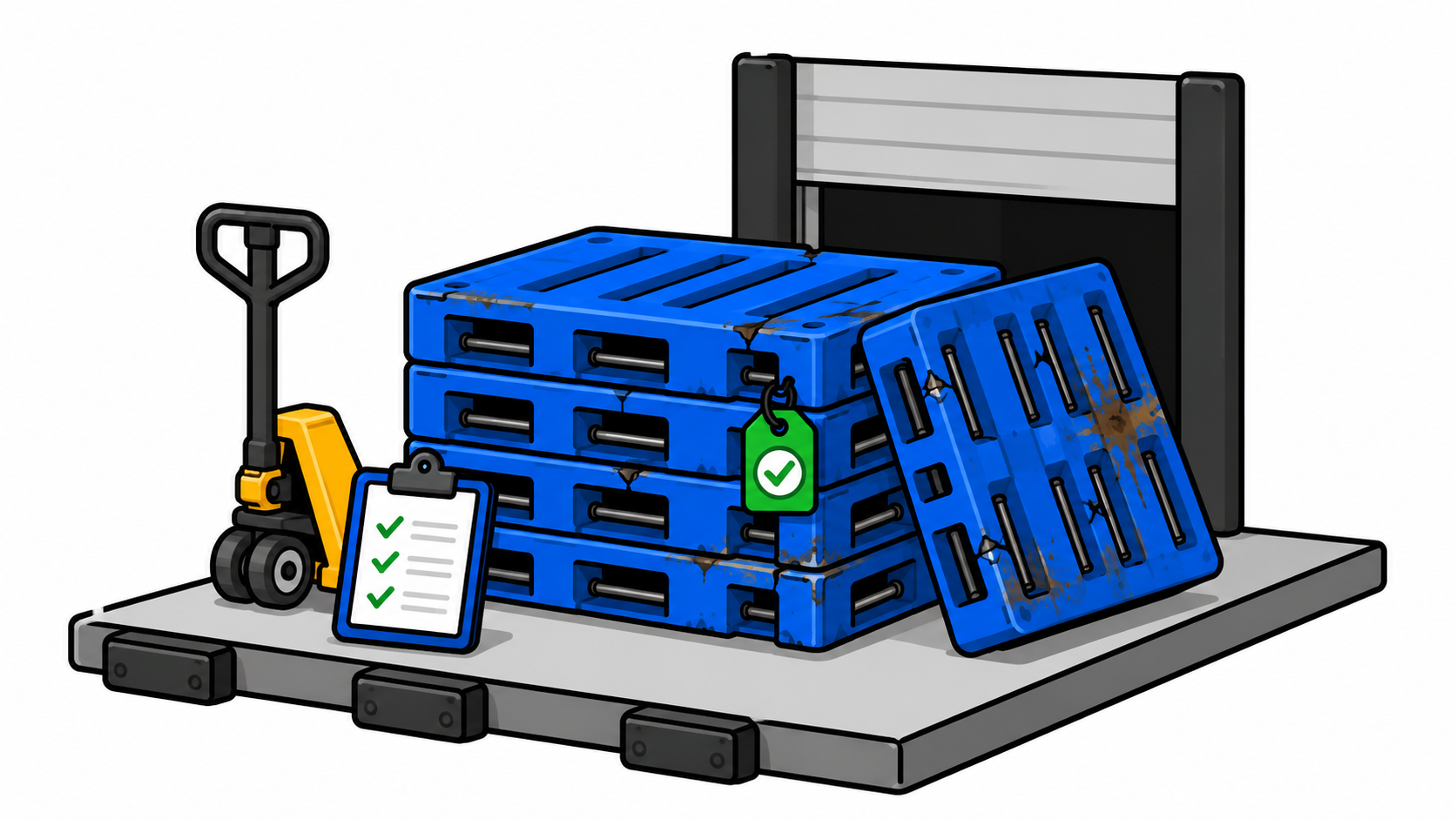
If you're not sure whether your pallets are candidates for resale, repair, or recycling, that's exactly what we sort out for you - request a quote and we'll tell you which bucket they fall into.
Frequently asked questions about recycling plastic pallets
Can I put a plastic pallet in my regular curbside recycling bin?
No. Curbside programs are built for packaging like bottles and jugs, not industrial-scale HDPE or PP parts. Plastic pallets need to go through a commercial or industrial recycler equipped to shred and reprocess larger, thicker plastic items.
Does the color of a plastic pallet affect whether it can be recycled?
Yes, to a degree. Natural or single-color pallets produce cleaner, more consistent regrind that manufacturers can blend at higher ratios into new products. Pallets made from mixed colors or repainted stock still recycle, but the resulting regrind is usually limited to darker or non-cosmetic applications.
Is there any money in scrapping a damaged plastic pallet for its plastic value?
Generally very little on a single-pallet basis. Recycled HDPE and PP regrind has commodity value, but it's priced by the pound at industrial volumes, not by the pallet. Selling a damaged pallet whole for repair or parts almost always nets more than scrapping it for resin value.
Do plastic pallet manufacturers take back their own pallets for recycling?
Some do, through formal buy-back or take-back programs, particularly manufacturers that run closed-loop pooling systems. Availability varies by manufacturer and region, so it's worth asking the original supplier directly if a take-back option exists before assuming you need to find a third-party recycler.
Can a broken plastic pallet be recycled if it's food-grade?
It depends on what it was used for, not just its food-grade rating. A pallet originally suitable for food-related use may still be recyclable, but recyclers consider its resin type, contamination history, additives, and condition. The recovered resin is not automatically suitable for new food-contact applications; using recycled plastic in food-contact products requires appropriate sourcing, controls, and regulatory review.
How much of a recycled plastic pallet is actually new material versus reused resin?
Recycled content typically makes up a minority share of a new pallet rather than the majority. Manufacturing blends vary, but virgin resin and industrial scrap usually make up the bulk of the material, with recycled pallet content added in smaller proportions.
Sources
This page draws on published federal guidance that defines recycling and food-contact standards, peer-reviewed life cycle research on plastic pallet manufacturing and end-of-life, and Verde Trader's own transaction records.
Industry standards (what is defined)
- EPA - Sustainable Materials Management Hierarchy. The federal framework ranking reduction and reuse above recycling - the basis for why reuse comes before recycling in the pallet lifecycle discussed on this page.
- EPA - Recycling basics and benefits. Baseline federal guidance on what recycling processes involve, referenced for the collection-to-reprocessing steps described on this page.
- U.S. FDA - Food contact substances and packaging. Governs which resins and recycled content are permissible for food-contact use - relevant to why some food-grade pallets face limits on recyclability.
- NSF International - Food contact materials certification. Third-party certification standards for food-safe plastics, referenced for the contamination and food-grade recycling barriers discussed on this page.
Peer-reviewed research
- Anil et al. (2020) - Life cycle assessment comparison of wooden and plastic pallets in the grocery industry (Journal of Industrial Ecology, Wiley). Details plastic pallet end-of-life dismantling, HDPE recovery, and reuse in lighter-duty products - the primary source for the manufacturing and reuse claims on this page.
- Khan et al. (2021) - Life-cycle assessment comparing wooden, virgin-plastic, and wood-polymer composite pallets, including assumptions about pallet service life, production, and end-of-life treatment.
- Weththasinghe et al. (2022) - Carbon footprint comparison of wooden and plastic pallets (Journal of Cleaner Production, Elsevier). Models plastic pallet trip counts and landfill-versus-recycling end-of-life scenarios - the source for the reuse cycle and end-of-life split figures on this page.
Our sales data (what people actually do)
- Verde Trader
About this page
