

Top plastic pallet manufacturers
A rundown of the manufacturers behind the plastic pallets we buy and sell every day.
Published October 14, 2026
By John Anderson, Owner of Verde Trader
10+ years buying and selling used industrial packaging.
A handful of companies make almost every plastic pallet moving through warehouses today, and they split into two different business models. Some, like ORBIS Corporation, Vestil Manufacturing, Nelson Company, Craemer, Monoflo International, Rehrig Pacific, and Greystone Pallets, design and injection mold pallets that customers buy outright. Others, like CHEP and iGPS Logistics, run pooling programs where you rent a pallet for a trip rather than owning it.
We buy and resell plastic pallets from most of these manufacturers, so this is a rundown of who they are, how their pallets differ, and which model fits a given operation.
Key takeaways
- Two business models: buy-outright manufacturers (ORBIS, Vestil, Rehrig Pacific, and others) versus pallet pooling providers (CHEP, iGPS Logistics) that rent pallets per trip.
- Material: most plastic pallets from these manufacturers are injection molded from HDPE resin.
- Sizes vary by manufacturer: common formats include 48 x 40, 48 x 48, and 40 x 48, but exact dimensions and deck styles differ across brands.
- Nestable and rackable designs are both common, and several manufacturers, like Monoflo International, offer both in the same product line.
How plastic pallets are manufactured
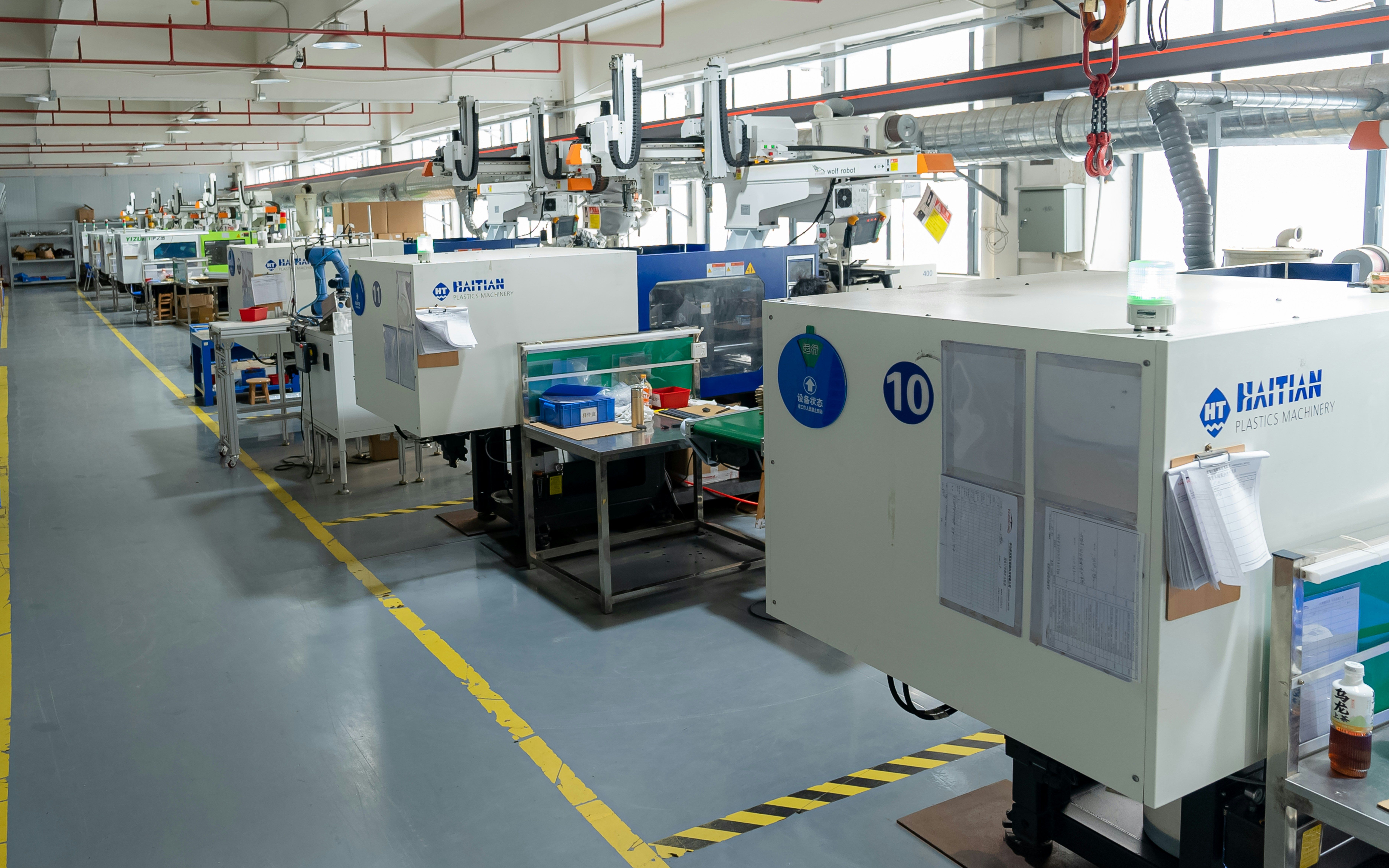
Nearly every manufacturer on this list builds pallets the same basic way: HDPE resin is injection molded into the deck and runner shapes in a single piece, then passed through a UV stabilizer that extends the pallet's usable life outdoors and under repeated handling.
Virgin vs. recycled resin
Some manufacturers mold pallets entirely from virgin HDPE, which holds tighter dimensional tolerances and a more consistent load rating from batch to batch. Others use recycled or reground HDPE, either fully or blended with virgin resin, which lowers material cost but can introduce more variation in wall thickness and color between production runs.
Why the mold design matters
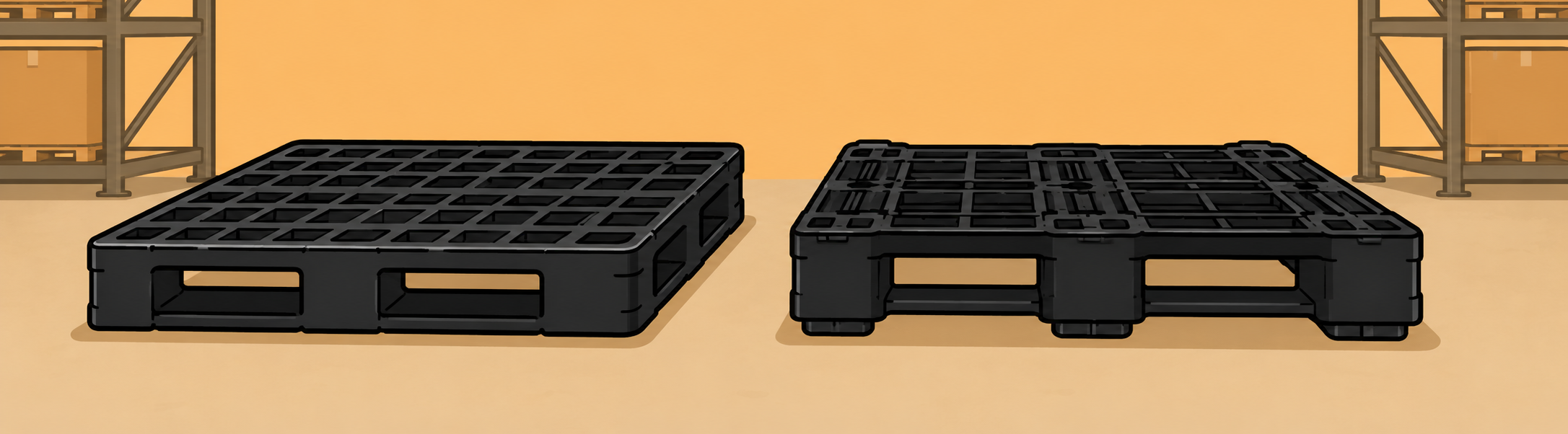
The resin is only half the story. Heavier-duty rackable pallets are molded with thicker runners and internal ribbing to handle higher static and dynamic loads on a rack system. Nestable pallets use a tapered deck profile instead, so empty units stack inside each other and take up less space in a return trailer or storage yard.
Single-piece molding vs. assembled designs
Most of the manufacturers covered here mold the pallet as one piece, which eliminates fasteners that can loosen or corrode over time. A smaller number of designs, more common in patent filings than current catalogs, use co-extruded or assembled composite decks that combine a plastic surface with a reinforced core.
Buy-outright manufacturers
Most operations that own their pallets outright are buying from one of a small group of manufacturers, each with a slightly different catalog focus.
ORBIS Corporation
ORBIS runs a broad rackable line, including a 40 x 48 open-deck rackable design built for repeated warehouse racking rather than one-way shipments.
Rehrig Pacific
Rehrig Pacific has one of the widest size ranges of any manufacturer covered here, spanning a 40 x 40 wide stringer dairy pallet, several 40 x 48 rackable and GMA rackable formats, a 32 x 40 pallet, a 32 x 37 pallet, and both low-deck and high-deck 44 x 56 stackable designs. That range makes them a common choice for operations that need more than one pallet size from a single supplier.
Greystone Pallets
Greystone runs the most specialized catalog in this group: a 48 x 48 standard, a 44 x 30 keg pallet, a 48 x 40 nestable 3-runner design, a 45 x 48 automotive pallet, a 48 x 45 no-lip version, a 48 x 40 two-rod valve pallet, a 56 x 44 size, and both dual-deck and 5-runner 48 x 40 designs. That level of variety is aimed at buyers with a specific handling requirement rather than a generic footprint.
Monoflo International
Monoflo offers both nestable and rackable versions in similar footprints, including 48 x 45, 48 x 40, and 30 x 42 nestable pallets alongside a 48 x 40 rackable design, which lets a buyer switch pallet types without changing dock or rack dimensions.
Vestil Manufacturing, Nelson Company, and Craemer
Vestil Manufacturing and Nelson Company both sell standard 48 x 40 rackable pallets as a single core product rather than a large size family, which tends to suit buyers who need one consistent spec across a facility. Craemer publishes a broader plastics catalog covering multiple pallet types, though its published materials focus more on general specifications than named model-by-model spec sheets.
Cabka
Cabka runs one of the broader recycled-material catalogs in this group, spanning lightweight nestable pallets built for export and retail loads, heavy-duty designs rated for high racking and automated systems, and hygienic pallets built for food and pharmaceutical environments.
Robinson Industries
Robinson Industries has one of the longest histories in this group, credited with inventing the reusable plastic pallet more than 50 years ago. Its current line runs on thermoformed and injection molded construction, including twin-sheet designs, rather than the single-piece injection molding most other manufacturers here rely on.
Buckhorn Inc.
Buckhorn, operating under the Myers Industries umbrella, sells plastic pallets alongside a broader line of totes and bins, which makes it a common choice for buyers who want to source pallets and other plastic handling equipment from a single supplier.
Pallet pooling providers
How the exchange actually works
A pooling provider delivers loaded pallets to a distribution center, then either collects empty pallets on a return run or exchanges them through a regional service center. Billing is usually per pallet per trip or per movement, rather than a flat purchase price, which shifts the cost of loss, damage, and repair onto the provider instead of the shipper.
When pooling makes more sense than owning
Pooling tends to fit high-volume, closed-loop supply chains, like grocery and beverage distribution, where the same retailers and distribution centers see repeat volume and pallets can cycle back through the network. It fits less well for irregular or one-way shipments, where there's no reliable path for the provider to recover the pallet.
Tosca
Tosca runs a pooling model similar to CHEP and iGPS Logistics, renting out reusable plastic pallets and containers rather than selling them outright, with a focus on grocery and retail supply chains.
Common pallet sizes and specialty designs
48 x 40 is the most common footprint across manufacturers, offered by ORBIS, Vestil, Nelson Company, Monoflo, and Greystone in some form. But several manufacturers also build for narrower use cases that don't show up in a generic size chart.
Source: manufacturer spec sheets, see Sources below.
The wider plastic pallet market
Beyond the manufacturers profiled above, dozens of other companies touch the plastic pallet market in some way, from smaller regional manufacturers to pooling providers, repair shops, and distributors. Here's how the wider field breaks down.
Additional pallet manufacturers
Source: manufacturer websites and industry directories, see Sources below.
Pallet pooling and leasing providers
- Arcawa, Logisall (also listed as Logistall), and Engels Logistiek. Additional companies operating in pallet pooling and logistics, without independently verified program details to describe further here.
Pallet repair and reconditioning
- APR Allen Plastics Repair. A plastic pallet repair specialist based in Indiana, rather than a manufacturer.
- Kiva Container. A reusable and returnable plastic packaging company, formerly known as CP Products.
Distribution, equipment, and adjacent suppliers
- Uline. A major industrial distributor that sells plastic pallets among thousands of other products, rather than manufacturing them.
- DENIOS. A manufacturer of safety storage and spill containment equipment, not plastic pallets.
- ELKOPLAST CZ. A Czech manufacturer of waste collection and water management equipment, not plastic pallets.
- Gibraltar Plastic Products. A manufacturer of plastic retail displays and signage, not pallets.
- Alpha Packaging. A manufacturer of plastic bottles and containers, not pallets.
- Chase Doors. An industrial door manufacturer, unrelated to pallets.
- Rapid Racking Ltd. A warehouse racking systems supplier, not a pallet manufacturer.
- Advance Cutting Systems. An industrial cutting equipment manufacturer, unrelated to pallets.
- Basic Crating & Packaging. A custom crating and packaging service provider, not a pallet manufacturer.
- American Surplus, Southland Equipment Service, Superlift Material Handling, Premier Handling Solutions, MH Containers & Equipment Co., and Nationwide Industrial Supply. Material handling equipment dealers and distributors that may carry plastic pallets but do not manufacture them.
How pallet height varies by manufacturer
Footprint gets most of the attention when comparing manufacturers, but height varies just as much and gets checked far less often. Two rackable pallets from different manufacturers can share the same 48x40 footprint and still differ by half an inch or more in overall height, which matters once you are fitting a specific model into your existing rack beam spacing or confirming forklift tine entry clearance.
Source: manufacturer spec sheets, see Sources below.
The differences look small on paper, but they compound across a beam rack layout or a full trailer load. Always confirm the exact height and tine entry clearance on the spec sheet for the specific model, not just the manufacturer's general product line, before ordering at volume. For overall height ranges by pallet type rather than by brand, see our sizes and dimensions guide.
Choosing between manufacturers
The right manufacturer usually comes down to whether you need to own the pallet or just move a shipment once. If you're buying outright, look at whether the manufacturer publishes a full spec sheet with load ratings and resin type, since that consistency matters more over repeat orders than a slightly lower unit price. If your customer network already runs on a specific pooling provider's pallets, matching that provider avoids extra handling and return logistics on your end.
Regional availability and lead times are also worth checking before settling on one manufacturer. A few, like Rehrig Pacific and ORBIS, run wide distributor networks, while others are more regionally concentrated, which can affect how quickly a repeat order actually ships.
Finally, consider how easily a manufacturer's design fits your existing equipment. A pallet built for one rack system or automated line doesn't always transfer cleanly to another, so matching deck style and runner configuration to what you already run in the warehouse can save a redesign down the road.
Frequently asked questions about plastic pallet manufacturers
Do plastic pallet manufacturers sell direct, or only through distributors?
It depends on the manufacturer. Some, like the larger industrial names covered above, sell through a distributor network as well as direct inquiries, while smaller or more specialized manufacturers tend to handle orders directly. Checking a manufacturer's own site for a distributor locator or minimum order policy is the fastest way to confirm which applies.
Can I buy directly from a pooling provider like CHEP or iGPS Logistics?
Not in the same way you'd buy from a manufacturer. Pooling providers rent pallets as part of a service agreement rather than selling individual units, so you'd set up an account with them rather than placing a one-time purchase order.
Do all plastic pallet manufacturers offer food-grade or FDA-compliant pallets?
No. Food-grade compliance depends on the specific resin and additive package a manufacturer uses for a given model, not the manufacturer as a whole. A single manufacturer can offer both food-grade and non-food-grade pallets across different lines, so it's worth confirming compliance on the specific model rather than assuming it based on the brand.
Can I get a custom pallet size from these manufacturers?
Some can accommodate custom sizing or specialty features, especially manufacturers that already run varied catalogs like Rehrig Pacific or Greystone Pallets, but custom tooling usually comes with a minimum order quantity and longer lead time than a stock size. It's generally worth checking whether an existing specialty design already fits your need before requesting a custom mold.
What happens if a manufacturer discontinues a pallet model I already use?
This is one of the practical risks of standardizing on a single manufacturer's model. If a specific design is discontinued, you're often left sourcing a close match in size and load rating from a different manufacturer, which can mean re-testing fit with your racking or automation. Keeping the original spec sheet on file makes that comparison much easier if it happens.
Sources
This page draws on peer-reviewed research covering how plastic pallets are manufactured and used, alongside published spec sheets from the manufacturers named above.
Peer-reviewed research
- Journal of Industrial Ecology - Anil et al., 2020. Life cycle inventory study comparing wooden and plastic pallets, including the HDPE resin, injection molding, and UV stabilization steps referenced in the manufacturing section above.
- The International Journal of Life Cycle Assessment - Khan et al., 2021. Comparative assessment of wood, plastic, and wood-polymer composite pallets, source for the estimated 100-trip service life of a pooled plastic pallet versus roughly 15 trips for a wood pallet.
Manufacturer specifications
- ORBIS Corporation. Rackable open-deck pallet specifications.
- Rehrig Pacific. Rackable pallet spec sheet, representative of the size range cited above.
- Greystone Pallets. GS 48 x 48 spec sheet, representative of the specialty catalog cited above.
- Monoflo International. Nestable and rackable pallet spec sheet.
- Vestil Manufacturing. Standard rackable pallet spec sheet.
- Nelson Company. Standard rackable pallet spec sheet.
