

How much do plastic drums cost?
What new and used plastic drums cost in 2026, and why the prices vary so much.
Published October 14, 2026
The short version
- New drums: A new 55-gallon plastic drum typically retails for about $85-$135 each. Smaller drums cost less per drum: roughly $70-$110 for 30 gallons and $45-$90 for 15 gallons.
- Used drums: In our 55-gallon sales, used drums went for about $3-$5 each as-is for pickup and about $20-$23 delivered.
- Bulk pricing: Quantity moves the price. Our new 55-gallon drums sold for $42.50-$50 each in orders of 20 or more drums, well under single-unit retail.
- What drives the price: Size, new or used, closed or open top, and how many drums you buy.
- Shipping: Our delivered quotes include shipping.
How much do new plastic drums cost?
Two things set the price of a new plastic drum before anything else: its size and whether the top is closed or open. The table below shows the typical range for the three sizes people ask about most, based on single-drum to small-quantity prices at national industrial packaging suppliers.
Size does not scale the price in a straight line. A 55-gallon drum holds more than three and a half times what a 15-gallon drum does for about twice the price. At one national supplier, closed-top drums work out to roughly $3.25 per gallon for a 15, $2.65 for a 30, and $1.75 for a 55. The pattern held at every supplier I checked.
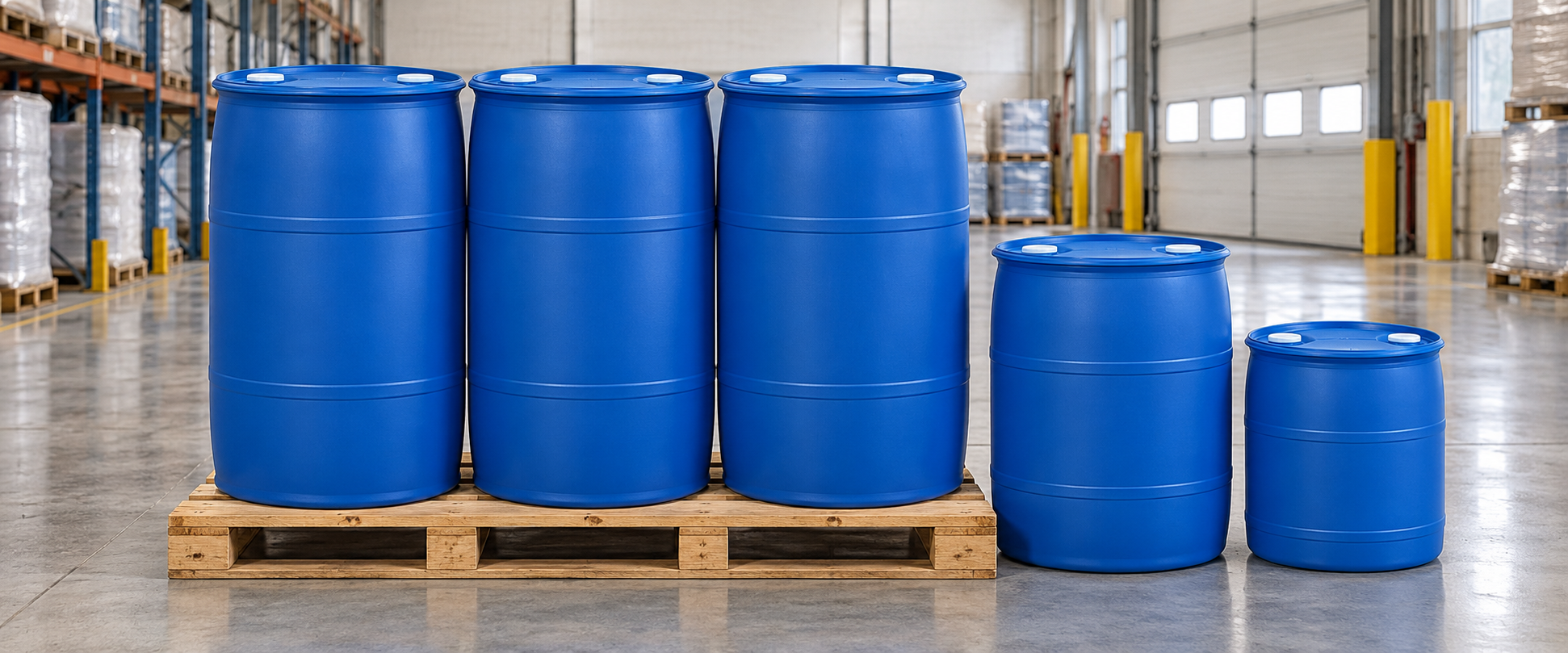
Source: Typical single-drum to small-quantity prices from national industrial packaging suppliers, checked October 2026, rounded to the nearest $5. Prices vary by supplier, color, UN rating, and quantity.
Open-top drums cost more
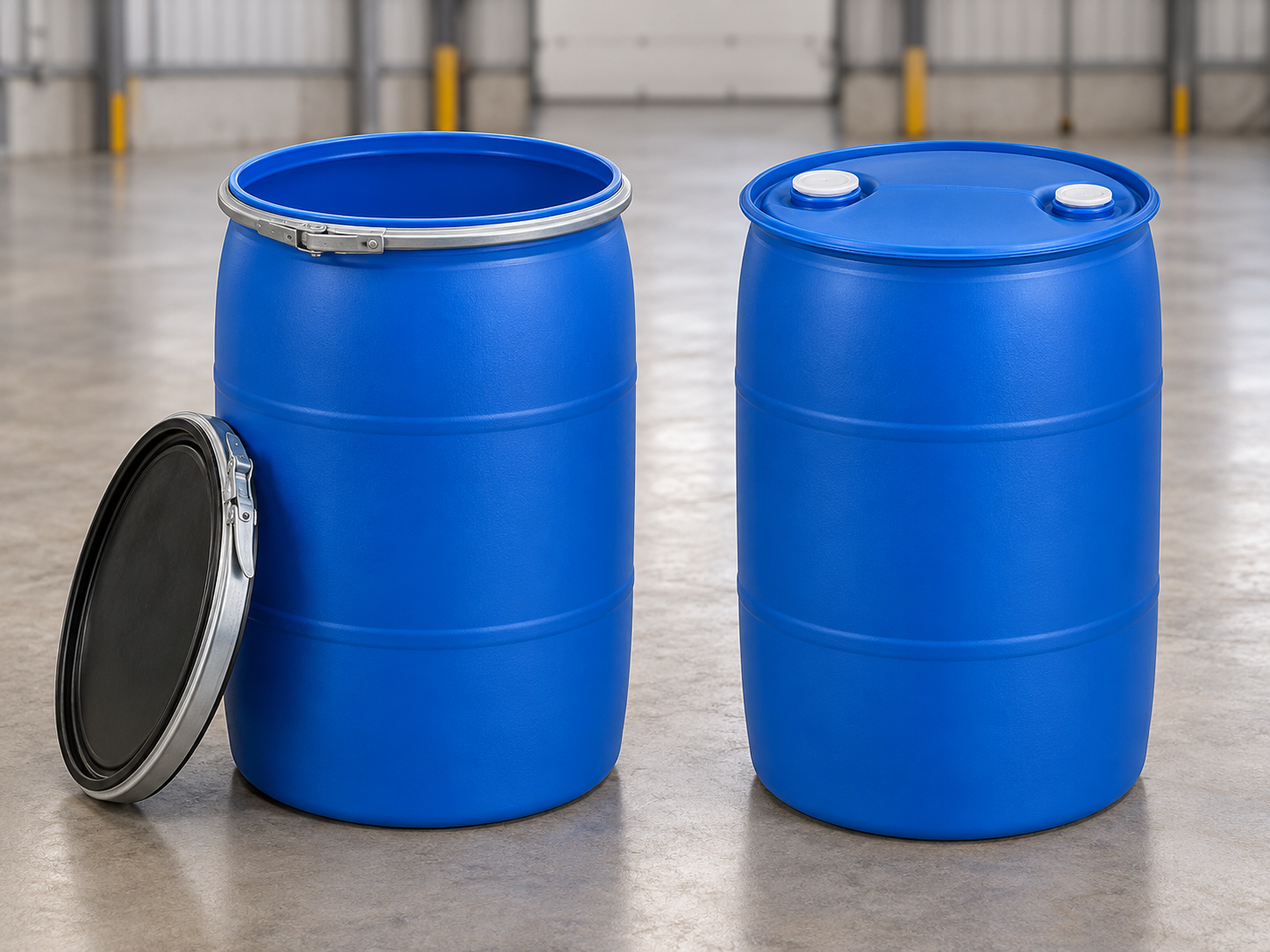
An open-top drum has a removable lid held by a locking ring, so you can fill and empty it by hand or with a scoop. That lid and ring add cost. At one national supplier, the open-top version of the same size ran about $10-$21 above the closed top. The high end of the 55-gallon open-top range is a heavier-rated drum, which is why it sits so far above the rest. For how the two styles differ in fittings and use, see our plastic drum sizes and dimensions guide.
Quantity discounts
Retail suppliers publish their own volume breaks, usually about 5-15% off at 2, 4, or 12 drums. That helps if you need a few drums, but it does not change the scale of the price. When we sold new 55-gallon closed-top drums in orders of 20 or more, they went for $42.50-$50 each, roughly 40-50% below the lowest retail price in the table. Check that the drums you compare carry the same UN rating and weigh about the same before you decide the gap is real.
If 55-gallon drums are what you need, see our 55-gallon plastic drums, or browse the full plastic drums category.
How much do used plastic drums cost?
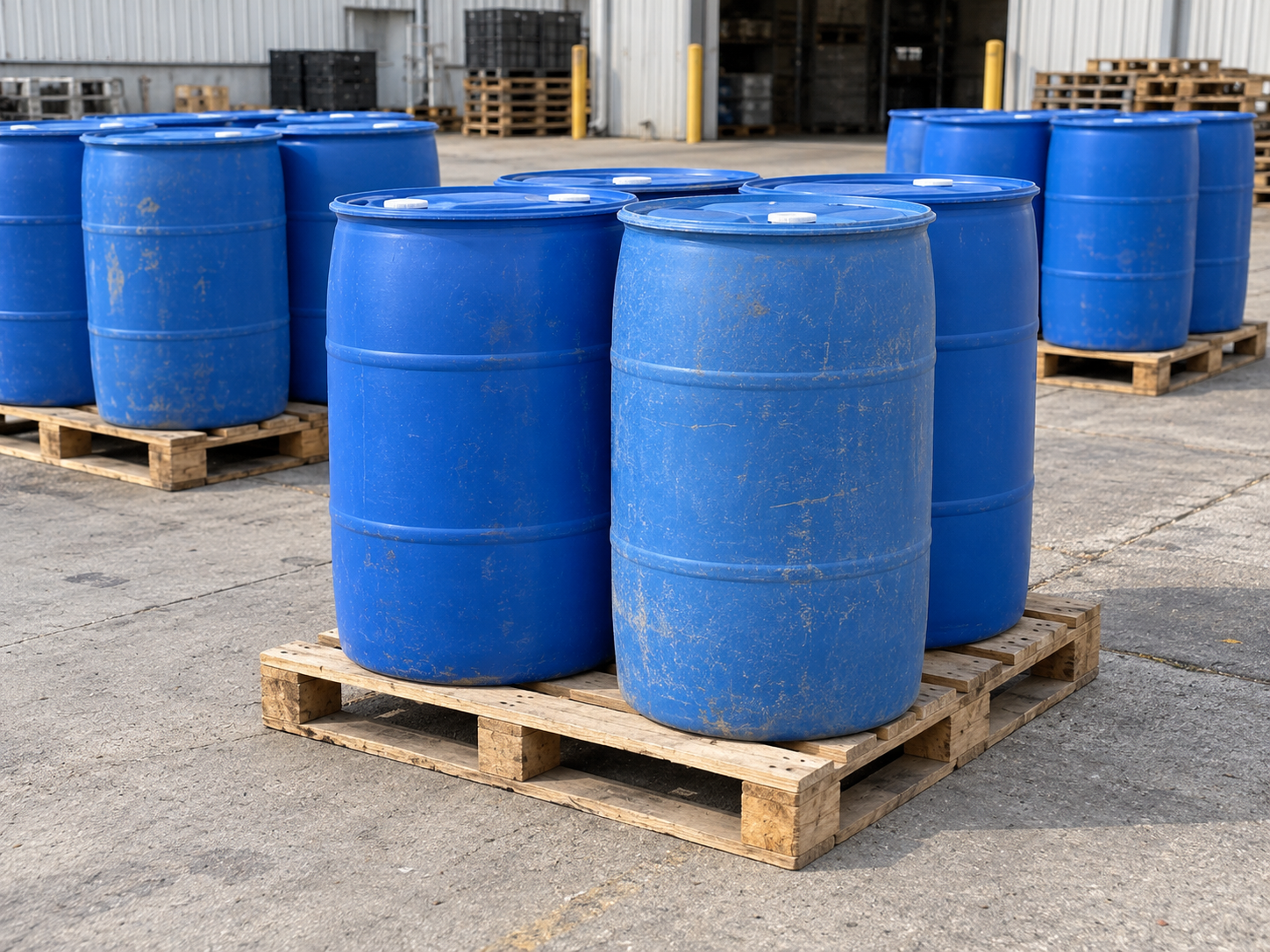
Used plastic drum prices split into two markets that rarely overlap. One is bulk, as-is drums that you collect yourself. The other is drums trucked to your location. The first costs a few dollars a drum. The second costs several times as much.
Our sales cover nearly 7,000 used 55-gallon drums since January 2024, and more than 90% of them sold as-is for pickup. That is why the as-is band is the most common price in the table below.
These figures are for 55-gallon drums because that is the only size we have sold. I would not stretch them to a 30- or 15-gallon drum.
Source: Verde Trader sold-order data for 55-gallon plastic drums, January 2024 to October 2026. Per-drum prices on bulk orders. The as-is range is the middle half of drums sold; the full spread ran from $0.50 to $15. The delivered band is a small sample, so treat it as a rough guide. Archived and dead-deal orders excluded.
What the as-is price covers
An as-is pickup price is the drum and nothing else. You supply the truck, collect from the source site, and take the drums in whatever condition they were in when emptied. That is often unrinsed, with residue from the previous contents, so it suits buyers who plan to clean the drums or use them for something that does not care. If that is you, our guide on how to clean chemicals out of plastic barrels covers the process. Freight is not in the price, so compare an as-is offer to a delivered one on total cost, not on the drum price alone.
What the delivered price covers
The $20-$23 band is a different purchase: the drums come to you by truck instead of you going to them. We have only five orders in that band, so I would not call it a market price. Quantity and where the drums are going change the number, which is why delivered used drums are quoted per order.
Used prices have drifted down
The average price on as-is pickup orders has slid since mid-2024: about $4.35 per drum in the second half of 2024, about $4.00 in the second half of 2025, and about $3.60 in 2026 so far. Those are averages weighted by drum, so large orders count for more.
To see what we have available now, browse our used plastic drums.
What about reconditioned plastic drums?
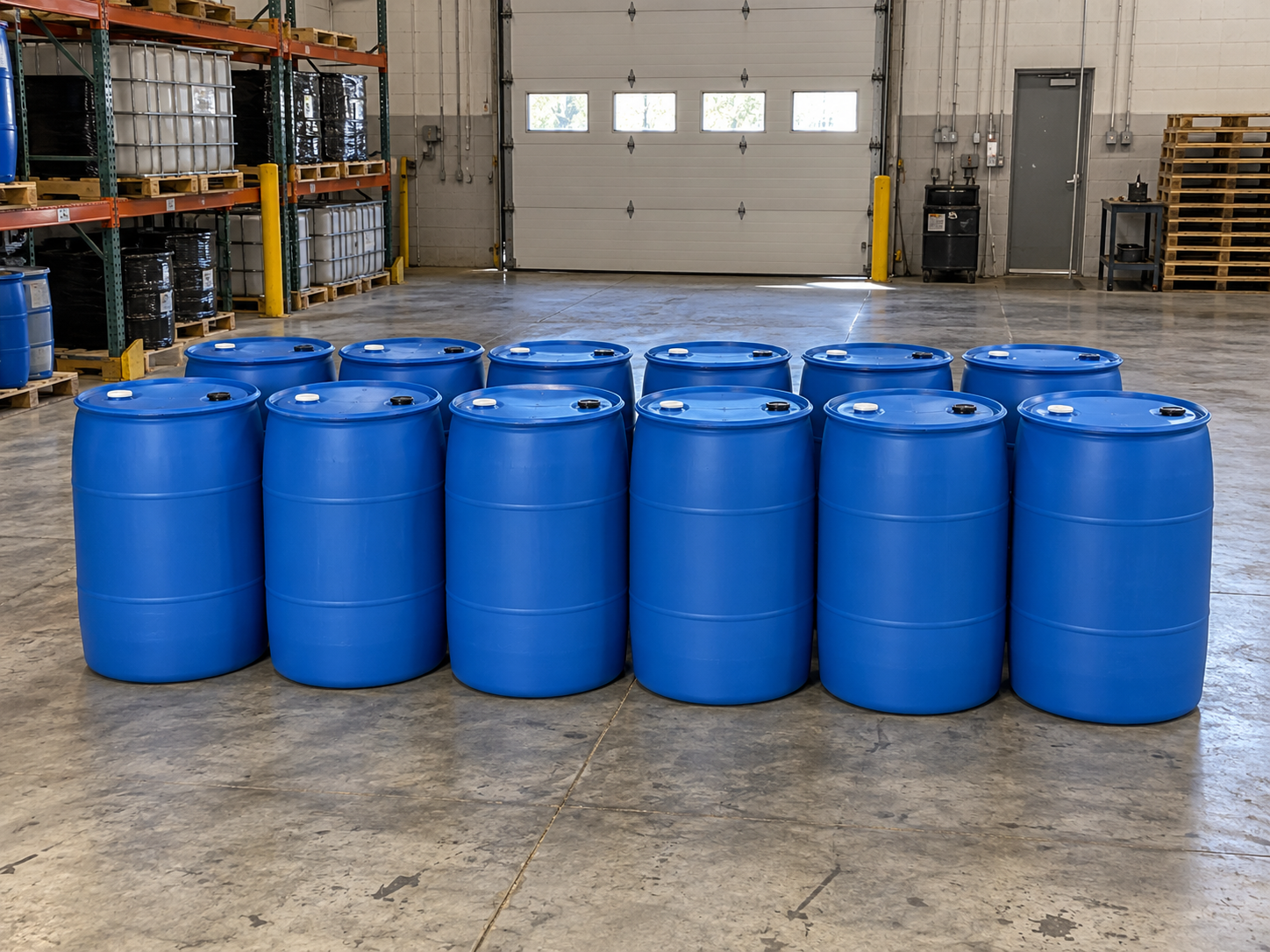
Reconditioned has a defined meaning for plastic drums. Under the federal packaging rule, 49 CFR 173.28, a reconditioned drum has had its former contents, labels, and coatings removed, been cleaned back to the original plastic, had its separate gaskets and closures replaced, and been inspected for damage. The EPA describes the work as cleaning, restoring, testing, and certifying a drum for resale and reuse, and for plastic drums the cleaning is done by washing with water and a caustic solution.
I do not have a reliable sold-price figure for reconditioned plastic drums, so this page does not show one. What I can say is that the work is real, so expect a reconditioned drum to cost more than an as-is used drum. How much more depends on who did the work and what you get for it.
What to check before you buy one
- Who reconditioned it. A reconditioner marks the drum to certify that it conforms to the standard it is marked for. Ask to see the marking.
- What was replaced. Ask whether the separate gaskets and closures were replaced. That step is part of the definition, so the answer tells you what the word means for that seller.
- What it held before. A drum should not be reused unless it is free of incompatible residue and of damage that weakens it. Ask what the drum held and whether that is compatible with what you plan to store.
For help finding a source, see our guide on where to buy plastic drums.
What moves plastic drum prices?
Size, new or used, and quantity do most of the work, as the sections above show. A few features move the price in less obvious ways, and they do not work the same on new and used drums.
Top type is the clearest example. A new open-top drum costs more than a closed-top drum of the same size. Among as-is used drums, closed top sold for more. A lid and ring close part of the gap, but not all of it.
Source: Verde Trader sold-order data for 55-gallon used drums sold as-is for pickup, January 2025 to October 2026. Averages are weighted by drum. The two lid rows are subsets of the open-top row, and one small order with a screw-on lid is not shown. Archived and dead-deal orders excluded.
UN rating matters less on the used market
A UN rating means a drum is built and tested to the standard in 49 CFR 178.509, and the marking on it tells you what it is allowed to carry. As-is buyers did not pay much extra for it: UN-rated open-top drums averaged about $2.95 each, against $2.67 for non-rated open-top drums. If you will ship regulated materials, the rating is usually a requirement, not an upgrade.
To compare two quotes fairly, match the size, the top type, new or used, pickup or delivered, and what comes with the drum, such as the lid and ring.
Should you buy new or used plastic drums?
Three questions settle most new-versus-used decisions: what will touch the drum's contents, whether the drum has to carry regulated materials, and how many identical drums you need. Price is the fourth question, not the first.
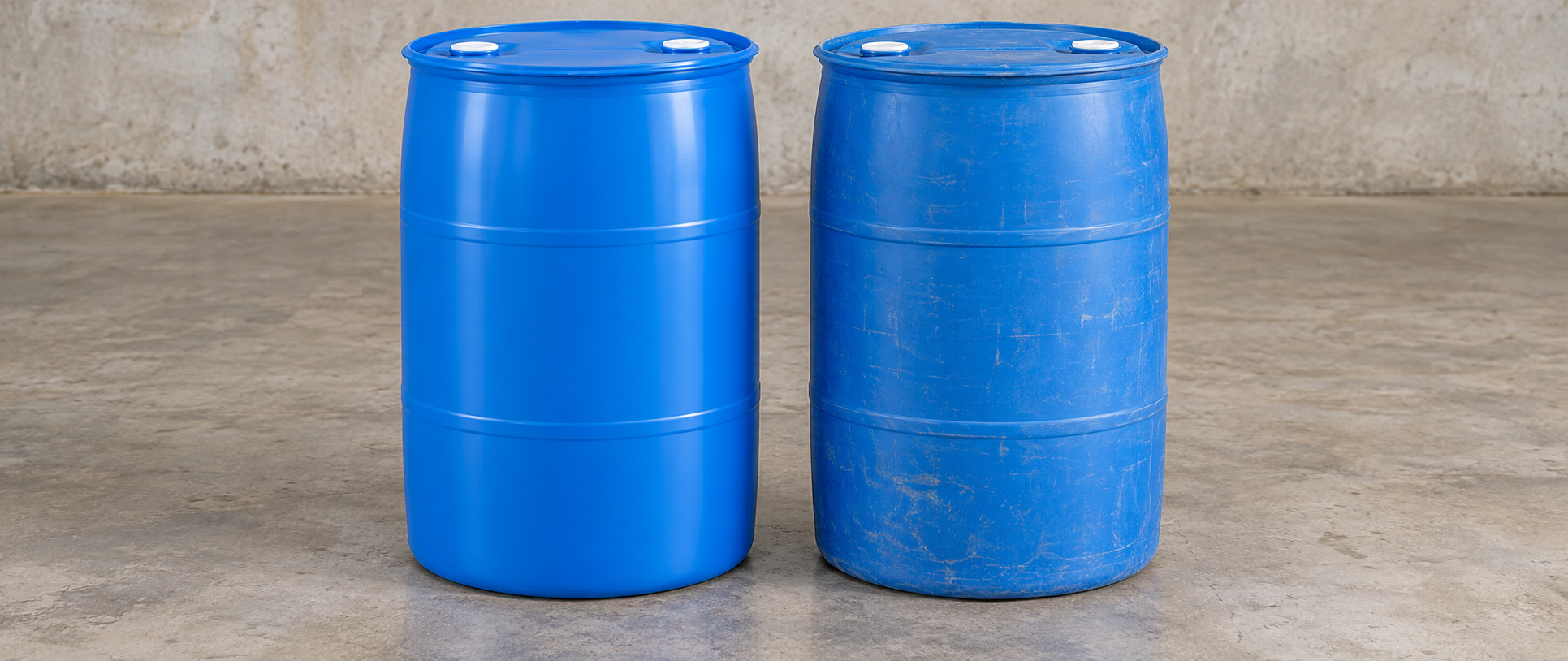
In our sales, an as-is used drum costs about a tenth of a new one, and a delivered used drum about half. That saving is real when the job allows it. It disappears if you end up replacing a drum that should have been new.
Source: Guidance summarized from CDC safe water storage advice, 49 CFR 178.509, and 49 CFR 173.28. The price comparison above uses Verde Trader sold-order data.
Food and drinking water is the hard line
Most of these choices are about cost. This one is about safety. The CDC advises against using any container that previously held toxic chemicals, such as pesticides or petroleum products, to store drinking water. A used drum with unknown contents cannot meet that test, so buy new, or buy used only if you know exactly what the drum held and can clean it properly.
For a side-by-side of new, used, and reconditioned drums, see our guide to new vs. used plastic drums.
What we have sold
The sold-price figures on this page come from our own records: nearly 150 plastic drum orders since January 2024, covering more than 12,000 drums. Nearly 7,000 were used and more than 5,000 were new.
New drums mostly move by the truckload, in orders of 345 to 399 drums. The table shows what those orders and the smaller ones cost.
Source: Verde Trader sold-order data for new 55-gallon drums, November 2025 to September 2026. Delivered orders include shipping in the quoted price; one smaller order was picked up. Archived and dead-deal orders excluded.
The $3 step in July is the only price change in the data. Two of the three smaller orders paid about $7 more per drum than the truckload price at the time. The third, at 67 drums, got the truckload price.
Get a quote for your quantity
Prices move with quantity, size, and where the drums are going, so the fastest way to a real number is to ask. Tell us the size, whether you want new or used, how many, and where they need to go, and I will quote it with shipping included on delivered orders. You can also browse our plastic drums.
Frequently asked questions about plastic drum pricing
What counts as an empty drum?
Under the federal RCRA rule at 40 CFR 261.7, a container that held hazardous waste is considered empty once everything that can be removed by pouring or pumping is out and no more than one inch of residue remains on the bottom. For containers of 119 gallons or less, a residue of no more than 3 percent of the container's capacity by weight also qualifies. That is a regulatory threshold, not a cleanliness standard, so a drum that counts as empty can still carry residue.
Is there a minimum wall thickness for reusing a plastic drum?
Yes. Under the federal reuse rule at 49 CFR 173.28, plastic drums must meet a minimum wall thickness to be reused, and for drums in the 55-gallon range that minimum is 2.2 mm (0.087 inch). Our plastic drum sizes and dimensions guide covers typical wall thickness and empty weight by size.
How many 55-gallon drums fit on a pallet?
Four is the standard for 55-gallon drums, and it is what most of our listings use. A few styles ship differently, so check the listing for the exact count.
Can I buy just a few drums?
Most of what we sell goes out in bulk, so the prices on this page are bulk prices. Our smallest new-drum order was 20 drums, and minimum order quantities vary by listing. If you need only a few, tell us the quantity and where they are going and we will tell you what we can do. The retail ranges in the new drum section are a better guide for single drums.
What happens to used drums that are not resold?
The EPA lists three routes for used drums: landfill disposal, recycling, or reconditioning and refurbishing for reuse. Which route a drum takes depends on its condition and what it held.
We recycle plastic drums across the US.
Sources
This page stands on two legs: federal regulations and agency guidance that define what a reconditioned, UN-rated, or empty drum is, and Verde Trader's own sold-order records that show what people actually pay. They answer different questions, so we keep them separate.
Federal regulations (what is defined)
- 49 CFR 173.28. Reuse, reconditioning, and remanufacture of packagings. Defines what reconditioning involves for plastic drums and sets the conditions for reuse, including minimum wall thickness. The basis for the reconditioned drum section and the wall thickness answer in the FAQ.
- 49 CFR 178.509. Standards for plastic drums and jerricans. The UN performance standard behind the UN rating discussed in the section on what moves drum prices.
- 40 CFR 261.7. Residues of hazardous waste in empty containers. The RCRA rule that defines when a drum counts as empty, used in the FAQ.
Agency guidance (background)
- U.S. EPA - Used Drum Management and Reconditioning. The agency's overview of how used steel and plastic drums are cleaned, tested, and certified for reuse, or recycled or discarded. Source for the reconditioning description and the FAQ answer on unsold drums.
- CDC - Safe Water Storage. Guidance on which containers should not be used to store drinking water, including containers that previously held toxic chemicals. The basis for the food and drinking water advice in the new-versus-used section.
Our sales data (what people actually pay)
- Verde Trader sold-order data. More than 140 plastic drum orders through October 2026, covering more than 12,000 55-gallon drums. The used and new price ranges, averages, and order counts on this page come from these records. Archived and dead-deal orders are excluded.
