

New vs. Reconditioned vs. Used Plastic Drums: What's the Difference?
Not every "used" drum has been through the same process, here's how new, reconditioned, and used HDPE drums differ in cost, safety, and what you can legally store or ship in them.
Published October 5, 2026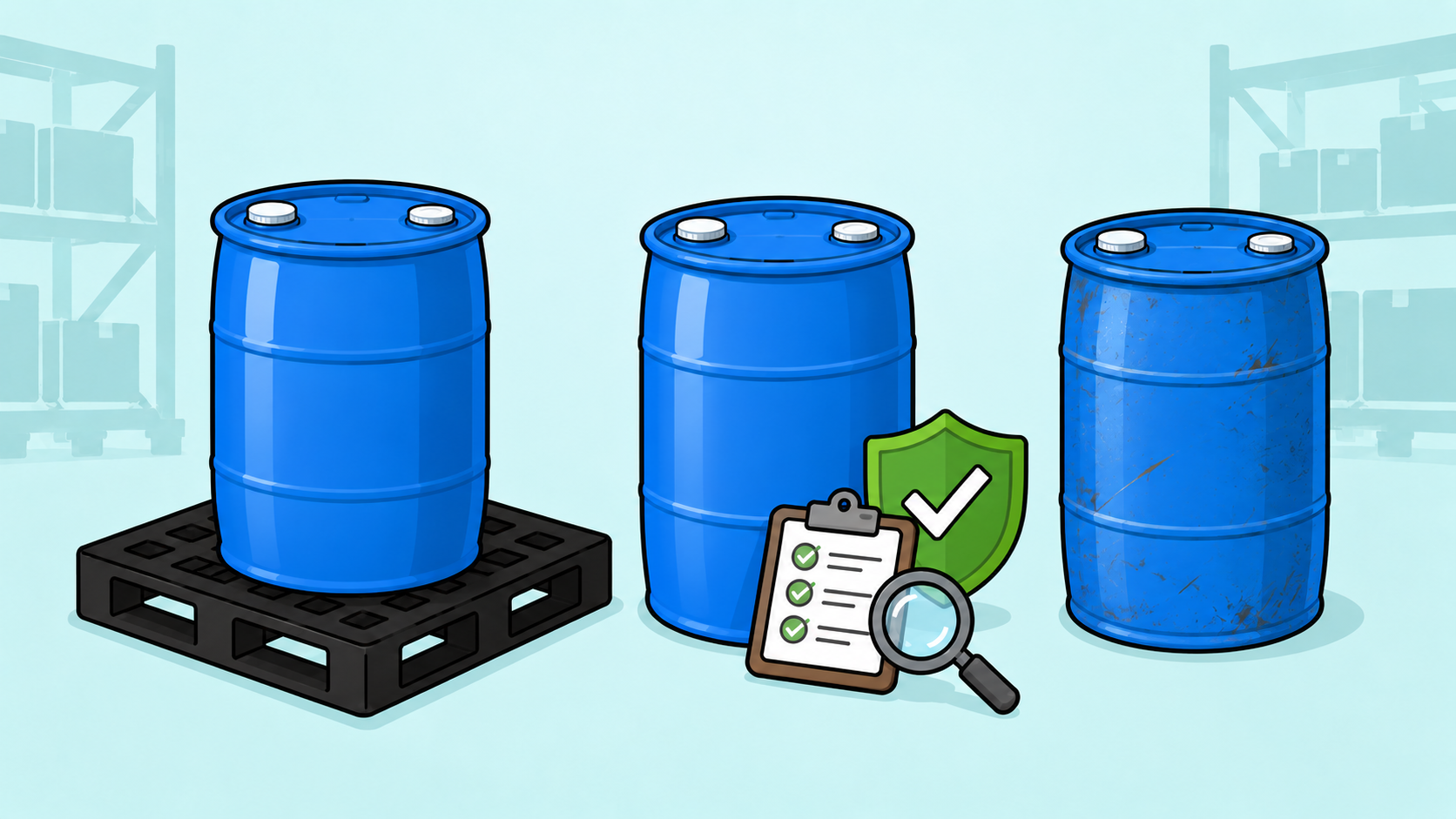
Key takeaways
- Reuse limit: for DOT-regulated hazardous-material shipments, plastic drums more than five years from their marked manufacture date generally need leakproofness testing before each reuse. Check the drum’s markings and applicable regulations.
- Certification: reconditioned drums intended for DOT-regulated hazardous-material shipments must meet the applicable reconditioning, testing, and marking requirements for that use
- Safety standard: used drums must meet the RCRA "empty container" rule (no more than 1 inch, or 3% by weight, of residue) before they can be resold.
- Best fit: used drums work for most industrial liquids and dry goods; new drums make sense for food-contact, pharma, or first-certification needs.
What is the difference between a new and a used plastic drum?

A new plastic drum is blow-molded from virgin HDPE resin and has never held a product. It ships with a full DOT/UN certification and a fresh five-year reuse clock. A used, reconditioned drum has already held one or more products and has been through an industrial cleaning and inspection process before it's resold.
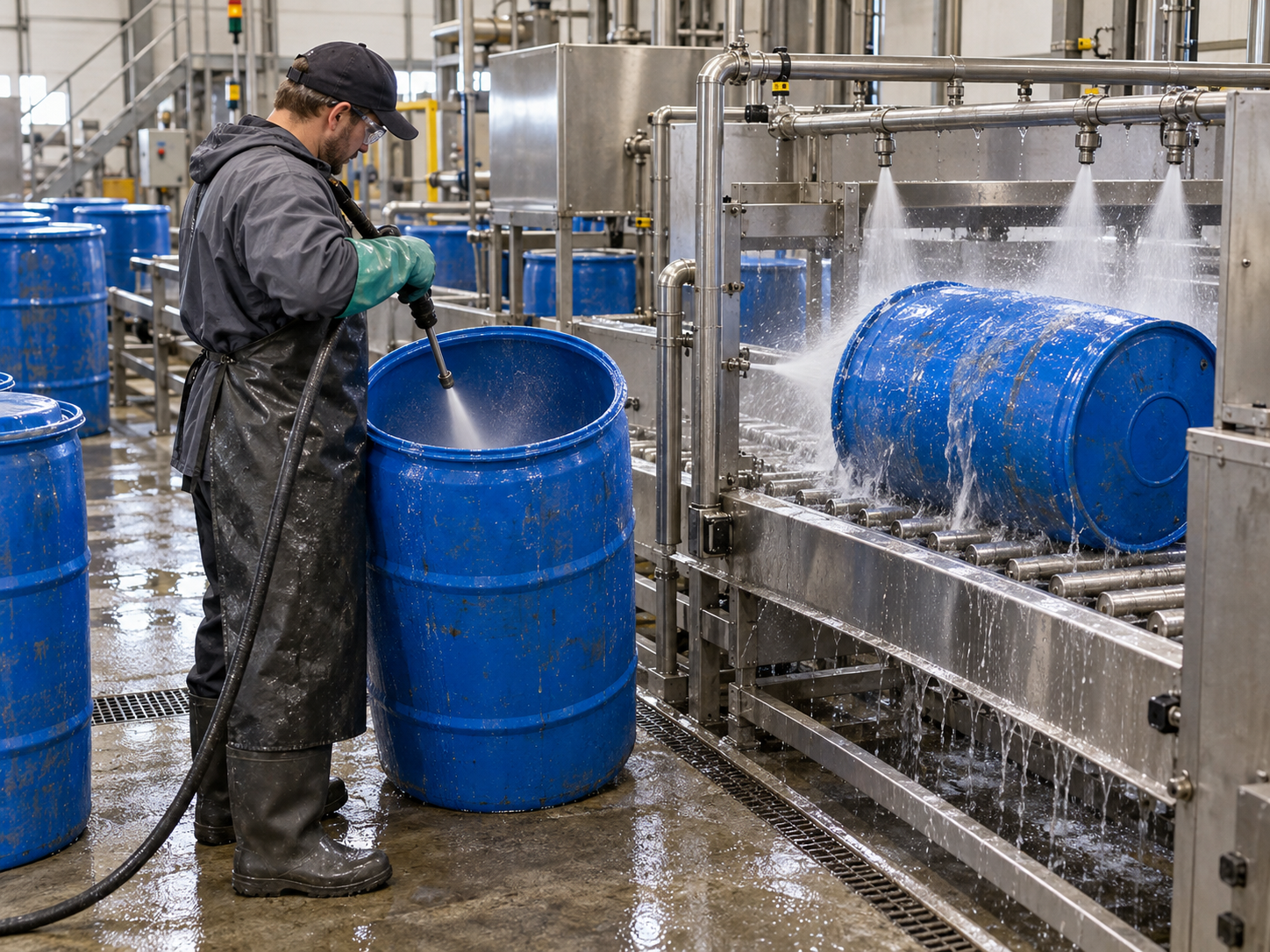
Reconditioning a poly drum means washing the inside and outside with alternating submersion and high-pressure alkaline solution, inspecting it for structural integrity, and leak testing it to USDOT and UN standards before it can legally go back into service. Not every used drum has been through that process. "Used" and "reconditioned" aren't automatically the same thing, so it's worth asking your supplier which one you're actually getting.
Source: 49 CFR §178.509 (new drum construction/testing standards) and 49 CFR §173.28 (reuse and reconditioning standards).
How much do new and used plastic drums cost?
Used plastic drums cost meaningfully less than new ones because they skip the cost of virgin resin and new tooling. The gap depends on drum size, condition, and whether the drum was reconditioned or sold as-is.
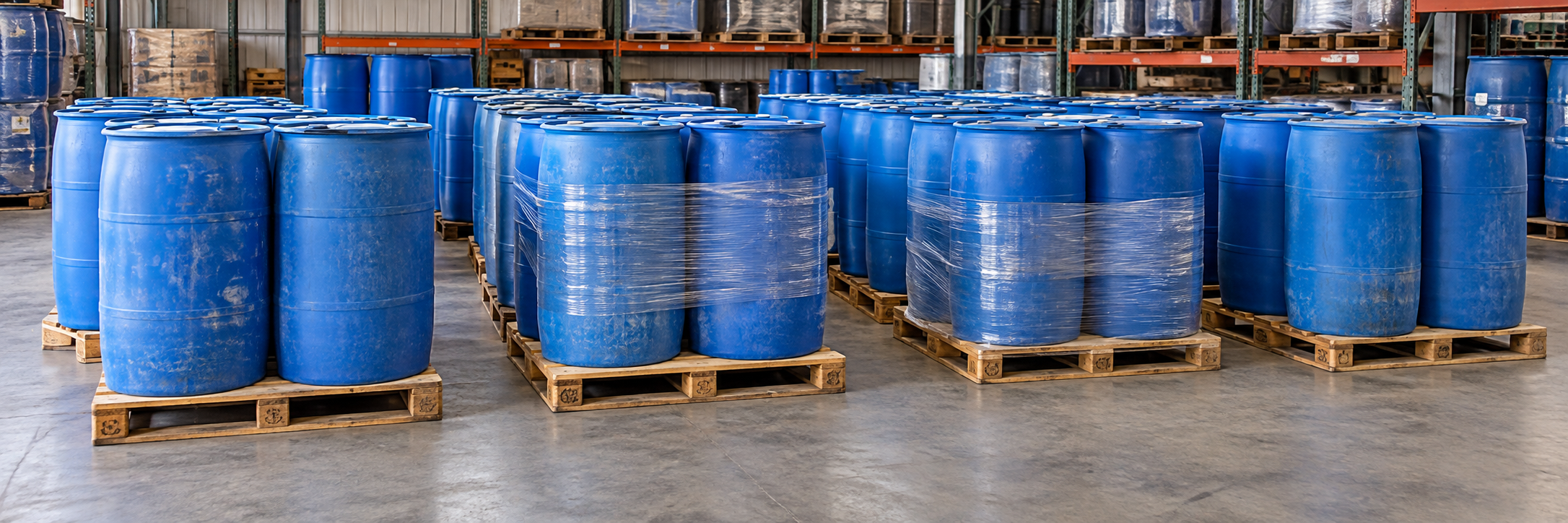
Source: Verde Trader sold-order data, 2026.
For a full pricing breakdown by size and condition, see how much plastic drums cost.
Quality, testing, and how long you can reuse a drum
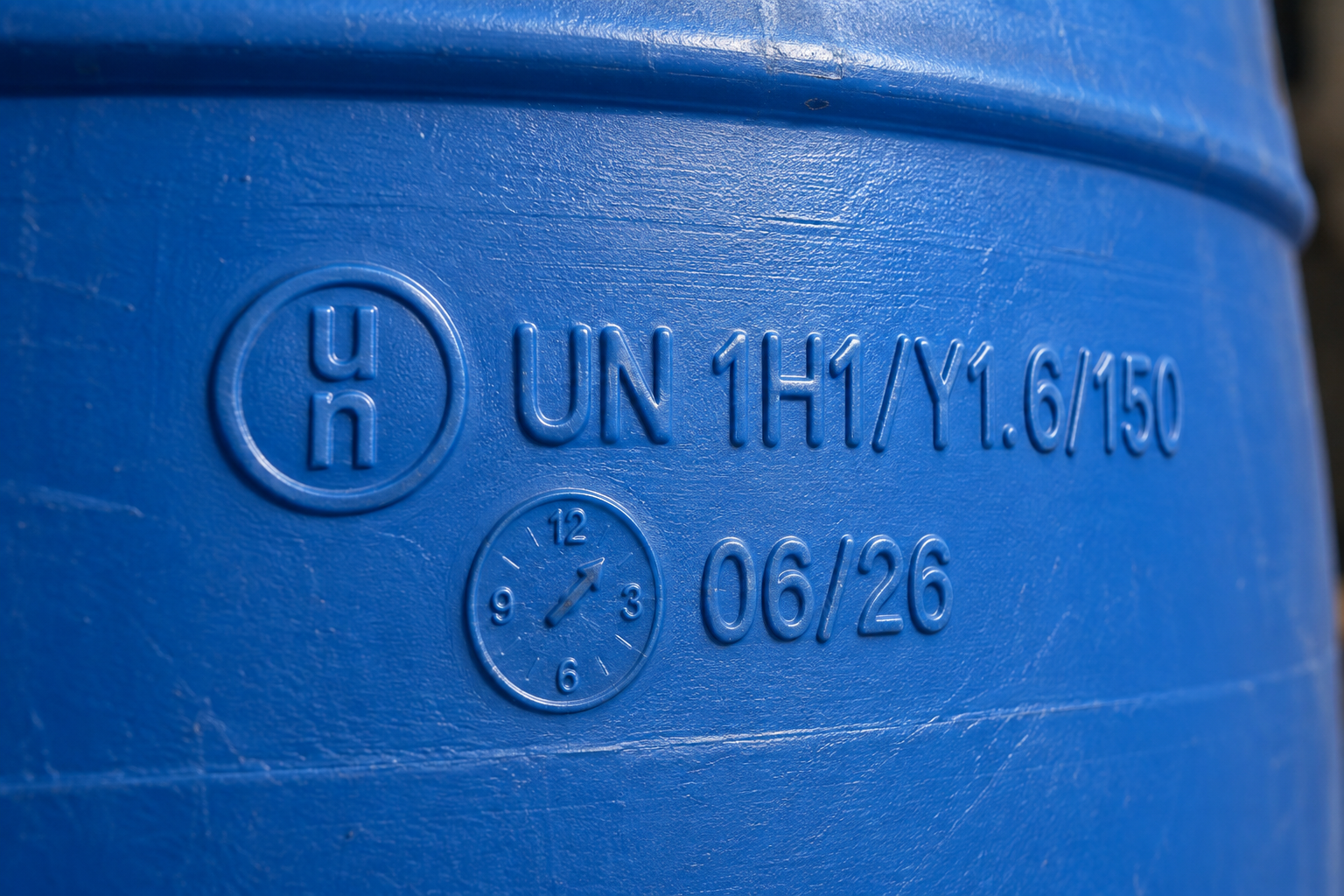
Federal rules limit how long a plastic drum can stay in service, and that limit matters more for used drums than new ones. Under 49 CFR §173.28, a plastic drum can't be reused as UN-rated hazmat packaging more than five years past its original manufacture date. A new drum starts that clock at zero. A used drum's clock started the day it was made A drum reconditioned at year four may need leakproofness testing before each later reuse for DOT-regulated hazardous-material shipments.
That clock applies to drums shipping DOT-regulated hazardous materials. If you're only using the drum for on-site storage of a non-regulated liquid, it doesn't apply in the same way, but it's still a useful proxy for how much structural life is left in the plastic.
What reconditioning actually involves
A poly drum reconditioner washes the drum inside and out with alternating submersion and high-pressure alkaline solution, inspects the shell for cracks, stress marks, and wall thinning, then leak tests it to USDOT and UN standards before it's re-marked and resold. Drums also have minimum wall-thickness requirements by capacity and must pass leakproofness testing at 20 kPa (Packing Groups II/III) or 48 kPa (Packing Group I) to keep their rating.
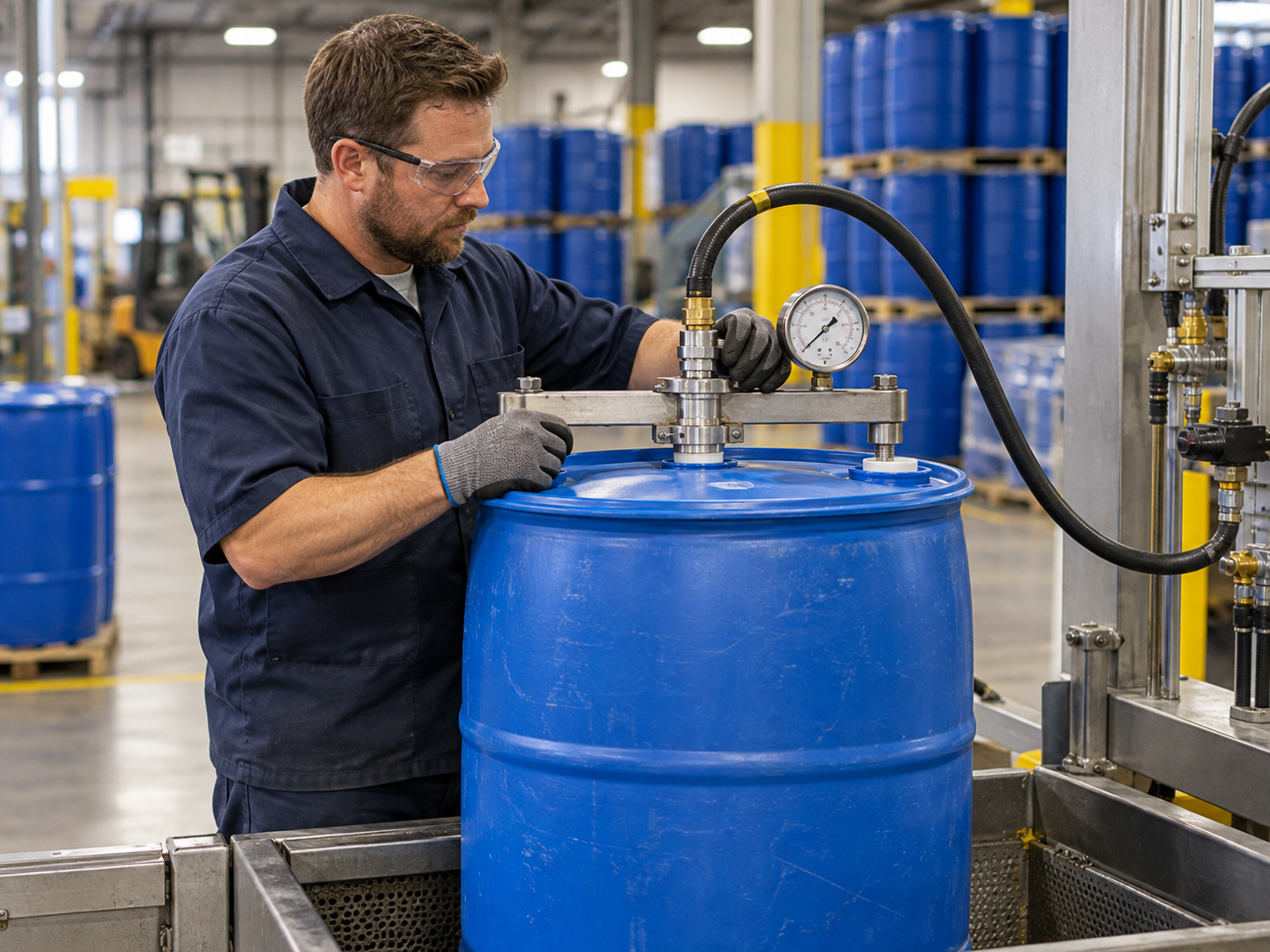
Research on HDPE shows that UV exposure and repeated chemical contact measurably change the polymer's mechanical and barrier properties over time. That's the reason reconditioners inspect wall thickness and re-test every drum instead of just rinsing and reselling it.
If a drum has been stored outdoors for years before you buy it, ask when it was manufactured and when it was last leak tested, not just when it was "reconditioned."
Chemical resistance and contamination risk
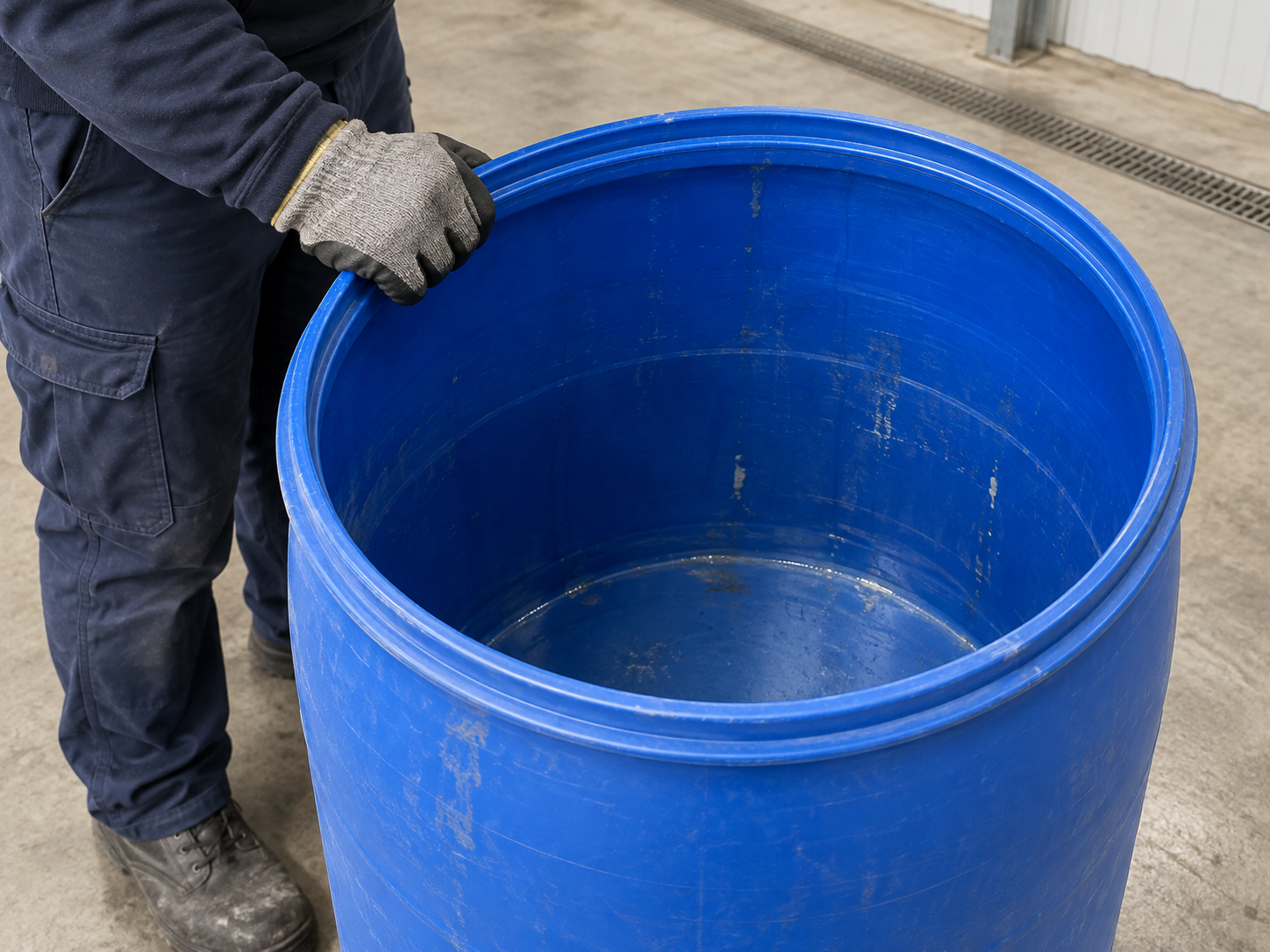
HDPE plastic drums are commonly used to move acids, other corrosives, water-treatment chemicals, and soaps, and the resin holds up well against most of them. The real difference between new and used isn't chemical resistance, it's what was in the drum before you got it.
If a drum held hazardous waste, RCRA’s empty-container rule may determine whether residue left inside remains subject to hazardous-waste regulation: all waste that can be removed by normal means (pouring, pumping, aspirating) has been removed, and no more than one inch of residue remains on the bottom, or no more than 3% of the container's capacity by weight for containers under 119 gallons. A drum that doesn't meet that standard isn't legally "empty" and shouldn't be resold as a clean container.
Food-grade and water storage
A used industrial drum is not automatically food-grade. FDA rules on food-contact polyethylene (21 CFR §177.1520) are a manufacturing and resin standard, not something a reconditioner can retroactively apply to a drum that held an industrial chemical. If you need a drum for drinking water storage, buy a drum that's specifically certified food-grade, not just "cleaned." CDC guidance on safe water storage and emergency water supplies makes the same point: reuse a container for water only if it was designed to hold food or beverages.
Buy from a supplier who can tell you what a used drum held and how it was cleaned. That's more useful than "food-grade" or "chemical-grade" as a label on its own.
Environmental impact of reconditioned drums
Buying a reconditioned drum instead of a new one means one less drum's worth of virgin HDPE resin gets produced, and one less used drum goes to a landfill. The EPA tracks drum reconditioning as a legitimate reuse pathway for industrial packaging under RCRA, alongside recycling and disposal.
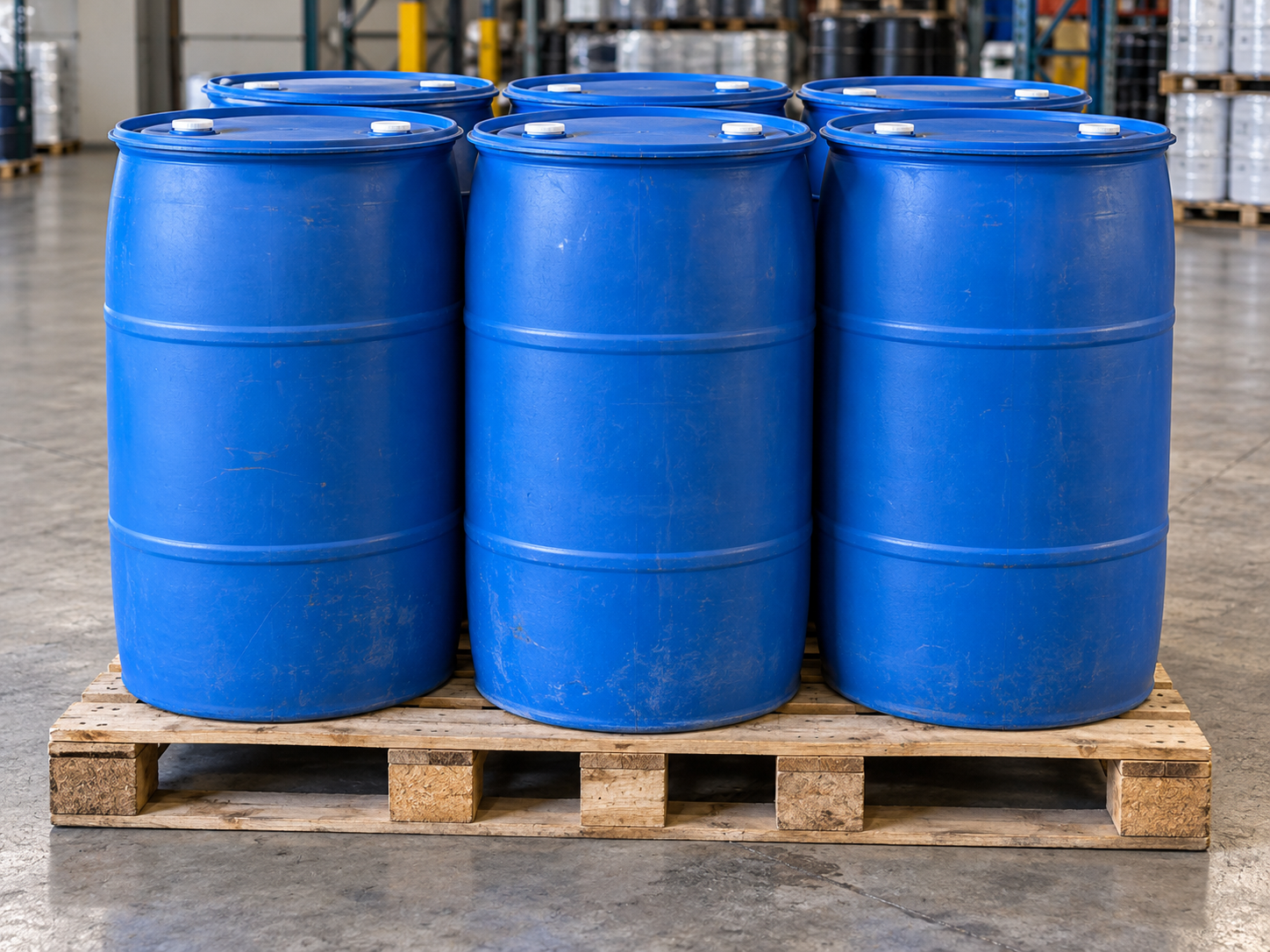
Not every reconditioner runs a tight process. EPA's 2022 review of the industry found compliance gaps at some facilities around the RCRA "empty" standard. That's an argument for buying from a reseller who can tell you where a drum came from and how it was inspected, not an argument against buying used.
Which plastic drum is right for you?
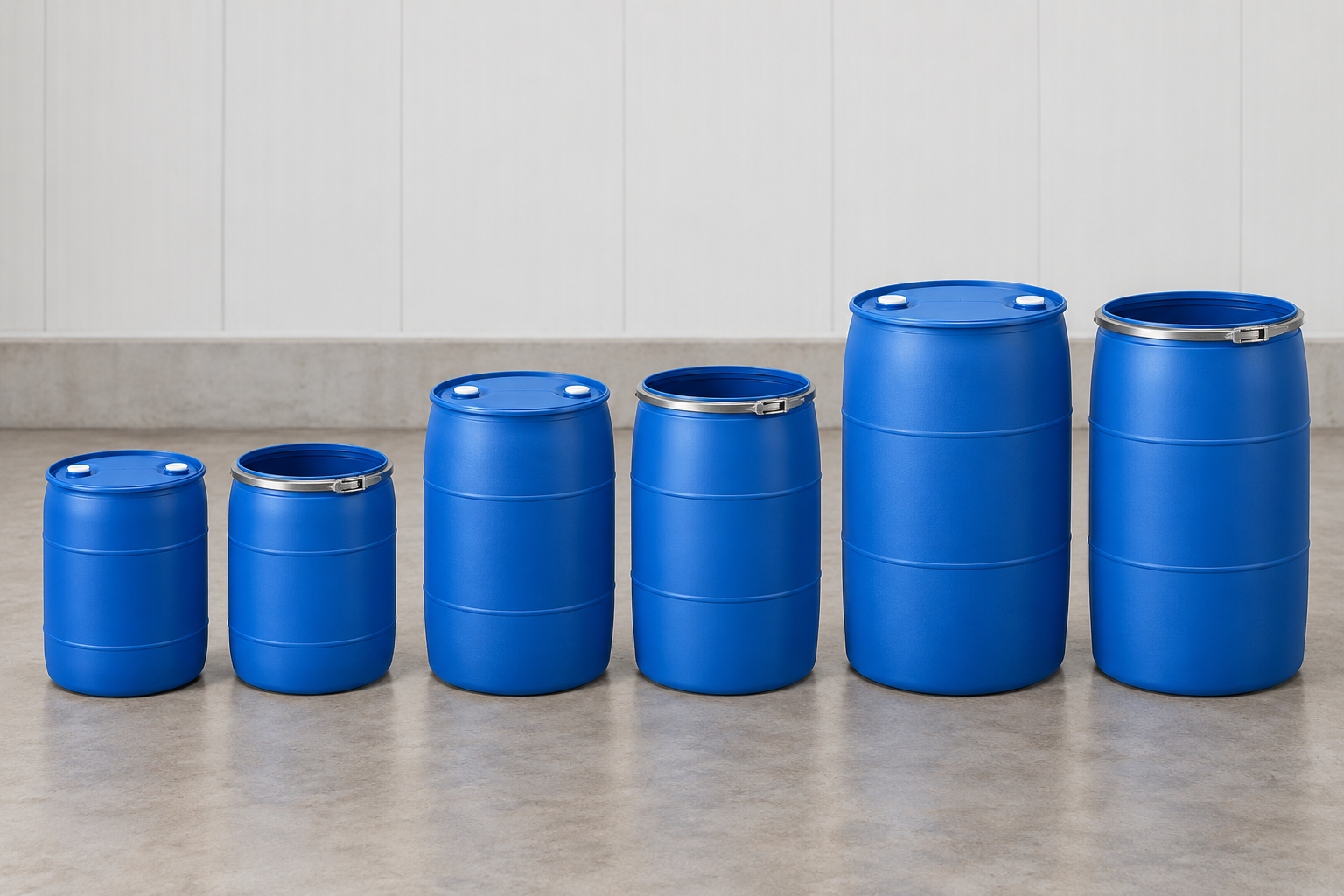
- Shipping regulated hazmat long-term. Check the drum's original manufacture date against the 5-year reuse cap before buying used. If there's not much clock left, new may be the better value.
- On-site chemical or industrial liquid storage. A reconditioned drum is usually the more cost-effective choice, since you're not shipping under a UN rating.
- Food-grade or drinking water storage. Buy new, or a drum specifically certified food-grade. Don't repurpose a used industrial drum for this.
- One-time or short-term use. Used is the lower-cost option and there's no reason to pay for new tooling you'll only use once.
- Custom branding or a guaranteed first-use drum. New is the only option that gives you a blank, unused drum with a full certification history.
Sources
This page draws on federal packaging and hazardous-waste regulations, peer-reviewed research on HDPE performance over time, and Verde Trader's own sold-order records.
Industry standards (what is defined)
- 49 CFR §178.509. Design, construction, and performance testing standards for plastic drums and jerricans - the basis for every new-drum certification claim on this page.
- 49 CFR §173.28. Rules on reuse, reconditioning, and remanufacture of packagings, including the 5-year reuse cap for plastic drums.
- 40 CFR §261.7 - RCRA "empty container" rule. Defines when a used container is legally "empty" and can be resold or reconditioned without hazardous-waste regulation.
- 21 CFR §177.1520 - Olefin polymers. FDA food-contact rules for polyethylene, relevant to whether a drum can be considered food-grade.
- U.S. EPA - Used Drum Management and Reconditioning. EPA's overview of the drum reconditioning industry and its regulatory framework under RCRA.
Peer-reviewed research
- Linking Degradation Pathways, Additive Transformation, and Contaminant Profiles in Post-Consumer HDPE (Polymers, MDPI). Study on how HDPE's composition changes after use and weathering.
- UV degradation of HDPE and PVC geomembranes in laboratory exposure (International Geosynthetics Society). Research on how UV exposure changes HDPE's mechanical properties over time.
Terminology and background
- CDC - Safe water storage. Guidance on which containers are appropriate for storing drinking water.
- CDC - Emergency water supply. Guidance on food-grade container reuse for emergency water storage.
Our sales data (what people actually pay)
- Verde Trader sold-order data. More than [ORDER COUNT] plastic drum orders through [DATE]. The pricing figures on this page come from these records. Archived and dead-deal orders are excluded.
