

Are fiber drums food safe?
What actually makes a fiber drum food grade, and what a DOT rating doesn't tell you
Published October 21, 2026
By John Anderson, Owner of Verde Trader
10+ years buying and selling used industrial packaging.
I get this question a lot from buyers who found us while shopping for drums to hold something edible: flour, spices, cocoa, syrup, pet treats. The honest answer is that a fiber drum isn't food safe just because it's a fiber drum. What determines food safety is the liner and coating inside it, not the fiberboard body, and that distinction gets lost in a lot of product listings.
I've spent years buying, selling, and reconditioning used fiber drums, and the liner is the first thing I check before a drum goes anywhere near a food or ingredient buyer. Below is what actually makes a fiber drum food grade, how that's different from the DOT rating stamped on the side, and what to ask before you buy one used.
The short version
- Food-contact safety depends on the contact surface: Many fiber drums use compliant liners for food products.
- A new liner alone is not enough: Used drums also need suitable history, condition, and cleanliness.
- UN/DOT and food-contact rules are separate: One does not prove compliance with the other.
- Check the specific liner: Suitability can depend on the food type and conditions of use.
What makes a container food safe
Food safety for packaging is a material question, not a container-type question. Whether a material is suitable for food contact depends on the applicable food-contact requirements for its intended use. In the U.S., food-contact substances are regulated by the Food and Drug Administration. In Germany and the EU, applicable EU and national requirements apply, and Germany's Federal Institute for Risk Assessment (BfR) publishes recommendations for food-contact materials such as paper and paperboard. These rules govern migration, meaning how much of a substance can transfer from the packaging into the food.
On a fiber drum, that migration-relevant layer is rarely the raw fiberboard. By DOT construction rules, a fiber drum body is built from multiple plies of heavy paper or fiberboard, firmly glued or laminated together, with a protective layer of bitumen, waxed kraft paper, metal foil, or plastic possible in the mix. Those rules exist to make the drum durable and water resistant enough to survive transport, not to make it safe for direct food contact.
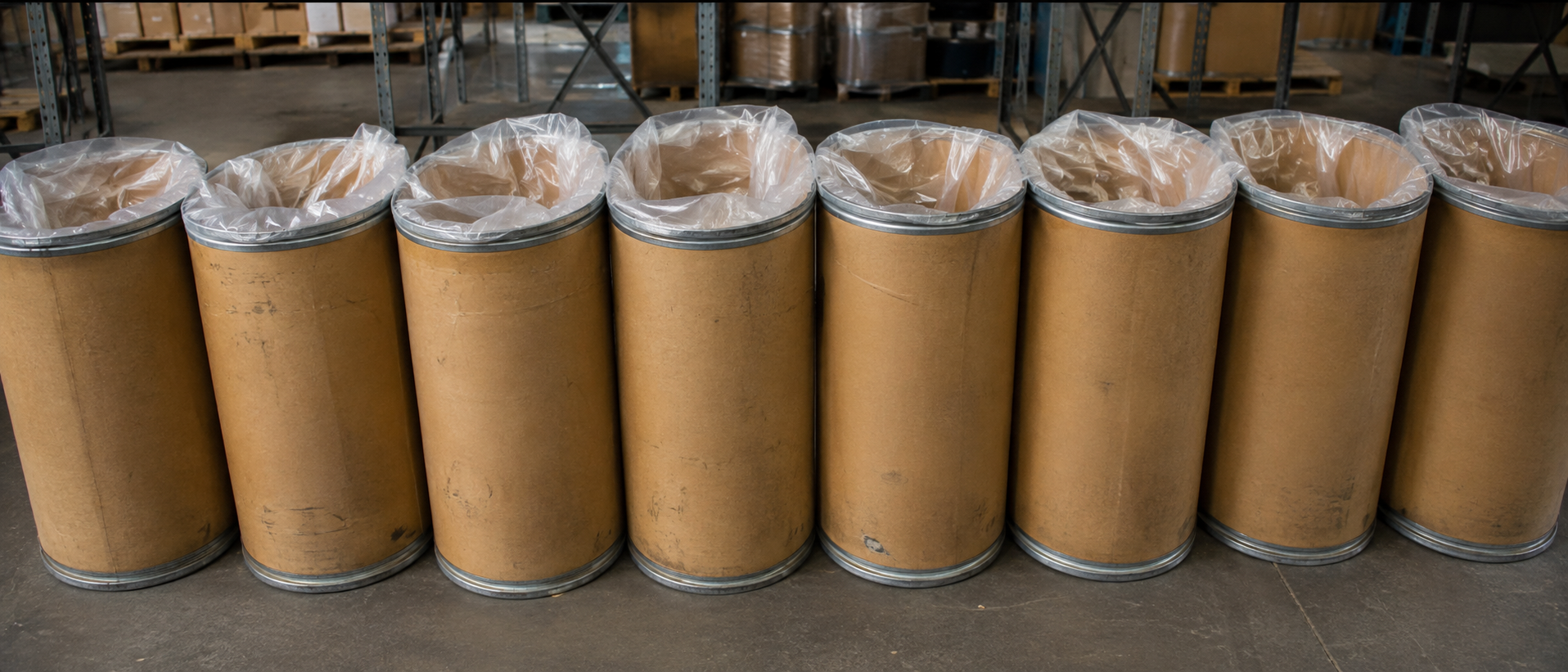
The liner, not the fiberboard, is what needs to meet food-contact requirements.
What makes a fiber drum food grade
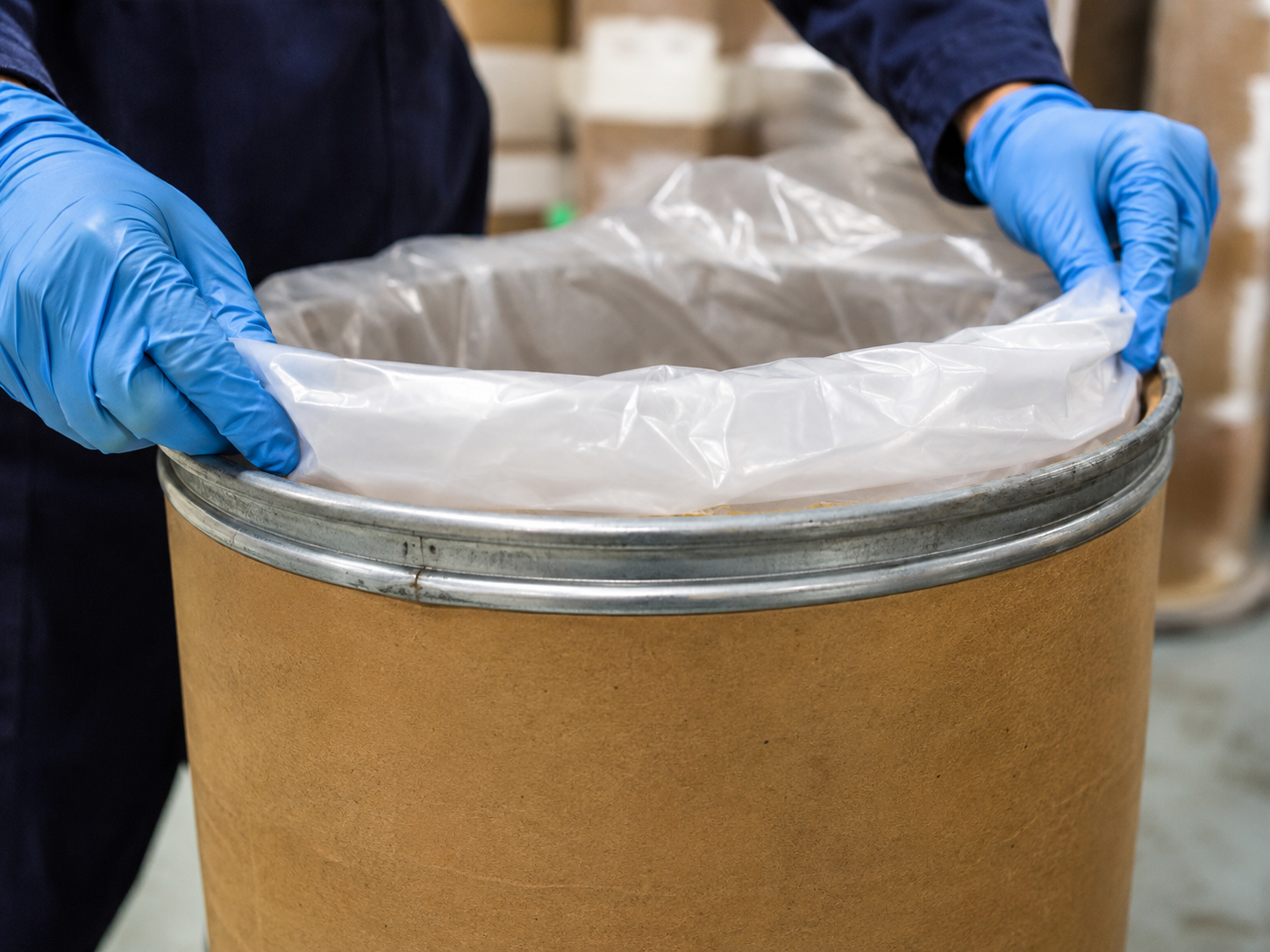
Manufacturers build food-grade options as a specific liner and construction choice, not a default. Mauser's North American fiber drum line offers liner options that the manufacturer states meet FDA requirements for food contact. On the European side, Mauser's fiber drum program offers food-approved PE bags, fixed or loose, as an accessory to the base drum.
A drum built for adhesives or industrial powders and a drum built for food ingredients can share the same fiberboard body and differ only in that inner liner.
That's why the liner spec, not the drum listing title, is the thing worth confirming before you buy.
Matching liner type to your product
Not every liner does the same job, and the wrong match is a common reason a "lined" drum still isn't right for a given product. Manufacturer liner lineups typically include several distinct options, each aimed at a different problem.
Source: Mauser fiber drums brochure and Mauser Fiber Drums Catalog.
Inspecting a liner for food use
A liner rated for food contact stops being one the moment it's compromised, and that's separate from whatever condition the fiberboard shell is in. Before you fill it, check the liner itself for:
- Pinholes or tears. Even small breaches defeat the point of a barrier meant to keep the product off the fiberboard.
- Seam and rim-closure integrity. A liner bag depends on its seams and how it's secured at the drum's rim. A failed seam is functionally no liner at all.
- Discoloration, staining, or residue. Any of these on the inside of the liner suggests it's already had product contact, whether or not the seller mentioned a prior fill.
- Odor. An unexplained or product-like odor can be a warning sign of contamination or previous exposure and should be investigated before the liner is used for food contact.
- Brittleness or cracking. Liners degrade with age and temperature exposure. A liner that's gone brittle no longer performs as a barrier even if it looks intact from a glance.
None of this replaces the structural checks on the drum body itself (moisture damage, delamination, chime condition); see our used fiber drum safety guide for that side of the inspection.
What food and ingredient products ship in fiber drums
Fiber drums are mostly used to ship dry granular and semi-solid materials, with liners and coatings added when the contents call for it. On the food side specifically, manufacturers point to pumpable, straight-sided applications in the food industry alongside adhesives as a typical use case for their food-liner drum lines.
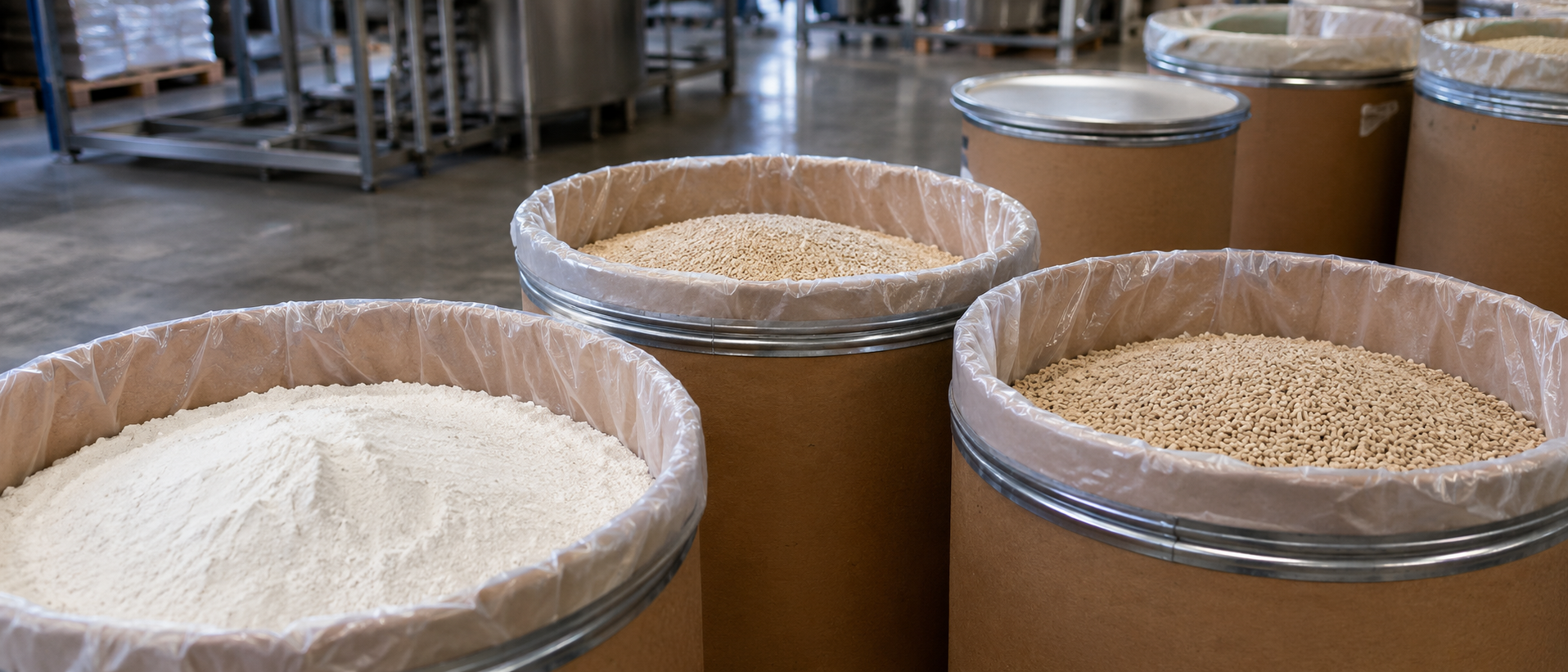
Dry granular and semi-solid ingredients are the most common food-adjacent fill for fiber drums.
Wide capacity ranges (roughly 1 to 100 gallons in standard sizing, with larger drums available) mean a fiber drum can be sized close to an actual batch volume, which is part of why they show up in ingredient handling more than a fixed-size metal drum would. That flexibility is a packaging-format advantage, not a food-safety one; the liner is still what determines whether a given drum is fit for food contact.
Choosing new vs. relined for food use
You generally have two real options for food-contact use: a new drum built with an FDA-compliant liner from the start, or a used drum body that's had its original liner fully removed and replaced with a new FDA-compliant liner before resale. A fiberboard shell does not necessarily have to be new, but relining alone does not automatically make a used drum suitable for food use. The drum's previous contents, physical condition, cleanliness, potential contamination or allergen risks, and the suitability of the new food-contact liner all need to be considered for the intended application.
A relined drum tends to make the most sense when you're running high volume of a stable, low-risk dry ingredient and want to control cost per unit. New tends to make more sense for pharmaceutical-adjacent aseptic requirements, or when you want a documented chain of custody on the liner with zero ambiguity, since that comes built in rather than something you have to request separately.
What you should not do either way is take a used drum with its original liner still in place and put food against it, regardless of what it held before, since there's no way to fully verify that liner's history from the outside.
Documentation to request before you buy
A UN specification marking identifies a drum as packaging manufactured to a tested and certified design type for hazardous-material transportation. It does not establish that the liner or other food-contact surface meets FDA food-contact requirements; the transportation specification and food-contact requirements address different issues. For food use, ask the seller for something in writing rather than taking "food grade" at face value.
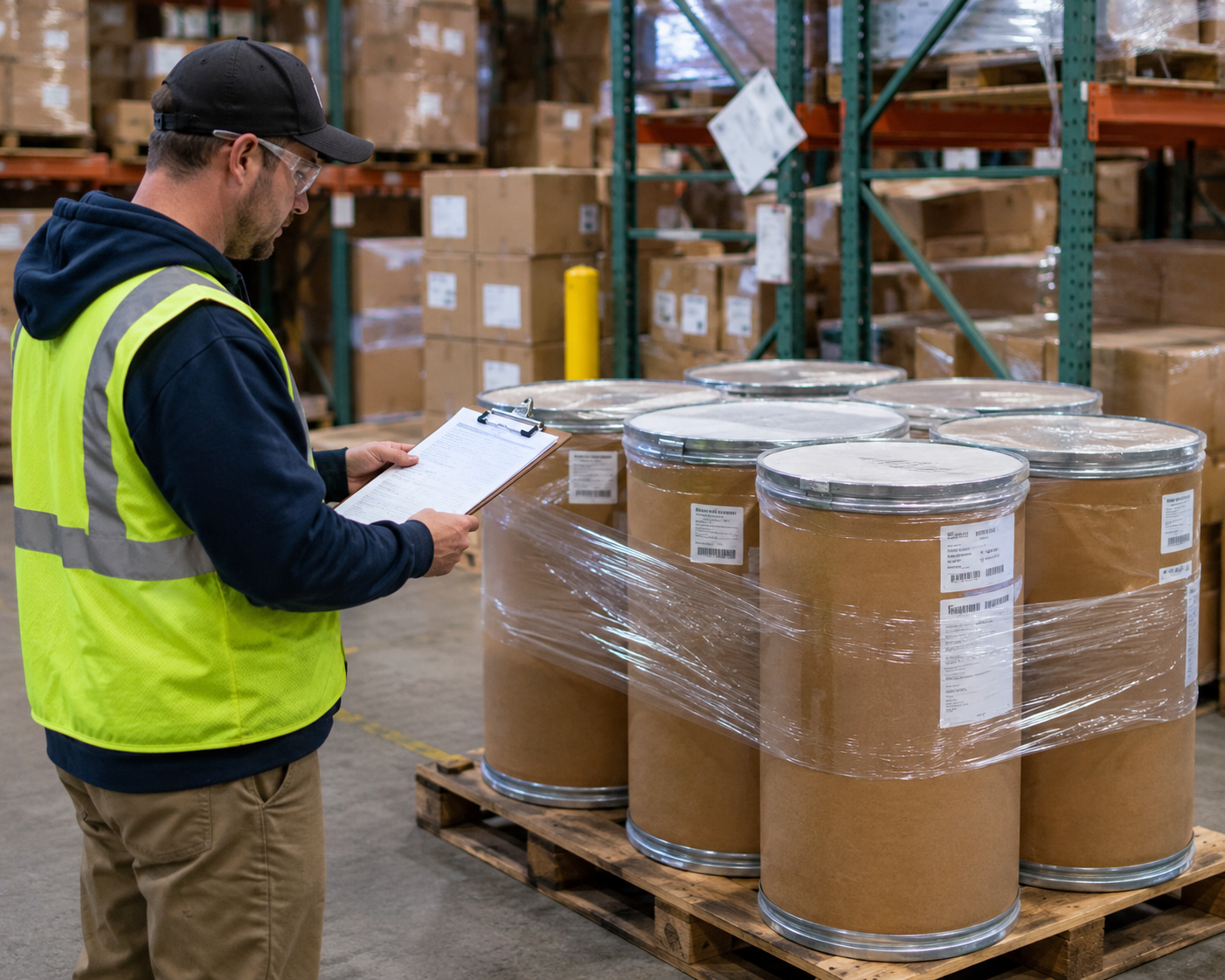
- Liner spec sheet or compliance statement. Something naming the liner as meeting FDA requirements for food contact, not just "lined" or "plastic lined."
- Whether the liner is new or original to the drum. If it's a used drum, confirm in writing whether the liner has been replaced since the drum's last use.
- Previous contents, if the liner is original. If the liner hasn't been replaced, ask what it held before. If the seller can't say, treat the drum as not food-grade.
- Liner type match to your product. Confirm the liner grade fits your specific use (see the liner-matching table above) rather than assuming any FDA-approved liner works for anything.
For the structural side of buying used, browse our used fiber drum safety guide, and for handling and storage once the drum is on your floor, see our guide to fiber drum stacking, storage, and handling. Browse current inventory on our fiber drums page.
Buying or selling food-grade fiber drums with us
If you're buying, we can point you to relined drums with documented liner replacements or new food-grade options, depending on volume and budget. Tell us what you're filling and we'll match the liner spec to it rather than you guessing from a listing title.
If you're on this page because you have food-grade fiber drums to move rather than buy, the same documentation standard applies from our side: we buy and trade for drums with a verifiable liner history. Get a quote on your fiber drums and we'll tell you what we can offer.
Can I put food directly against the bare fiberboard if I skip the liner?
No. The fiberboard body is built for structural containment during transport, not for direct food contact, so it isn't a substitute for a liner rated for food contact.
Does the drum body need to be new for the drum to count as food-grade?
Not necessarily. A used fiberboard body may be suitable for food use if its previous contents, condition, cleanliness, contamination risks, and new food-contact liner are all appropriate for the intended application. The new liner is important, but it is not the only factor that determines suitability.
How can I tell if a liner has already degraded even if the drum looks fine from the outside?
Open it and check the liner directly rather than judging from the drum's exterior. Pinholes, seam failures, staining, odor, and brittleness are the signs that matter, and none of them are visible without looking inside.
What should I do if a seller can't tell me what a used fiber drum previously held?
Treat it as a non-food-grade drum until proven otherwise. Without knowing prior contents, there's no way to confirm the liner is free of contamination, and the safer move is to request a drum with a documented liner replacement or buy new for anything food contact.
Is a fiber drum rated for shipping hazardous materials ever also food-grade?
They address different requirements. A drum's UN hazardous-material transport specification does not establish that its food-contact surface meets FDA requirements, and food-contact compliance does not establish that the drum is authorized for hazardous-material transportation. Check both requirements separately when both apply. Check the liner spec specifically for food use regardless of what the drum is otherwise rated for.
Sources
This page draws on two separate regulatory questions: the DOT transport standards that define what a fiber drum is built to withstand, and manufacturer specifications for the liner options that actually determine food-contact safety.
Industry standards (what is defined)
- 49 CFR 178.508, Standards for fiber drums. Defines the 1G identification code, construction requirements, and capacity/mass limits that every fiber drum built to spec must meet for transport of regulated goods. The basis for the DOT-vs-food-safety distinction throughout this page.
Peer-reviewed research and reference works
- Kirwan, Handbook of Paper and Paperboard Packaging Technology, "Fibre drums" chapter (Wiley, 2012). Reference chapter on fiber drum construction; general packaging-industry context on food-contact regulatory bodies (FDA, BgVV) cited in this page comes from Kirwan's related 2005 volume on paperboard packaging technology.
- Olsson, "Packaging, Containers for Industrial Materials," Kirk-Othmer Encyclopedia of Chemical Technology (Wiley, 2005). Source for the general statement that fiber drums are mostly used to ship dry granular and semi-solid materials, with liners added for liquid products.
Manufacturer specifications
- Mauser Packaging Solutions, Fiber Drums Catalog. Source for the North America FDA-approved liner claim (food and beverage plus pharmaceutical aseptic use) and the EU food-approved PE bag accessory.
- Mauser fiber drums brochure. Source for the liner-type breakdown (PE, foil, anti-static, silicone release) and the liner option that specifically meets FDA requirements for food contact.
