

Can fiber drums be recycled?
What actually happens to a used fiber drum, and what it takes to recycle one properly.
Published October 21, 2026
By John Anderson, Owner of Verde Trader
10+ years buying and selling used industrial packaging.
We move a lot of used fiber drums through Verde Trader, and the recycling question comes up on both sides of the transaction. Sellers want to know what happens to a drum once it's too worn out to refill, and buyers who are weighing fiber drums against steel or plastic want to know if the "eco-friendly" pitch actually holds up at end of life. The short answer is yes, fiber drums are recyclable, but the honest version of that answer has some conditions attached to it, which is what this page walks through.
Key takeaways
- Short answer: Yes. The paperboard body of many fiber drums is recyclable, but acceptance and preparation requirements depend on the drum’s construction and the receiving recycler.
- Recycling limit: paper fibers are generally estimated to be recyclable five to seven times before they become too short for new paper products.
- Three end of life paths: a fiber drum can be reused, recycled for its fiber, or incinerated. Manufacturers design for all three.
- Contamination matters: drums that held liquids, chemicals, or other residue-heavy products often need the liner cut away before the shell can go back into the fiber stream.
What happens to a fiber drum at end of life
Industry reference material on fiber drums lays out three end-of-life paths: the drum can be reused, its component materials can be recovered and recycled, or it can be disposed of through energy-to-waste incineration. Which path makes sense depends mostly on what the drum held and what shape it's in.
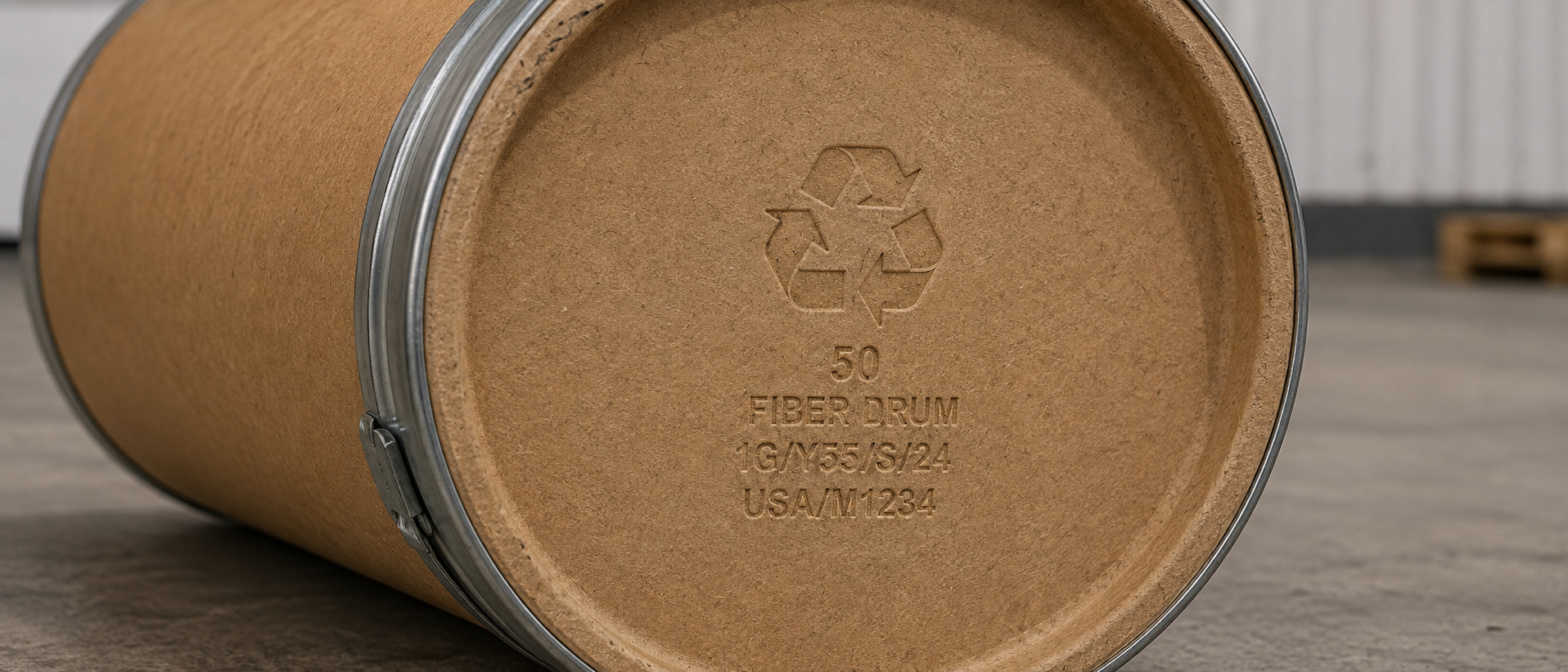
Manufacturers also put identification codes and recycling logos on the drum sidewall and base that indicate what the drum is made of, which is meant to be used as a guide for whoever handles the drum at disposal. It's a small detail, but it's the reason you'll see a stamped code on the base of most fiber drums if you go looking for one.
Why the fiber body recycles well
The paperboard shell of a fiber drum is made from a naturally renewable material, and both the fiber and the other components are described in industry reference material as easily recoverable and recyclable. That's consistent with what manufacturers say about their own products: Mauser markets its fiber drums as fully recyclable and made from renewable raw material with a favorable CO2 balance, and Greif's Ro-Con line is described as 100% recyclable and easy to dispose of. When the fiber is clean, it can go back into the secondary fiber market at high quality.
That's also why fiber packaging in general gets pitched as an alternative to plastic. Research on natural fiber-based packaging notes that fiber materials fit into the circular economy because they're completely or partially recyclable and biodegradable, and that fiber drums specifically require less energy to manufacture than other industrial packaging options. None of that means the fiber can be recycled endlessly, though, which is the catch covered below.
Every time paper fiber gets repulped, the fibers shorten and stiffen slightly, a process researchers call hornification. That is why paper fibers are generally estimated to be recyclable five to seven times before they become too short to be useful in new paper products. A fiber drum's shell isn't necessarily on its first life, and it won't have an unlimited number of lives left either.
What makes a fiber drum harder to recycle
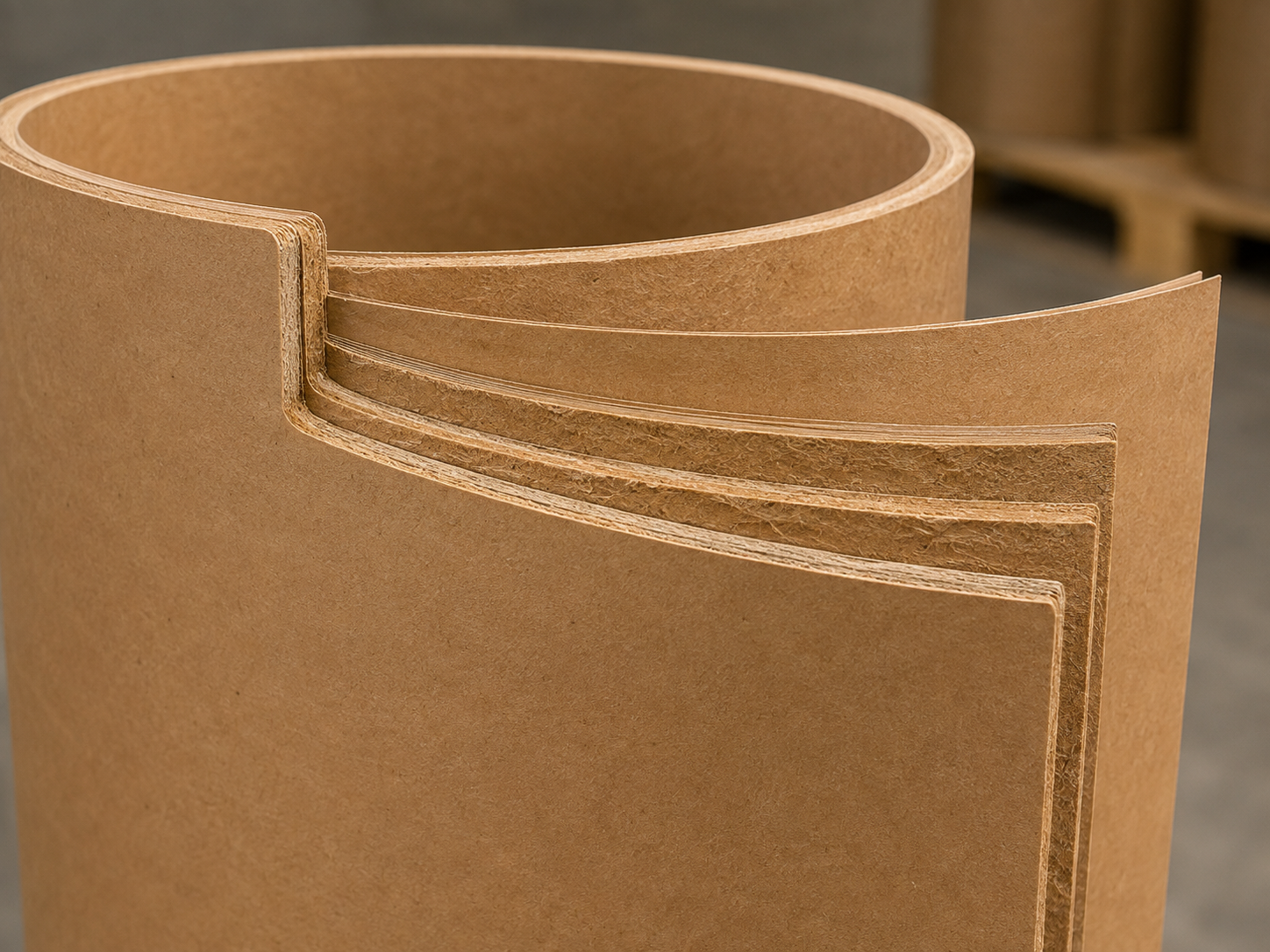
A fiber drum is not a single-material product, and that's the main complication. Under the federal construction standard for fiber drums, the body is built from multiple plies of heavy paper or fiberboard, which may include protective layers of bitumen, waxed kraft paper, metal foil, or plastic material, and the heads can be made of wood, fiberboard, metal, plywood, or plastic. That means a typical fiber drum can be leaving the fiber recycling stream with a steel or plastic lock ring still attached, plus whatever coating or liner was added for moisture or product protection.
Research on paper recycling backs this up in general terms: laminated covers and other non-fiber components make recycling more difficult, and the more contaminated the paper is, the more expensive the recycling process becomes. A drum that packed dry, clean product with a plain paper interior is a straightforward case. A drum with a PE or foil-lined interior, a caulked base joint, or product residue baked into the liner is a much less straightforward one.
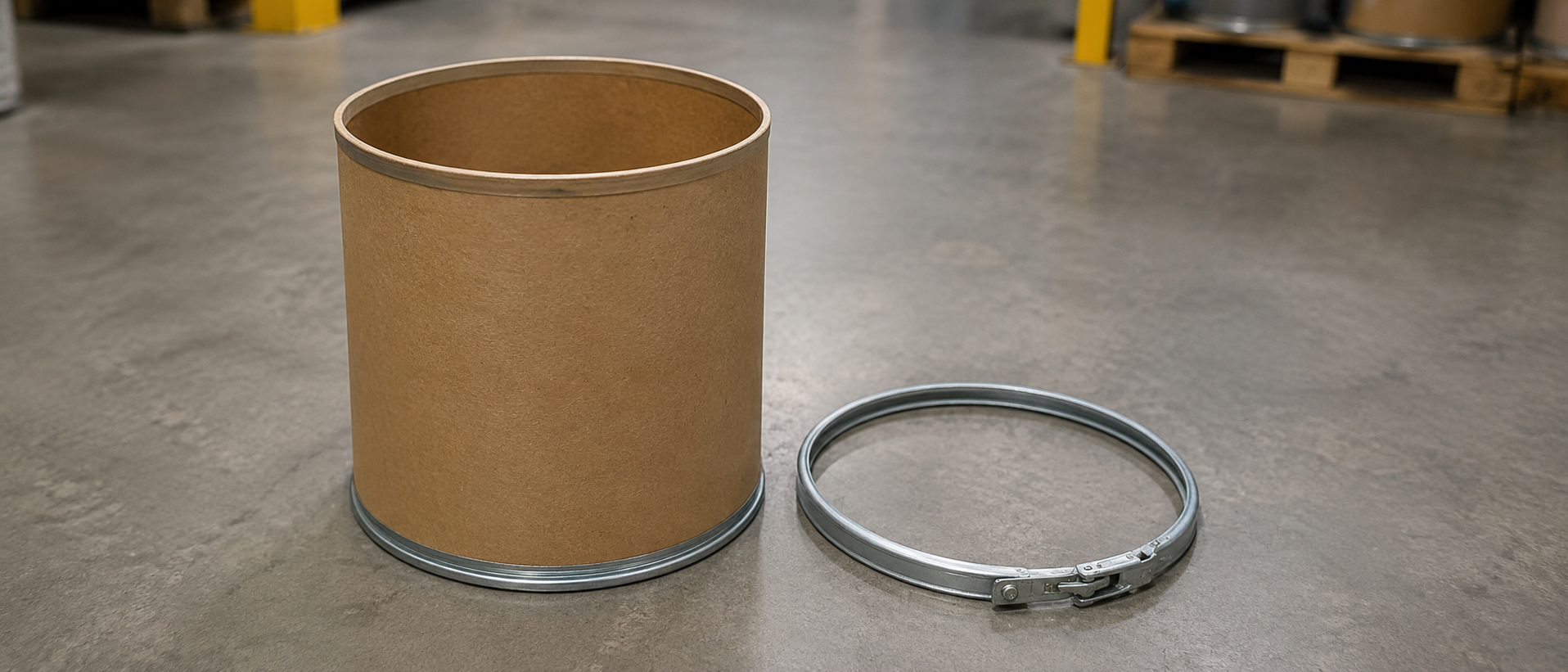
This is also why some fiber drum designs build in a way to separate the lining from the shell after use. A patented fiber drum design from the early 1990s addresses exactly this problem: the drum has a lining that can be cut away from the shell with a knife after the drum is emptied, leaving a clean, uncontaminated fiberboard shell that can be recycled into new fiberboard, with the lining disposed of separately. That's a good illustration of the general rule: the fiber recycles cleanly once it's actually isolated from everything else in the drum.
Reuse before recycling
Recycling isn't actually the first option on the list. Reference material on fiber drum waste management puts reuse ahead of recycling, and that ordering makes sense: reusing a drum that's still structurally sound gets more life out of the same fiber before it ever needs to be repulped, which is a better outcome than sending a serviceable drum straight to a recycling stream. This is the logic behind the used and reconditioned drum market that Verde Trader operates in. For the checklist we use to judge whether a drum is still sound enough to reuse, see our guide to used fiber drum safety.
Recycling makes the most sense once a drum has failed a stacking test, taken on moisture damage, or otherwise reached the point where reuse or reconditioning isn't a realistic option. At that point, separating the fiber body from its metal and plastic components and sending the fiber into the paper recycling stream is the better outcome compared to landfill.
How to prepare a used fiber drum for recycling
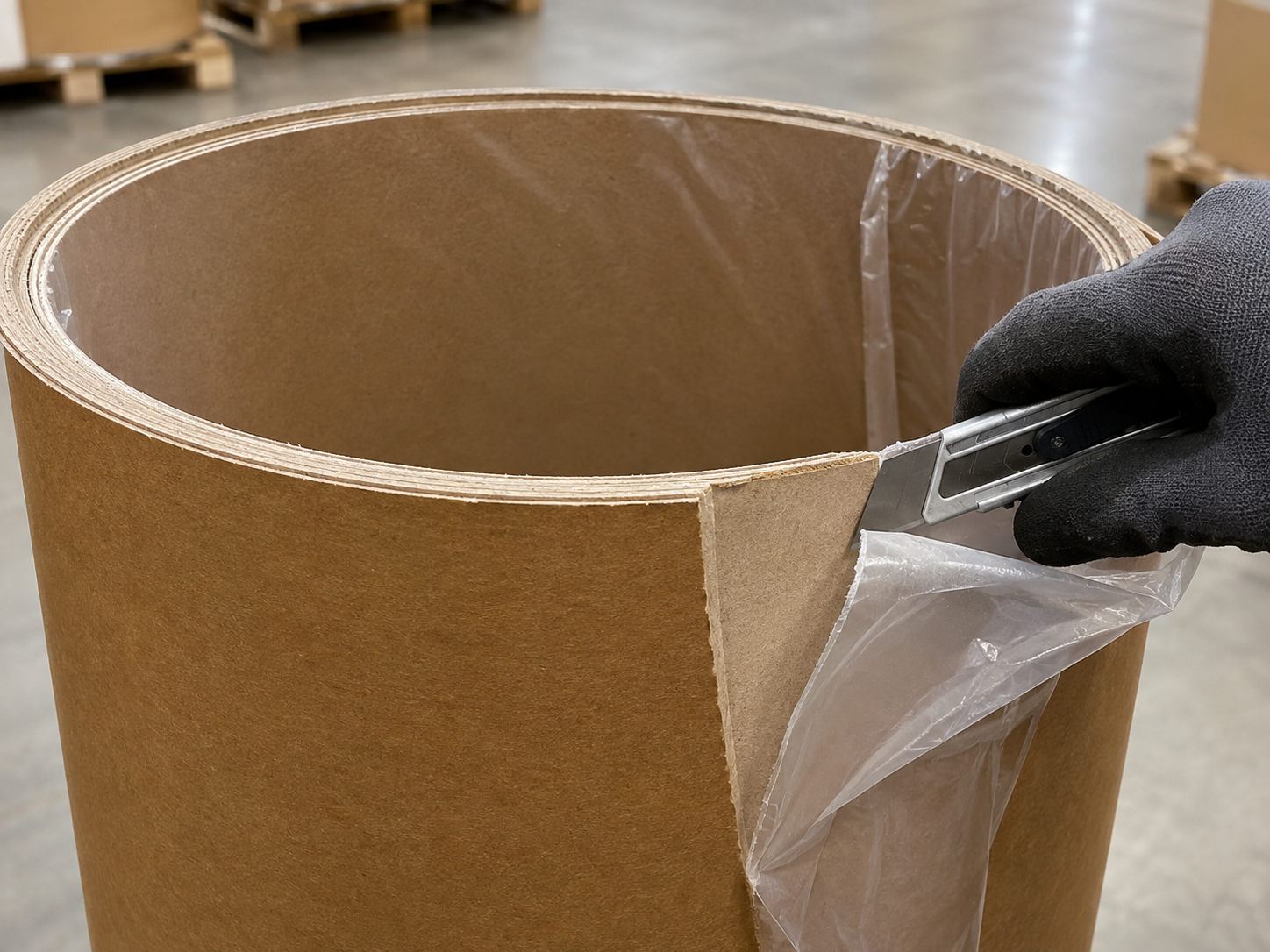
If the drum still holds its shape and hasn't been used for anything that would make it unsafe to refill, it's worth checking whether it can be reused or reconditioned instead. That's usually the better outcome, and it's a separate question from what's covered on this page.
Frequently asked questions about recycling fiber drums
Can a fiber drum that held hazardous or heavily contaminated material still be recycled?
Possibly, but a drum that held hazardous waste must first meet applicable empty-container and waste-management requirements. Removing the liner or making the shell appear clean does not by itself establish that the drum is legally empty. If it meets the applicable requirements, the recycler must still confirm that the drum’s fiberboard and remaining components are acceptable. Otherwise, it must be managed through an appropriate hazardous-waste or disposal process.
Does the recycling logo or code stamped on a fiber drum actually mean anything?
Yes. It's a materials identification code that indicates what the drum's body and components are made of, and it's meant to be used as a guide for whoever is handling the drum's disposal or recycling. It's the same idea as the resin codes stamped on plastic containers, just for fiber drum construction.
If paper fibers are generally recycled five to seven times, does an individual drum have a countdown on it?
Not exactly. The five-to-seven-cycle estimate applies to cellulose fiber as it moves through repeated pulping, not to a single physical drum. A drum's shell could already be made from fiber that's been through several previous paper products before it ever became a drum, which is one reason drum manufacturers can't guarantee unlimited future recyclability for any specific batch of material.
How does fiber drum recyclability compare to plastic or steel drums?
Each material has a different end-of-life profile. Steel can be recycled repeatedly without the same loss of quality associated with paper fibers. Many plastics can also be recycled, but repeated mechanical processing may degrade their properties. Fiber drums have the advantage of being made primarily from renewable fiber material.
Sources
This page draws on the federal construction standard for fiber drums, peer-reviewed and industry reference research on fiber packaging and paper recycling, a patented fiber drum design built around recyclability, and manufacturer materials from Mauser and Greif.
Industry standards (what is defined)
- 49 CFR § 178.508, Standards for fiber drums. Federal construction standard confirming that fiber drum bodies and heads may legally include metal, plastic, or foil components alongside the paperboard, which is the basis for the multi-material recycling complications covered on this page.
Peer-reviewed and industry reference research
- "Overview of Natural Fiber-Based Packaging Materials," Journal of Natural Fibers. Source for the fiber recycling cycle limit, hornification, and the general recyclability and biodegradability profile of fiber-based packaging.
- "Fibre Drums" chapter, Handbook of Paper and Paperboard Packaging Technology (Wiley, Kirwan). Source for the three end-of-life paths for fiber drums (reuse, recycle, incinerate) and the use of materials identification codes on drum sidewalls and bases.
Patents and technical background
- US Patent 5,137,206, "Reusable Recyclable Fiber Drum." Source for how a detachable liner design allows a contaminated drum shell to be cut clean and recycled into new fiberboard.
Manufacturer specifications
- Greif Ro-Con Drum brochure. Manufacturer claim that Ro-Con fiber drums are 100% recyclable.
- Mauser Packaging Solutions, Fiber Drums Catalog. Manufacturer claims on renewable material sourcing, low-energy manufacturing, full recyclability of the fiber body, and disposal by incineration.
