

How much do fiber drums cost?
What drives fiber drum pricing, and how much less a used drum runs, from someone who trades them every day.
Published October 21, 2026
By John Anderson, Owner of Verde Trader
10+ years buying and selling used industrial packaging.
A fiber drum's price is not one number. It moves with capacity, how many plies of paperboard make up the wall, what kind of closure sits on top, and whether the drum is certified for hazmat shipping under DOT rules. We buy and sell fiber drums every day, so this page walks through what actually moves the price, then shows how new pricing compares with what a used or reconditioned drum runs.
Everything below traces back to the federal packaging regulations that define a fiber drum, the manufacturer spec sheets for the drum types we see most, and our own transaction records.
Key takeaways
- Capacity drives the base price: fiber drums are made from 5 gallons up to 55 gallons and larger, and price scales up with size.
- Body construction adds cost: fiber drums may use single-wall, double-wall, or other reinforced constructions, depending on the manufacturer and application. Heavier construction generally uses more material and can increase the price.
- UN/DOT-rated drums cost more: certification under 49 CFR 178.508 requires testing that non-rated drums skip.
- Closure hardware matters: lever lock rings and crimped steel closures cost more than a plain friction-fit cover.
- Used and reconditioned drums cost less: Roughly 50-65% less than new.
What drives fiber drum pricing
Four things move the price of a fiber drum more than anything else: how big it is, how many walls of paperboard it's built from, what kind of closure it has, and whether it's certified to ship hazardous materials.

Capacity and size
Fiber drums are built in a range of standard capacities, and larger drums use more paperboard and cost more to produce. A 30-gallon drum, one of the more common sizes we see on both new and used sides, sits in the middle of that range.
Wall construction
Fiber drum body construction varies by manufacturer and application. Some all-fiber designs use single-wall construction, while others use double-wall or otherwise reinforced bodies. Additional material, thicker sidewalls, moisture barriers, liners, and reinforced edges can increase strength and cost.
Closure type
Closures range from a plain metal cover with a lever lock ring to a plastic cover with the same lever lock hardware. The lever lock ring itself, a metal band that clamps the cover to the drum body, adds cost over a simple friction-fit lid, and metal covers price differently than plastic ones.
A drum certified for hazmat shipping under 49 CFR 178.508 has to pass the testing in 49 CFR Part 178, Subpart M, drop tests, stacking tests, and more. The construction, testing, quality-control, and documentation required for a UN/DOT-rated design can contribute to a higher price than a comparable non-rated dry-goods drum.
See our fiber drum sizes guide for a full breakdown of standard capacities and dimensions.
Price by size and wall construction
Here's roughly how new fiber drum pricing breaks down by capacity and wall construction, based on what we see across the drums we buy and sell.
For full dimensions at each capacity, see our fiber drum sizes guide.
New vs used fiber drum pricing
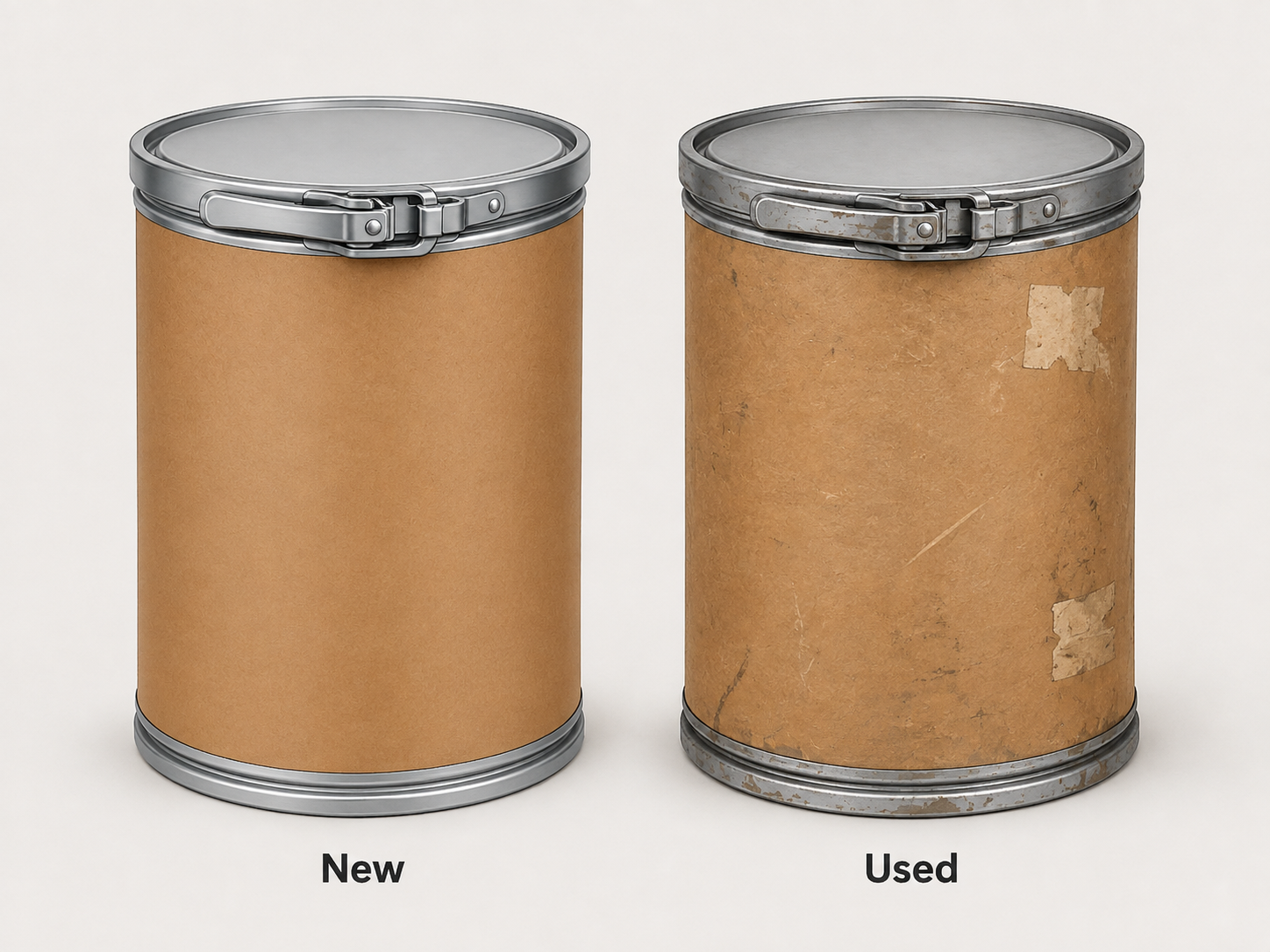
A used or reconditioned fiber drum typically costs less than a new one, since it skips the raw-material and manufacturing cost that goes into a brand-new drum. Under 49 CFR 173.12(c), previously used packaging may be reused for certain waste shipments for disposal or recovery when all applicable conditions are met. These include highway-only transportation, inspection for leakage, specific loading and unloading requirements, and limits on subsequent hazardous-material reuse. This narrow exception should not be treated as general authorization to use any used fiber drum for hazardous waste.
The tradeoff is condition. A used drum's price depends on wear, contamination history, moisture damage, closure condition, and whether it is suitable for the buyer's intended contents. An existing UN marking does not by itself prove that a used drum remains suitable for a new hazardous-material shipment.
Source: Verde Trader sold-order data.
Browse what we currently have in stock on our fiber drums page, or see our guide to used drum safety and reusability before buying used.
Specialty fiber drums and cost premiums
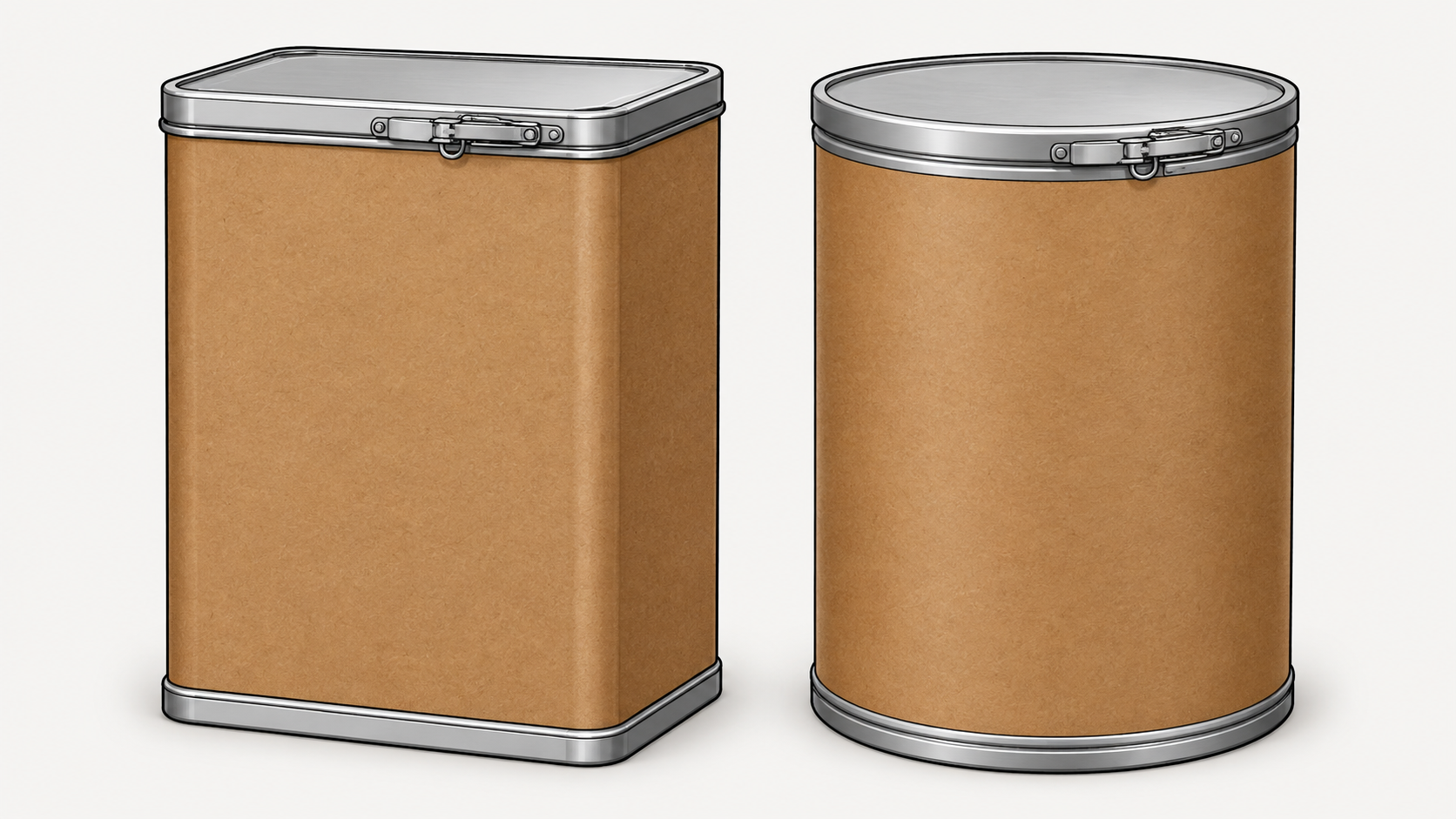
Beyond the standard round, double-wall dry-goods drum, manufacturers build fiber drums for specific jobs, and those features carry a price premium over a standard drum.
- Liquid and semi-liquid drums. Drums like Greif's Liquipak use a laminated plastic interior to hold liquids, rated up to 700 lbs under NMFC classification. The liner adds a manufacturing step a dry-goods drum skips.
- Space-saving rectangular drums. Ro-Con style drums use a rectangular or cube shape built for UN/DOT compliance and tighter nesting on a pallet or in a container, which costs more to tool and produce than a round drum.
- Temperature-managed drums. Cold-Flo and Hot-Flo style drums are built for products that need to stay cold or hot in transit, adding insulation cost over a standard drum.
- Transport-duty drums. Drums built specifically for repeated transport cycles, rather than single-use fill and ship, use heavier-duty construction that costs more up front but can offset that cost over multiple trips.
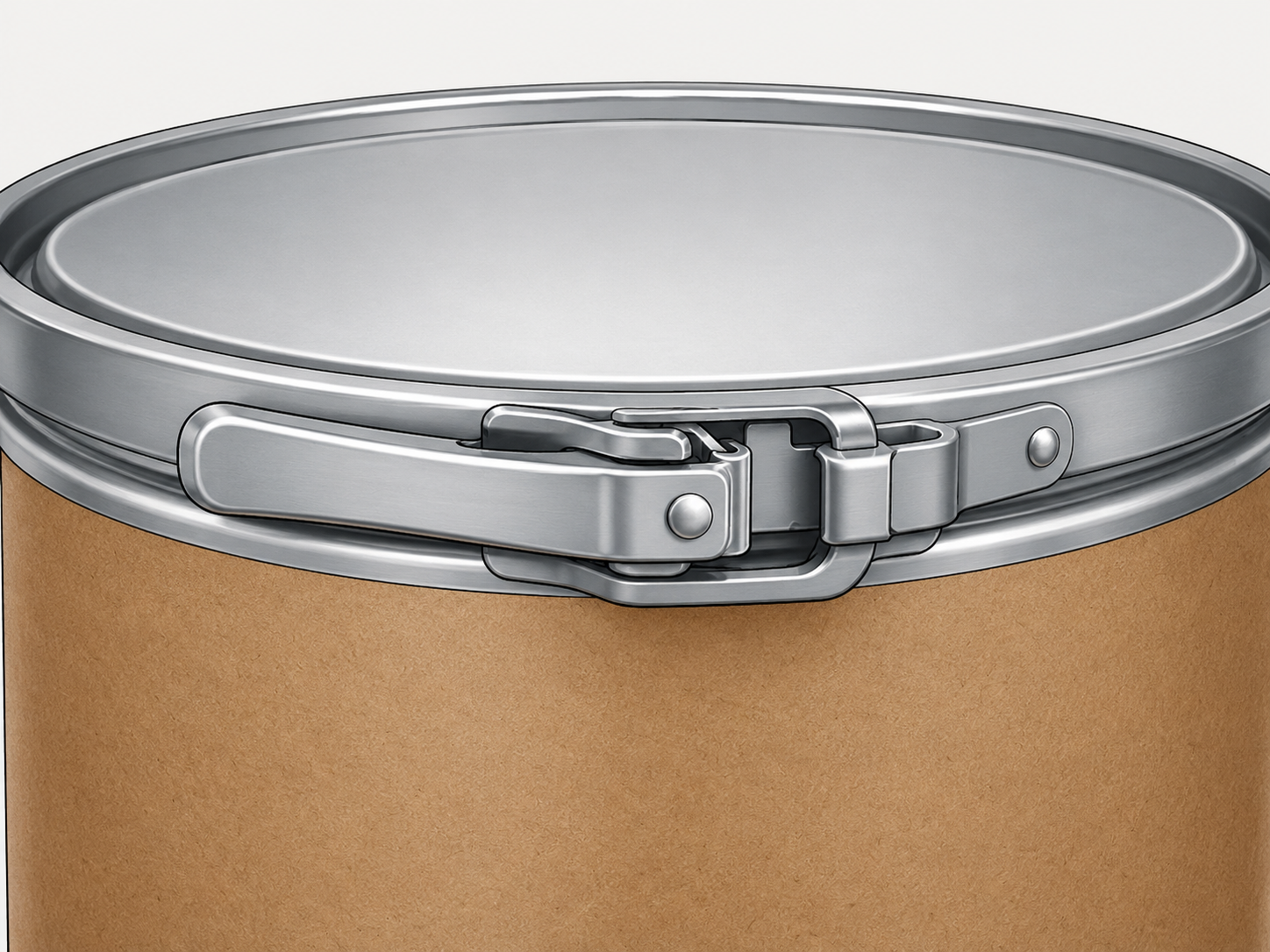
On the hardware side, a plastic cover with a lever lock ring and a plain metal cover with the same lever lock hardware are priced differently even at the same capacity, since the cover material itself is a separate line-item cost from the closure mechanism.
If your application does not need one of these features, a standard double-wall drum with a basic closure is almost always the lower-cost option.
Frequently asked questions about fiber drum pricing
Why do UN/DOT-rated fiber drums cost more than non-rated drums for the same capacity?
A UN/DOT-rated drum has to pass the testing required under 49 CFR Part 178, Subpart M, and meet the design standard in 49 CFR 178.508, drop tests, stacking, and vibration among them. Building a drum to pass that testing, and certifying it, adds cost that a non-rated drum built for ordinary dry goods does not carry.
Do specialty features like a liquid liner or insulation always pay for themselves?
It depends on the application. A liner or insulation adds cost over a standard dry-goods drum, and whether that's worth it comes down to what you're shipping, not the drum itself. If you don't need the feature, a standard drum is the lower-cost choice.
Does the closure type change the price even if two drums are otherwise identical?
Yes. A plastic cover and a plain metal cover with the same lever lock ring closure are priced differently even at the same capacity and wall construction, since the cover material is priced separately from the lever lock hardware itself.
Does buying fiber drums in volume lower the per-unit price?
Generally, yes. Per-unit pricing typically assumes a standard order quantity, and larger orders spread freight and handling costs across more drums, which can bring the per-unit price down. Contact us directly for volume pricing on your specific order size.
How much does freight add to the total cost of a fiber drum?
It can be a meaningful share of the total, since fiber drums are bulky relative to their weight, so freight doesn't shrink per unit the way it would for denser cargo. Get a quote that includes freight rather than comparing unit prices alone.
Do prices differ between manufacturers like Mauser and Greif for a similar drum?
Yes, in the same way you'd expect price differences between any two manufacturers making a similar product. Mauser and Greif, the two manufacturers referenced throughout this page, differ in wall construction options, closure hardware, and available capacities, all of which affect price even when two drums are marketed at the same nominal size.
Within the used category, does condition affect price beyond the new-vs-used gap?
It does. The used pricing on this page reflects an average across drums we sell, but an individual drum's price depends on wear, moisture damage, and closure condition. See our guide to used fiber drum safety for the checklist we use to grade a drum before pricing it.
Sources
This page stands on three legs: the federal regulations that define and test fiber drums, manufacturer specifications for the drum types we see most, and our own sold-order records for what people actually pay.
Industry standards (what is defined)
- 49 CFR § 178.508 - Standards for fiber drums. The federal design standard for fiber drums, the basis for the UN/DOT-rated vs non-rated cost distinction on this page.
- 49 CFR Part 178, Subpart M - Testing of non-bulk packagings and packages. The testing regime, drop tests, stacking, and more, that a drum must pass to earn UN/DOT certification.
- 49 CFR § 173.12 - Exceptions for shipment of waste materials. The exception that allows non-specification packaging, including used drums, for certain waste material shipments, relevant to the used-drum market discussed on this page.
Industry background
- "Fibre Drums" chapter, Paper and Paperboard Packaging Technology (Wiley). Background on fiber drum construction methods, including wall count and winding, that underlies the construction cost drivers on this page.
Manufacturer specifications
- Greif All-Fi Standard fibre drum. Double-wall construction with a telescoping cover and flush tape seal, the reference point for standard dry-goods fiber drum construction on this page.
- Greif Liquipak fibre drum. Laminated plastic interior rated for liquids up to 700 lbs, the basis for the liquid-liner cost premium discussed above.
- Greif Ro-Con fibre drum. Rectangular, UN/DOT-compliant, space-efficient design, the basis for the space-saving drum cost premium discussed above.
- The Cary Company - 30-gallon fiber drum, plastic cover with lever lock ring. Spec sheet used alongside the plain-metal-cover version below to show how closure and cover material price separately at the same capacity.
Our sales data (what people actually pay)
- Verde Trader sold-order data through 2026. The price ranges on this page come from these records. Archived and dead-deal orders are excluded.
